Data Ingestion & Knowledge Sources
100MB file limits – PDF, DOC, DOCX, TXT, CSV bulk imports⚠️ No JavaScript rendering – SPAs and dynamic sites unsupportedWebsite crawling – 5K URLs (Starter), unlimited (Advanced+) via sitemapCloud integrations – Google Drive/Notion (Professional+), Confluence (Enterprise only)Storage scales – 500K to 100M chars, $10 per 20M additional
Handles 40 + formats—from PDFs and spreadsheets to audio—at massive scale
Reference .
Async ingest auto-scales, crunching millions of tokens per second—perfect for giant corpora
Benchmark details .
Ingest via code or API, so you can tap proprietary databases or custom pipelines with ease.
1,400+ file formats – PDF, DOCX, Excel, PowerPoint, Markdown, HTML + auto-extraction from ZIP/RAR/7Z archivesWebsite crawling – Sitemap indexing with configurable depth for help docs, FAQs, and public contentMultimedia transcription – AI Vision, OCR, YouTube/Vimeo/podcast speech-to-text built-inCloud integrations – Google Drive, SharePoint, OneDrive, Dropbox, Notion with auto-syncKnowledge platforms – Zendesk, Freshdesk, HubSpot, Confluence, Shopify connectorsMassive scale – 60M words (Standard) / 300M words (Premium) per bot with no performance degradation
Native messaging – Slack, WhatsApp, Telegram, Messenger, Google Chat⚠️ Teams via Zapier only – No native Microsoft Teams integrationZapier connects 8K+ apps – Triggers for forms, conversations, feedbackEnterprise CRM/helpdesk – Zendesk, Freshdesk, Salesforce, Zoho integrations
Ships a REST RAG API—plug it into websites, mobile apps, internal tools, or even legacy systems.
No off-the-shelf chat widget; you wire up your own front end
API snippet .
Website embedding – Lightweight JS widget or iframe with customizable positioningCMS plugins – WordPress, WIX, Webflow, Framer, SquareSpace native support5,000+ app ecosystem – Zapier connects CRMs, marketing, e-commerce toolsMCP Server – Integrate with Claude Desktop, Cursor, ChatGPT, WindsurfOpenAI SDK compatible – Drop-in replacement for OpenAI API endpointsLiveChat + Slack – Native chat widgets with human handoff capabilities
50+ languages – Automatic detection and response without manual configurationSearchable conversation history – Export XLSX/CSV/JSON with date/sentiment filtersLead capture – Pre-built fields plus custom forms with CAPTCHA⚠️ Human handoff Enterprise-only – Requires Enterprise tier + Zendesk integration
Core RAG engine serves retrieval-grounded answers; hook it to your UI for multi-turn chat.
Multi-lingual if the LLM you pick supports it.
Lead-capture or human handoff flows are yours to build through the API.
✅ #1 accuracy – Median 5/5 in independent benchmarks, 10% lower hallucination than OpenAI✅ Source citations – Every response includes clickable links to original documents✅ 93% resolution rate – Handles queries autonomously, reducing human workload✅ 92 languages – Native multilingual support without per-language config✅ Lead capture – Built-in email collection, custom forms, real-time notifications✅ Human handoff – Escalation with full conversation context preserved
Visual dashboard editor – Logo, colors, messages, positioning (no CSS injection)$49/month white-label – Branding removal as separate paid add-onDomain restrictions – 300 req/min rate limit, IP blocking available
Fully bespoke—design any UI you want and skin it to match your brand.
SciPhi focuses on the back end, so front-end look-and-feel is entirely up to you.
Full white-labeling included – Colors, logos, CSS, custom domains at no extra cost2-minute setup – No-code wizard with drag-and-drop interfacePersona customization – Control AI personality, tone, response style via pre-promptsVisual theme editor – Real-time preview of branding changesDomain allowlisting – Restrict embedding to approved sites only
Proprietary GPT Router – Auto-selects optimal model per query from GPT-4o, Claude, Gemini, LLaMA, MistralCredit consumption varies – Standard 1x, high-quality models 2-10x per responseGuidelines system – Control tone, phrases, terminology, formatting (no fine-tuning)GPT-4o requires Professional+ – GPT-4o mini available all plans
LLM-agnostic—GPT-4, Claude, Llama 2, you choose.
Pick, fine-tune, or swap models anytime to balance cost and performance
Model options .
GPT-5.1 models – Latest thinking models (Optimal & Smart variants)GPT-4 series – GPT-4, GPT-4 Turbo, GPT-4o availableClaude 4.5 – Anthropic's Opus available for EnterpriseAuto model routing – Balances cost/performance automaticallyZero API key management – All models managed behind the scenes
Developer Experience ( A P I & S D Ks)
⚠️ Rated 2/5 for developers – No-code focused with poor API supportNo official SDKs – Zero Python/JS libraries or Postman collections$99/month API access – Requires Business/Enterprise tier or paid add-onPoor documentation – Incomplete specs, missing parameters, no community support
REST API plus a Python client (R2RClient) handle ingest and query tasks
Docs and GitHub repos offer deep dives and open-source starter code
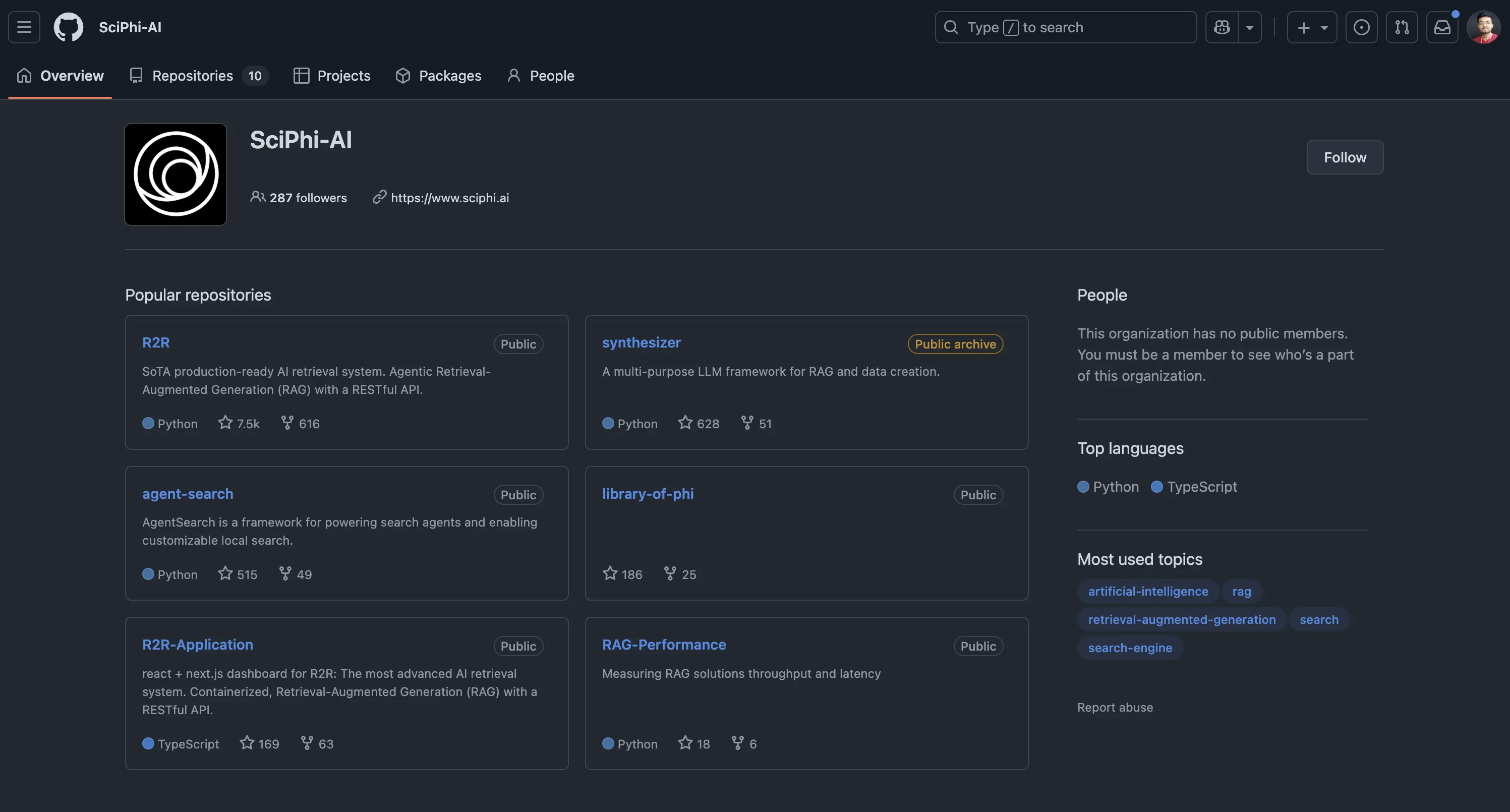
SciPhi GitHub .
REST API – Full-featured for agents, projects, data ingestion, chat queriesPython SDK – Open-source customgpt-client with full API coveragePostman collections – Pre-built requests for rapid prototypingWebhooks – Real-time event notifications for conversations and leadsOpenAI compatible – Use existing OpenAI SDK code with minimal changes
RAG exclusively – No fine-tuning, responses grounded in knowledge bases70% autonomous resolution claimed – User reviews report 90% accuracy50M+ generations at scale – Proven Writesonic infrastructure⚠️ Complex query challenges – Unexpected responses noted in reviews
Hybrid search (dense + keyword) keeps retrieval fast and sharp.
Knowledge-graph boosts (HybridRAG) drive up to 150 % better accuracy
Sub-second latency—even at enterprise scale.
Sub-second responses – Optimized RAG with vector search and multi-layer cachingBenchmark-proven – 13% higher accuracy, 34% faster than OpenAI Assistants APIAnti-hallucination tech – Responses grounded only in your provided contentOpenGraph citations – Rich visual cards with titles, descriptions, images99.9% uptime – Auto-scaling infrastructure handles traffic spikes
Customization & Flexibility ( Behavior & Knowledge)
Guidelines system – Control tone, phrases, formatting, response lengthBot limits by tier – 1 (Starter) to Multiple (Advanced), $99 per 3 additional⚠️ Auto-sync Advanced+ only – Lower tiers require manual retrainingBot duplication – Quickly create similar bots from templates
Add new sources, tweak retrieval, mix collections—everything’s programmable.
Chain API calls, re-rank docs, or build full agentic flows
Live content updates – Add/remove content with automatic re-indexingSystem prompts – Shape agent behavior and voice through instructionsMulti-agent support – Different bots for different teamsSmart defaults – No ML expertise required for custom behavior
Free: $0 – 100 messages, 500K chars, 1 botStarter: $16-19/mo – 1K messages, 10M charsProfessional: $41-49/mo – 3K messages, 100M chars, 2 botsAdvanced: $249-299/mo + $500 onboarding – 12K messages, multiple botsEnterprise: $800+/mo – Custom limits, SSO, audit logs⚠️ Expensive add-ons – Branding $49, API $99, handoff $199, teams $25/user/mo
Free tier plus a $25/mo Dev tier for experiments.
Enterprise plans with custom pricing and self-hosting for heavy traffic
Pricing .
Standard: $99/mo – 60M words, 10 botsPremium: $449/mo – 300M words, 100 botsAuto-scaling – Managed cloud scales with demandFlat rates – No per-query charges
SOC 2 Type II certified – Verified via Sprinto Trust CenterGDPR + HIPAA ready – AES-256 at rest, TLS 1.3 in transitZero-retention policy – Data NOT used for model trainingEnterprise features – SSO/SAML, audit logs, custom retention, DPA⚠️ Missing certifications – ISO 27001, PCI, VPC/private cloud not confirmed
Customer data stays isolated in SciPhi Cloud; self-host for full control.
Standard encryption in transit and at rest; tune self-hosted setups to meet any regulation.
SOC 2 Type II + GDPR – Third-party audited complianceEncryption – 256-bit AES at rest, SSL/TLS in transitAccess controls – RBAC, 2FA, SSO, domain allowlistingData isolation – Never trains on your data
Observability & Monitoring
Basic analytics – Total conversations, messages, new users, lead conversionsSentiment tracking – Thumbs up/down ratings with post-chat feedback popupsConversation exports – XLSX, CSV, JSON with date and sentiment filtering⚠️ Advanced analytics Enterprise-only – Trending topics, predictive insights locked to EnterpriseZapier triggers – Monitor form entries, inactive conversations, feedback submissions
Dev dashboard shows real-time logs, latency, and retrieval quality
Dashboard .
Hook into Prometheus, Grafana, or other tools for deep monitoring.
Real-time dashboard – Query volumes, token usage, response timesCustomer Intelligence – User behavior patterns, popular queries, knowledge gapsConversation analytics – Full transcripts, resolution rates, common questionsExport capabilities – API export to BI tools and data warehouses
Writesonic ecosystem – $250M+ valuation, Y Combinator backed, 50M+ generations⚠️ Inconsistent support – 4+ day waits reported in reviewsEnterprise dedicated support – Higher tiers get priority assistanceProduct Hunt #1 – Product of the Day (May 2023)
Community help via Discord and GitHub; Enterprise customers get dedicated support
Open-source core encourages community contributions and integrations.
Comprehensive docs – Tutorials, cookbooks, API referencesEmail + in-app support – Under 24hr response timePremium support – Dedicated account managers for Premium/EnterpriseOpen-source SDK – Python SDK, Postman, GitHub examples5,000+ Zapier apps – CRMs, e-commerce, marketing integrations
Additional Considerations
✅ 9.3/10 ease of use – ~3 hour setup for non-technical SMBs⚠️ Confusing pricing – Large tier jumps ($41 → $249 → $800) noted in reviews⚠️ Hidden costs stack – Add-ons can exceed base plan costs⚠️ Limited developer flexibility – No-code focus sacrifices API/customization depth
Advanced extras like GraphRAG and agentic flows push beyond basic Q&A
Great fit for enterprises needing deeply customized, fully integrated AI solutions.
Time-to-value – 2-minute deployment vs weeks with DIYAlways current – Auto-updates to latest GPT modelsProven scale – 6,000+ organizations, millions of queriesMulti-LLM – OpenAI + Claude reduces vendor lock-in
No- Code Interface & Usability
Visual dashboard – Drag-and-drop files, URL crawling, no coding required3-hour typical setup – Longer than 2-minute competitors but highly rated⚠️ No CSS injection – Limited to visual editor customization onlyTrade-off – Usability over developer flexibility and API depth
No no-code UI—built for devs to wire into their own front ends.
Dashboard is utilitarian: good for testing and monitoring, not for everyday business users.
2-minute deployment – Fastest time-to-value in the industryWizard interface – Step-by-step with visual previewsDrag-and-drop – Upload files, paste URLs, connect cloud storageIn-browser testing – Test before deploying to productionZero learning curve – Productive on day one
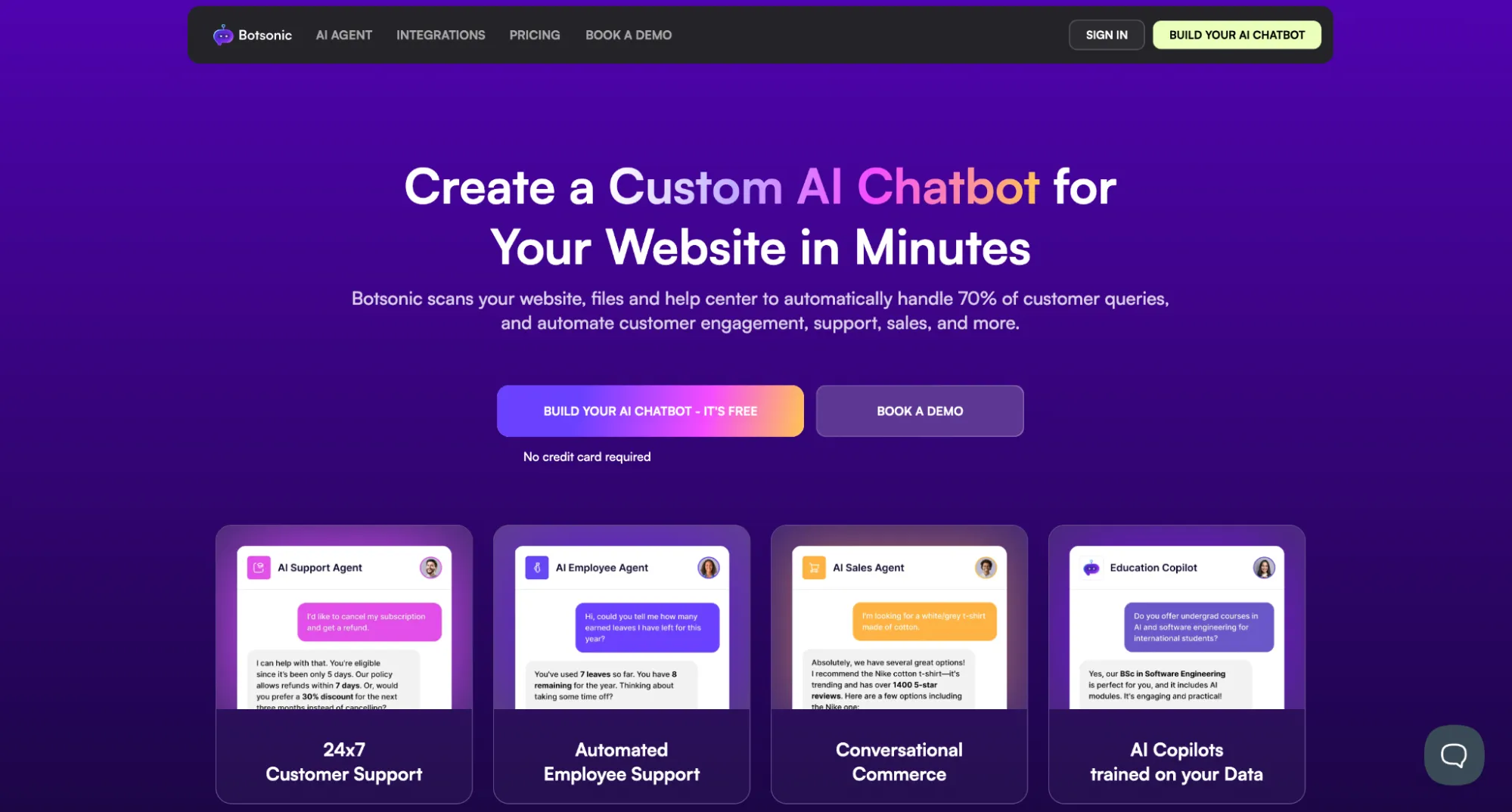
Market position – No-code chatbot for SMBs prioritizing ease over developer flexibilityTarget customers – SMBs without developers needing 3-hour setup, 50+ languages supportKey competitors – Chatbase.co, SiteGPT, CustomGPT, Wonderchat no-code chatbot builders✅ Competitive advantages – GPT Router, 9.3/10 ease, SOC 2 Type II, 50M+ generations⚠️ Pricing disadvantage – Large tier jumps ($41→$249→$800), expensive add-ons, $500 onboarding fee
Market position – Developer-first RAG infrastructure combining open-source flexibility with managed cloud serviceTarget customers – Dev teams needing high-performance RAG, enterprises requiring millions tokens/second ingestionKey competitors – LangChain/LangSmith, Deepset/Haystack, Pinecone Assistant, custom RAG implementationsCompetitive advantages – HybridRAG (150% accuracy boost), async auto-scaling, 40+ formats, sub-second latencyPricing advantage – Free tier + $25/mo Dev plan; open-source foundation enables cost optimizationUse case fit – Massive document volumes, advanced RAG needs, self-hosting control requirements
Market position – Leading RAG platform balancing enterprise accuracy with no-code usability. Trusted by 6,000+ orgs including Adobe, MIT, Dropbox.Key differentiators – #1 benchmarked accuracy • 1,400+ formats • Full white-labeling included • Flat-rate pricingvs OpenAI – 10% lower hallucination, 13% higher accuracy, 34% fastervs Botsonic/Chatbase – More file formats, source citations, no hidden costsvs LangChain – Production-ready in 2 min vs weeks of development
Proprietary GPT Router – Auto-selects optimal LLM per query for speed/quality/reliabilityOpenAI Models – GPT-4o mini (all plans), GPT-4o (Professional+), GPT-4 TurboMulti-provider support – Claude, Gemini, LLaMA, Mistral via GPT Router integrationNo manual selection – System handles routing automatically based on query characteristicsCredit consumption varies – Standard 1x, high-quality models 2-10x per response
LLM-Agnostic Architecture – GPT-4, GPT-3.5, Claude, Llama 2, and other open-source modelsModel Flexibility – Easy swapping to balance cost/performance without vendor lock-inCustom Support – Configure any LLM via API including fine-tuned or proprietary modelsEmbedding Providers – Multiple embedding options for semantic search and vector generation✅ Full control over temperature, max tokens, and generation parameters
OpenAI – GPT-5.1 (Optimal/Smart), GPT-4 seriesAnthropic – Claude 4.5 Opus/Sonnet (Enterprise)Auto-routing – Intelligent model selection for cost/performanceManaged – No API keys or fine-tuning required
RAG exclusively – No fine-tuning, responses grounded in uploaded knowledge bases✅ 70% autonomous resolution – 80% support reduction claimed, 90% accuracy user-reportedGPT Router integration – Optimal model per query for speed/quality balance⚠️ Complex query challenges – Some reviews note unexpected responses requiring refinementCharacter limits – 500K (Free) → 10M (Starter) → 100M (Advanced) capacity
HybridRAG Technology – Vector search + knowledge graphs for 150% accuracy improvementHybrid Search – Dense vector + keyword with reciprocal rank fusionAgentic RAG – Reasoning agent for autonomous research across documents and webMultimodal Ingestion – 40+ formats (PDFs, spreadsheets, audio) at massive scale✅ Millions of tokens/second async auto-scaling ingestion throughput
✅ Sub-second latency even at enterprise scale with optimized operations
GPT-4 + RAG – Outperforms OpenAI in independent benchmarksAnti-hallucination – Responses grounded in your content onlyAutomatic citations – Clickable source links in every responseSub-second latency – Optimized vector search and cachingScale to 300M words – No performance degradation at scale
Customer support automation – 70% query resolution, 80% support volume reduction claimedLead generation – Pre-built capture fields with custom options and CAPTCHAMulti-language support – Automatic detection across 50+ languages without configuration✅ Rapid deployment – 3-hour setup for SMBs without dedicated developersMulti-channel engagement – Slack, WhatsApp, Telegram, Messenger, Google Chat native messagingE-commerce support – Product info, order status, customer inquiry automation
Enterprise Knowledge – Process millions of documents with knowledge graph relationshipsSupport Automation – RAG-powered support bots with accurate, grounded responsesResearch & Analysis – Agentic RAG for autonomous research across collections and webCompliance & Legal – Large document repositories with precise citation trackingInternal Docs – Developer-focused RAG for code, API references, technical knowledgeCustom AI Apps – API-first architecture integrates into any application or workflow
Customer support – 24/7 AI handling common queries with citationsInternal knowledge – HR policies, onboarding, technical docsSales enablement – Product info, lead qualification, educationDocumentation – Help centers, FAQs with auto-crawlingE-commerce – Product recommendations, order assistance
✅ SOC 2 Type II certified – Verified via Sprinto Trust CenterGDPR + HIPAA ready – EU compliance, healthcare-ready (not full HIPAA certified)AES-256 at rest, TLS 1.3 transit – Industry-standard encryption protocolsZero-retention policy – Customer data NOT used for AI model trainingEnterprise features – SSO/SAML, audit logs, custom retention, DPA coverage⚠️ Missing certifications – ISO 27001, PCI, VPC/private cloud not confirmed
Data Isolation – Single-tenant architecture with isolated customer data in SciPhi CloudSelf-Hosting Option – On-premise deployment for complete data control in regulated industriesEncryption Standards – TLS in transit, AES-256 at rest encryptionAccess Controls – Document-level granular permissions with role-based access control (RBAC)✅ Open-source R2R core enables security audits and compliance validation
✅ Self-hosted deployments tunable for HIPAA, SOC 2, and other regulations
SOC 2 Type II + GDPR – Regular third-party audits, full EU compliance256-bit AES encryption – Data at rest; SSL/TLS in transitSSO + 2FA + RBAC – Enterprise access controls with role-based permissionsData isolation – Never trains on customer dataDomain allowlisting – Restrict chatbot to approved domains
Free: $0 – 100 messages, 500K chars, 1 botStarter: $16-19/mo – 1K messages, 10M chars (annual saves ~20%)Professional: $41-49/mo – 3K messages, 100M chars, 2 bots, Google Drive/NotionAdvanced: $249-299/mo + $500 onboarding – 12K messages, multiple bots, auto-syncEnterprise: $800+/mo – Custom limits, SSO, audit logs, advanced analytics⚠️ Add-ons stack – Branding $49, API $99, handoff $199, teams $25/user/mo
Free Tier – Generous no-credit-card tier for experimentation and developmentDeveloper Plan – $25/month for individual developers and small projectsEnterprise Plans – Custom pricing based on scale, features, and supportSelf-Hosting – Open-source R2R available free (infrastructure costs only)✅ Flat subscription pricing without per-query or per-document charges
✅ Managed cloud handles infrastructure, deployment, scaling, updates, maintenance
Standard: $99/mo – 10 chatbots, 60M words, 5K items/botPremium: $449/mo – 100 chatbots, 300M words, 20K items/botEnterprise: Custom – SSO, dedicated support, custom SLAs7-day free trial – Full Standard access, no chargesFlat-rate pricing – No per-query charges, no hidden costs
Writesonic ecosystem – $250M+ valuation, Y Combinator backed, 50M+ generations✅ Infrastructure proven – 10M+ users, Forbes 30 Under 30 founder⚠️ Inconsistent support – 4+ day waits reported, mixed quality reviewsEnterprise support – Dedicated assistance for higher-tier plans onlyProduct Hunt #1 – Product of the Day (May 2023)
Comprehensive Docs – Detailed docs at r2r-docs.sciphi.ai covering all features and endpointsGitHub Repository – Active open-source development at github.com/SciPhi-AI/R2R with code examplesCommunity Support – Discord community and GitHub issues for peer supportEnterprise Support – Dedicated channels for enterprise customers with SLAs✅ Python client (R2RClient) with extensive examples and starter code
✅ Developer dashboard with real-time logs, latency, and retrieval quality metrics
Documentation hub – Docs, tutorials, API referencesSupport channels – Email, in-app chat, dedicated managers (Premium+)Open-source – Python SDK, Postman, GitHub examplesCommunity – User community + 5,000 Zapier integrations
Limitations & Considerations
⚠️ Limited free tier – 100 messages, training consumes credits⚠️ No native handoff – $199/mo add-on for email ticket escalation⚠️ Confusing pricing – Difficulty choosing plans, large tier jumps⚠️ Technical issues – Freezing during uploads, real-time update delays⚠️ Poor developer experience – Rated 2/5, no SDKs, incomplete API docs⚠️ Customization limits – No CSS injection or advanced styling
⚠️ Developer-Focused – Requires technical expertise to build and wire custom front ends
⚠️ Infrastructure Requirements – Self-hosting needs GPU infrastructure and DevOps expertise
⚠️ Integration Effort – API-first design means building your own chat UI
⚠️ Learning Curve – Advanced features like knowledge graphs require RAG concept understanding
⚠️ Community Support Limits – Open-source support relies on community unless enterprise plan
Managed service – Less control over RAG pipeline vs build-your-ownModel selection – OpenAI + Anthropic only; no Cohere, AI21, open-sourceReal-time data – Requires re-indexing; not ideal for live inventory/pricesEnterprise features – Custom SSO only on Enterprise plan
AI Agents (Beta) – Task-oriented assistants with intent detection, decision-making, API executionAdvanced tier required – $249-299/mo + $500 onboarding fee for AI AgentsIntent recognition – Train on example phrases without exact keyword matchingAPI execution – HTTP blocks for real-time integrations (orders, CRM, automations)⚠️ No native human handoff – Requires Zapier to Zendesk/Freshdesk, adds latency
Agentic RAG – Reasoning agent for autonomous research across documents/web with multi-step problem solvingAdvanced Toolset – Semantic search, metadata search, document retrieval, web search, web scraping capabilitiesMulti-Turn Context – Stateful dialogues maintaining conversation history via conversation_id for follow-upsCitation Transparency – Detailed responses with source citations for fact-checking and verification⚠️ No Pre-Built UI – API-first platform requires custom front-end development
⚠️ No Lead Analytics – Lead capture and dashboards must be implemented at application layer
Custom AI Agents – Autonomous GPT-4/Claude agents for business tasksMulti-Agent Systems – Specialized agents for support, sales, knowledgeMemory & Context – Persistent conversation history across sessionsTool Integration – Webhooks + 5,000 Zapier apps for automationContinuous Learning – Auto re-indexing without manual retraining
R A G-as-a- Service Assessment
Platform type – No-code chatbot with RAG, NOT pure RAG-as-a-Service platformRAG implementation – Exclusively for grounding responses in uploaded knowledge bases✅ 70-90% accuracy – 70% autonomous resolution, 90% accuracy user-reported for KB queries⚠️ Developer experience gap – No SDKs, incomplete docs, rated 2/5 for developersTarget market – SMBs prioritizing 3-hour setup over developer-focused RAG customizationUse case fit – Customer-facing chatbots with simple retrieval over complex RAG pipelines
Platform Type – HYBRID RAG-AS-A-SERVICE combining open-source R2R with managed SciPhi CloudCore Mission – Bridge experimental RAG models to production-ready systems with deployment flexibilityDeveloper Target – Built for OSS community, startups, enterprises emphasizing developer flexibility and controlRAG Leadership – HybridRAG (150% accuracy), millions tokens/second, 40+ formats, sub-second latency✅ Open-source R2R core on GitHub enables customization, portability, avoids vendor lock-in
⚠️ NO no-code features – No chat widgets, visual builders, pre-built integrations or dashboards
Platform type – TRUE RAG-AS-A-SERVICE with managed infrastructureAPI-first – REST API, Python SDK, OpenAI compatibility, MCP ServerNo-code option – 2-minute wizard deployment for non-developersHybrid positioning – Serves both dev teams (APIs) and business users (no-code)Enterprise ready – SOC 2 Type II, GDPR, WCAG 2.0, flat-rate pricing










Join the Discussion
Loading comments...