In this comprehensive guide, we compare Contextual AI and SiteGPT across various parameters including features, pricing, performance, and customer support to help you make the best decision for your business needs.
Overview
When choosing between Contextual AI and SiteGPT, understanding their unique strengths and architectural differences is crucial for making an informed decision. Both platforms serve the RAG (Retrieval-Augmented Generation) space but cater to different use cases and organizational needs.
Quick Decision Guide
Choose Contextual AI if: you value invented by the original creator of rag technology
Choose SiteGPT if: you value extremely easy setup - minutes to launch
About Contextual AI
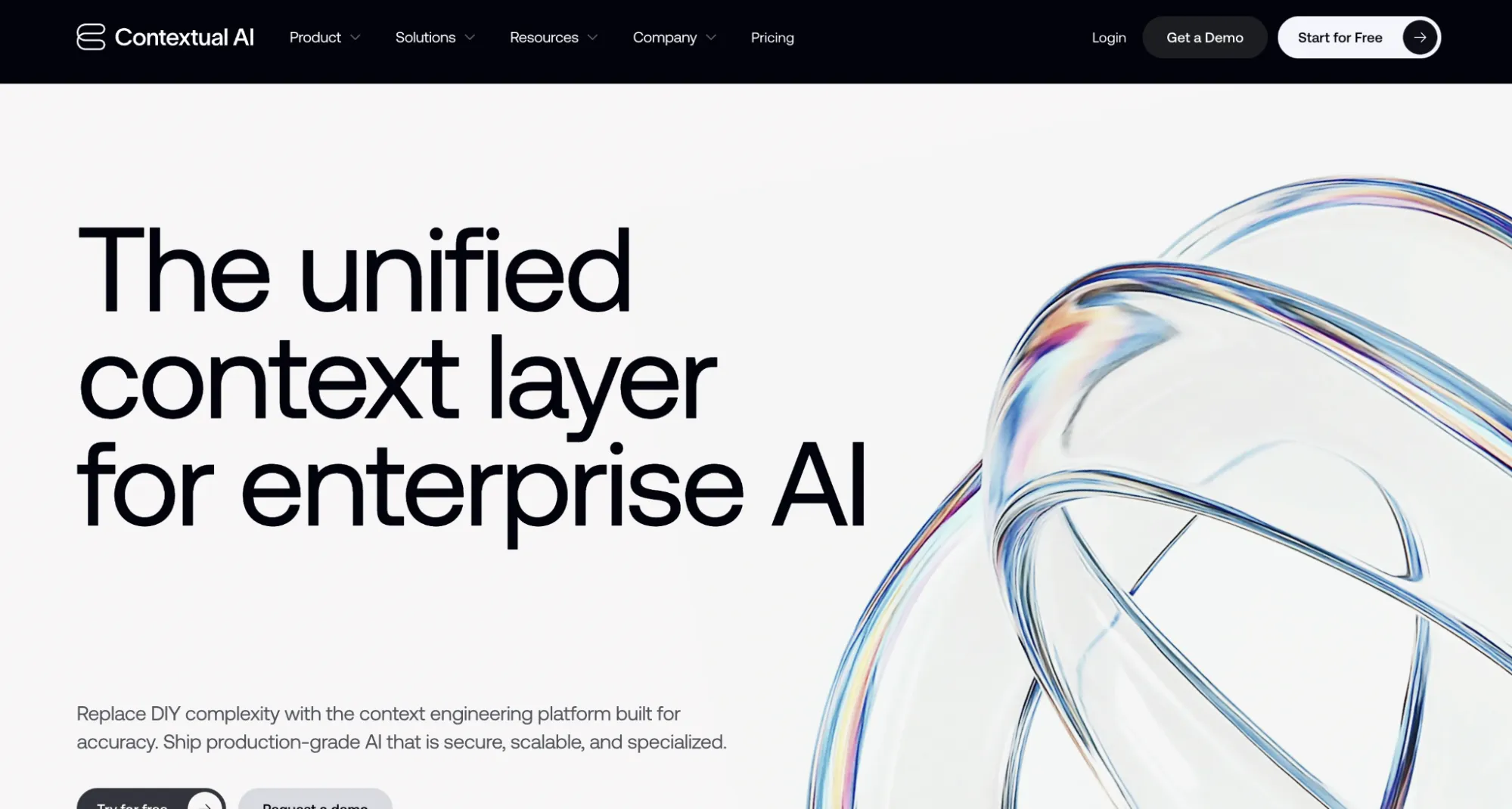
Contextual AI is rag 2.0 platform for enterprise-grade specialized ai agents. Contextual AI is an enterprise platform that pioneered RAG 2.0 technology, enabling organizations to build specialized RAG agents with exceptional accuracy for complex, knowledge-intensive workloads through end-to-end optimized systems. Founded in 2023, headquartered in Mountain View, CA, the platform has established itself as a reliable solution in the RAG space.
Overall Rating
91/100
Starting Price
Custom
About SiteGPT
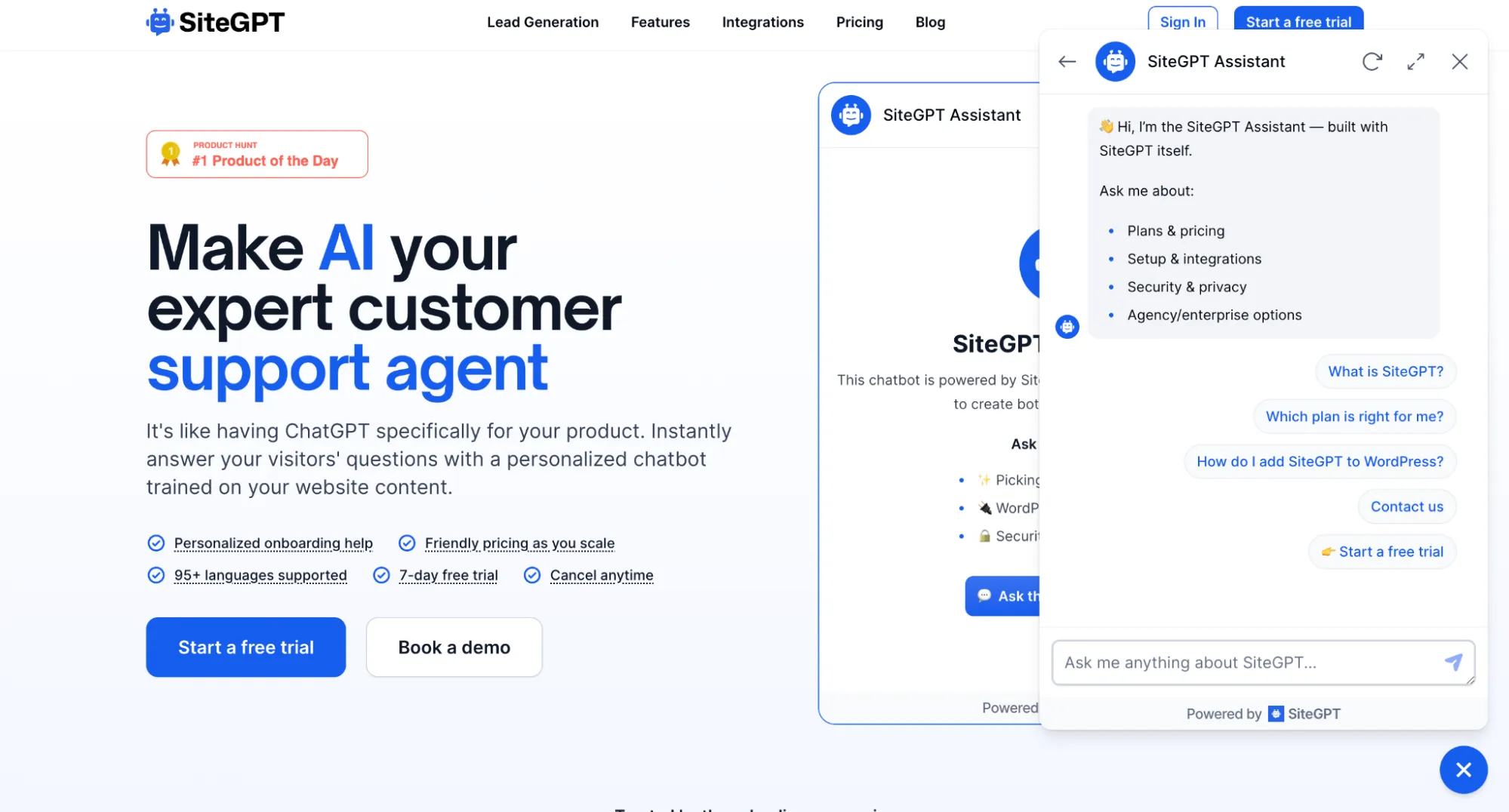
SiteGPT is make ai your expert customer support agent. SiteGPT is an AI chatbot solution that instantly answers visitor questions with a personalized chatbot trained on your website content. It's like having ChatGPT specifically for your products, offering 24/7 automated customer support with seamless integrations into existing support platforms. Founded in 2022, headquartered in Remote, the platform has established itself as a reliable solution in the RAG space.
Overall Rating
86/100
Starting Price
$49/mo
Key Differences at a Glance
In terms of user ratings, both platforms score similarly in overall satisfaction. From a cost perspective, Contextual AI starts at a lower price point. The platforms also differ in their primary focus: RAG Platform versus AI Chatbot. These differences make each platform better suited for specific use cases and organizational requirements.
⚠️ What This Comparison Covers
We'll analyze features, pricing, performance benchmarks, security compliance, integration capabilities, and real-world use cases to help you determine which platform best fits your organization's needs. All data is independently verified from official documentation and third-party review platforms.
Detailed Feature Comparison
Contextual AI
SiteGPT
CustomGPTRECOMMENDED
Data Ingestion & Knowledge Sources
Easily brings in both unstructured files (PDFs, HTML, images, charts) and structured data (databases, spreadsheets) through ready-made connectors.
Does multimodal retrieval—turns images and charts into embeddings so everything is searchable together. Source
Hooks into popular SaaS tools like Slack, GitHub, and Google Drive for integrated data flow.
Website Crawling – Entire sites by URL/sitemap with thousands of pages
File Uploads – CSV, TXT, PDF, DOCX, PPTX, Markdown up to 10MB
In-browser testing – Test before deploying to production
Zero learning curve – Productive on day one
Competitive Positioning
Market position: Enterprise RAG 2.0 platform with proprietary Grounded Language Model (GLM) optimized for factual accuracy and multimodal retrieval capabilities
Target customers: Large enterprises and ML teams requiring mission-critical AI applications with advanced reasoning, multimodal content handling (images, charts), and strict accuracy requirements (88% factual accuracy benchmarked)
Key competitors: OpenAI Enterprise, Azure AI, Deepset, Vectara.ai, and custom-built RAG solutions using LangChain/Haystack
Competitive advantages: Proprietary GLM model with superior RAG performance, multimodal retrieval (images/charts), SOC 2 compliance with VPC/on-prem deployment options, Snowflake Native App integration, groundedness scoring with "Instant Viewer" for source attribution, and multi-hop retrieval with chain-of-thought reasoning
Pricing advantage: Usage-based enterprise pricing with standalone component APIs (reranker, generator) priced per token; flexible for organizations that want to mix and match components; best value for high-accuracy, high-volume use cases
Use case fit: Ideal for mission-critical enterprise applications requiring multimodal retrieval (technical documentation with diagrams), domain-specific AI agents with advanced reasoning, and organizations needing role-based data access with query-time permission checks
Market Position – No-code RAG chatbot for SMB customer service
Custom AI Agents – Autonomous GPT-4/Claude agents for business tasks
Multi-Agent Systems – Specialized agents for support, sales, knowledge
Memory & Context – Persistent conversation history across sessions
Tool Integration – Webhooks + 5,000 Zapier apps for automation
Continuous Learning – Auto re-indexing without manual retraining
R A G-as-a- Service Assessment
Platform Type: TRUE ENTERPRISE RAG 2.0 PLATFORM - Proprietary Grounded Language Model (GLM) optimized for factual accuracy and multimodal retrieval
RAG 2.0 Architecture: Advanced approach tops industry benchmarks for document understanding and factuality with multi-hop retrieval (announced general availability January 2025)
Proprietary GLM Model: ~88% factual accuracy on FACTS benchmark outperforming Gemini 2.0 Flash (84.6%), Claude 3.5 Sonnet (79.4%), GPT-4o (78.8%)
Built-in Evaluation Tools: Assess generated responses for equivalence and groundedness with comprehensive evaluation across every critical component
Multimodal Retrieval: Turns images and charts into embeddings for unified search across text and visual content in technical documentation
Groundedness Scoring: Built-in scoring with "Instant Viewer" highlighting exact source text backing each answer part for transparency
Reranker + Scoring: Uses reranker plus groundedness scoring for factual answers with precise attribution and hallucination reduction
Handles Noisy Datasets: Strong reranking and retrieval for large, noisy datasets with multiple datastores by role or permission
Production-Grade Accuracy: Delivers production-grade accuracy for specialized knowledge tasks with enterprise security, audit trails, high availability, scalability, compliance
Joint Tuning Capability: Retrieval and generation components can be jointly tuned by providing sample queries, gold-standard responses, supporting evidence
Comprehensive Assessment: Measures end-to-end RAG performance, multi-modal document understanding, structured data retrieval, and grounded language generation
Target Market: Large enterprises and ML teams requiring mission-critical AI applications with advanced reasoning and strict accuracy requirements
Use Case Fit: Ideal for mission-critical enterprise applications requiring multimodal retrieval, domain-specific AI agents, and role-based data access with query-time permission checks
After analyzing features, pricing, performance, and user feedback, both Contextual AI and SiteGPT are capable platforms that serve different market segments and use cases effectively.
When to Choose Contextual AI
You value invented by the original creator of rag technology
Best-in-class accuracy on RAG benchmarks
End-to-end optimized system vs cobbled together solutions
Best For: Invented by the original creator of RAG technology
When to Choose SiteGPT
You value extremely easy setup - minutes to launch
Excellent website content training capabilities
Seamless integration with major support platforms
Best For: Extremely easy setup - minutes to launch
Migration & Switching Considerations
Switching between Contextual AI and SiteGPT requires careful planning. Consider data export capabilities, API compatibility, and integration complexity. Both platforms offer migration support, but expect 2-4 weeks for complete transition including testing and team training.
Pricing Comparison Summary
Contextual AI starts at custom pricing, while SiteGPT begins at $49/month. Total cost of ownership should factor in implementation time, training requirements, API usage fees, and ongoing support. Enterprise deployments typically see annual costs ranging from $10,000 to $500,000+ depending on scale and requirements.
Our Recommendation Process
Start with a free trial - Both platforms offer trial periods to test with your actual data
Define success metrics - Response accuracy, latency, user satisfaction, cost per query
Test with real use cases - Don't rely on generic demos; use your production data
Evaluate total cost - Factor in implementation time, training, and ongoing maintenance
Check vendor stability - Review roadmap transparency, update frequency, and support quality
For most organizations, the decision between Contextual AI and SiteGPT comes down to specific requirements rather than overall superiority. Evaluate both platforms with your actual data during trial periods, focusing on accuracy, latency, ease of integration, and total cost of ownership.
📚 Next Steps
Ready to make your decision? We recommend starting with a hands-on evaluation of both platforms using your specific use case and data.
• Review: Check the detailed feature comparison table above
• Test: Sign up for free trials and test with real queries
• Calculate: Estimate your monthly costs based on expected usage
• Decide: Choose the platform that best aligns with your requirements
Last updated: October 11, 2026 | This comparison is regularly reviewed and updated to reflect the latest platform capabilities, pricing, and user feedback.
The most accurate RAG-as-a-Service API. Deliver production-ready reliable RAG applications faster. Benchmarked #1 in accuracy and hallucinations for fully managed RAG-as-a-Service API.
DevRel at CustomGPT.ai. Passionate about AI and its applications. Here to help you navigate the world of AI tools and make informed decisions for your business.
People Also Compare
Explore more AI tool comparisons to find the perfect solution for your needs










Join the Discussion
Loading comments...