Data Ingestion & Knowledge Sources
Document formats – PDF, DOCX, PPTX, CSV, TXT, HTML; 5MB free tier limitWebsite crawling – Hundreds of thousands of pages indexed under 5 minutesGoogle Drive – Native integration with real-time sync for cloud contentSQL databases – MySQL, PostgreSQL, Oracle, SQL Server, AWS/Azure/Google Cloud SQL⚠️ YouTube, Dropbox, Notion, OneDrive – Zapier middleware required (no native integration)
✅ Ready-Made Connectors – Google Drive, Gmail, Notion, Confluence auto-sync data automatically✅ Multi-Format Upload – PDF, DOCX, TXT, Markdown, URL/sitemap crawling supported✅ Automatic Retraining – Manual or automatic knowledge base updates keep RAG current✅ Real-Time Indexing – Launch RAG pipelines with immediate content updates and synchronization
1,400+ file formats – PDF, DOCX, Excel, PowerPoint, Markdown, HTML + auto-extraction from ZIP/RAR/7Z archivesWebsite crawling – Sitemap indexing with configurable depth for help docs, FAQs, and public contentMultimedia transcription – AI Vision, OCR, YouTube/Vimeo/podcast speech-to-text built-inCloud integrations – Google Drive, SharePoint, OneDrive, Dropbox, Notion with auto-syncKnowledge platforms – Zendesk, Freshdesk, HubSpot, Confluence, Shopify connectorsMassive scale – 60M words (Standard) / 300M words (Premium) per bot with no performance degradation
Hybrid Retrieval Architecture ( Core Differentiator)
✅ Three-component system – Elasticsearch + Milvus vectors + XGBoost ML reranking
75.33 NDCG@10 – MTEB vs 73.16 pure vector (3% improvement)96.50% Recall@20 – Anthropic benchmark vs 90.06% baselineModels – snowflake-arctic-embed-m, bge-en-icl, voyage-2, OpenAI text-embedding-3-large✅ Key finding – Open-source models match/exceed paid alternatives in benchmarks
N/A
N/A
98.3% response accuracy – Claimed with 1.2-second average responseSource citation – Visual PDF highlighting with page-level references⚠️ No published uptime SLA – Service reliability not documented
✅ Hybrid Search – Re-ranking, smart partitioning, semantic + keyword retrieval✅ Fast/Accurate Modes – Speed-optimized or depth-focused responses per configuration✅ Citation Support – Answers grounded in sources with traceable references✅ Entity Extraction – Structured data from unstructured documents for advanced querying
Sub-second responses – Optimized RAG with vector search and multi-layer cachingBenchmark-proven – 13% higher accuracy, 34% faster than OpenAI Assistants APIAnti-hallucination tech – Responses grounded only in your provided contentOpenGraph citations – Rich visual cards with titles, descriptions, images99.9% uptime – Auto-scaling infrastructure handles traffic spikes
Developer Experience ( A P I & S D Ks)
REST API + GraphQL – Bearer token auth with scored passage responsesdenser-retriever – MIT-licensed Python package (261 stars, 30 forks)Docker Compose – Full stack with Elasticsearch and Milvus containers⚠️ Self-hosted "not production suitable" – Requires additional persistence and secrets config
Rate limits – 200 API calls/month on free tier
✅ REST API – Complete coverage: bot management, data ingestion, answers, clear docs✅ TypeScript/Python SDKs – Official SDKs for production-grade RAG development workflows✅ No-Code Builder – Drag-and-drop dashboard for non-devs, API for heavy lifting✅ SourceSync API – Headless RAG layer for fully customizable retrieval backends
REST API – Full-featured for agents, projects, data ingestion, chat queriesPython SDK – Open-source customgpt-client with full API coveragePostman collections – Pre-built requests for rapid prototypingWebhooks – Real-time event notifications for conversations and leadsOpenAI compatible – Use existing OpenAI SDK code with minimal changes
Supported LLMs – GPT-4o, GPT-4o mini, GPT-3.5, Claude (version unspecified)API keys – Users provide OpenAI or Claude keys via environment⚠️ No custom fine-tuning – No private model hosting documented
✅ OpenAI GPT-4o – Primary "accurate" mode for depth, advanced reasoning, quality✅ GPT-4o-mini – "Fast" mode balances quality with speed for volume✅ Claude 3.5 Sonnet – Confirmed support through RAG-as-a-Service architecture integration✅ Mode Toggle – Switch fast/accurate modes per chatbot without code changes⚠️ No Model Agnosticism – OpenAI/Claude only; no Llama, Mistral, custom deployment
GPT-5.1 models – Latest thinking models (Optimal & Smart variants)GPT-4 series – GPT-4, GPT-4 Turbo, GPT-4o availableClaude 4.5 – Anthropic's Opus available for EnterpriseAuto model routing – Balances cost/performance automaticallyZero API key management – All models managed behind the scenes
Website deployment – JavaScript widget (single line), iFrame, REST APIWordPress – Official plugin with page-specific targeting for no-code installZapier – 6,000+ apps with lead form triggers and events⚠️ No native Slack, Teams, Discord – WhatsApp via Zapier only
⚠️ CRM via Zapier only – HubSpot, Salesforce, Zendesk not native
✅ Multi-Channel – Slack, Telegram, WhatsApp, Facebook Messenger, Microsoft Teams, chat widget✅ Webhooks & Zapier – External actions: tickets, CRM updates, workflow automation✅ Support Workflows – Real-time chat, easy escalation, customer-support focused design⚠️ No Native UI – RAG API platform requires custom chat interface development
Website embedding – Lightweight JS widget or iframe with customizable positioningCMS plugins – WordPress, WIX, Webflow, Framer, SquareSpace native support5,000+ app ecosystem – Zapier connects CRMs, marketing, e-commerce toolsMCP Server – Integrate with Claude Desktop, Cursor, ChatGPT, WindsurfOpenAI SDK compatible – Drop-in replacement for OpenAI API endpointsLiveChat + Slack – Native chat widgets with human handoff capabilities
Drag-and-drop builder – Theme colors, logos, button sizing, bubblesCustom domains – Available on paid tiers for white-labelingWelcome messages – Configure suggested questions and greetings
✅ Widget Customization – Logos, colors, welcome text, icons match brand perfectly✅ White-Label – Remove Ragie branding entirely for clean deployment✅ Domain Allowlisting – Lock bot to approved sites for security⚠️ Moderate Customization – Not as extensive as fully white-labeled custom solutions
Full white-labeling included – Colors, logos, CSS, custom domains at no extra cost2-minute setup – No-code wizard with drag-and-drop interfacePersona customization – Control AI personality, tone, response style via pre-promptsVisual theme editor – Real-time preview of branding changesDomain allowlisting – Restrict embedding to approved sites only
No- Code Interface & Usability
Visual builder – Drag-and-drop theme customization without codingSetup – Single line JavaScript; WordPress plugin for no-code⚠️ Learning curve – Documentation fragmented across multiple sites
⚠️ ~4-person team – Impacts enterprise support capacity
✅ Guided Dashboard – Paste URL or upload files, up running fast✅ Pre-Built Templates – Live demo, simple embed snippet for painless deployment✅ In-Platform Guidance – Visual walkthrough of configuration, deployment for no-code users✅ Knowledge Base – Self-service docs covering setup, integrations, troubleshooting guides
2-minute deployment – Fastest time-to-value in the industryWizard interface – Step-by-step with visual previewsDrag-and-drop – Upload files, paste URLs, connect cloud storageIn-browser testing – Test before deploying to productionZero learning curve – Productive on day one
Integrated lead capture – Configurable fields (name, email, company, role, phone)Conversation-triggered forms – Dynamic deployment based on conversation contextAnalytics dashboard – Lead quality, satisfaction scores, conversion trends✅ 24.8% conversion rate – Claimed on homepage demonstrating effectiveness
N/A
N/A
Multi- Language & Localization
80+ languages – Automatic language detection for global deploymentsMultilingual rerankers – jinaai/jina-reranker-v2-base-multilingual support
N/A
N/A
Conversation history – 30-360 days retention by tierHuman handoff – Triggers when complexity exceeds scopeEscalation workflows – Zendesk ticket creation for handoffs
N/A
N/A
Observability & Monitoring
Conversation logs – Retention by tier (30-360 days)User engagement tracking – Common queries, conversation length, drop-off points⚠️ No A/B testing – No third-party BI integration (Tableau, PowerBI)
⚠️ No real-time alerting – No documented SLA tracking
✅ Dashboard Metrics – Chat histories, sentiment, key performance indicators displayed✅ Daily Digests – Email summaries keep team informed without logins⚠️ Basic Analytics – Not as comprehensive as dedicated conversation analytics platforms
Real-time dashboard – Query volumes, token usage, response timesCustomer Intelligence – User behavior patterns, popular queries, knowledge gapsConversation analytics – Full transcripts, resolution rates, common questionsExport capabilities – API export to BI tools and data warehouses
S Q L Database Chat ( Unique Feature)
✅ Direct SQL connectivity – Conversational BI across major databases
Supported databases – MySQL, PostgreSQL, Oracle, SQL Server, AWS/Azure/Google Cloud SQLNatural language to SQL – Ask questions, receive database query resultsAES-256 encryption – Secure connections with read-only access requirement
N/A
N/A
Free – $0: 1 chatbot, 20 queries/month, 5MB limitStarter – $19-29/month: 2 chatbots, 1,500 queries/month, 30-day logsStandard – $89-119/month: 4 chatbots, 7,500 queries/month, custom domainBusiness – $399-799/month: 8 chatbots, 15,000 queries/month, priority supportEnterprise – Custom: Private cloud, dedicated support, AWS Marketplace⚠️ User feedback – "Plans quite restrictive, credit limits reached sooner"
✅ Growth Plan – ~$79/month for small teams, basic multi-channel support✅ Pro/Scale Plan – ~$259/month with expanded capacity, messages, bots, crawls✅ Enterprise Plan – Custom pricing for large deployments, dedicated support, SLAs✅ Smooth Scaling – Message credits scale costs with usage, no linear explosions✅ 7-Day Free Trial – Full feature access to test everything risk-free
Standard: $99/mo – 60M words, 10 botsPremium: $449/mo – 300M words, 100 botsAuto-scaling – Managed cloud scales with demandFlat rates – No per-query charges
⚠️ NO SOC 2, HIPAA, ISO 27001, GDPR certifications – Not for regulated industries
Private cloud deployments – Enterprise tier for data sovereigntyAES-256 encryption – Database connections with read-only accessAWS infrastructure – Data storage and processing on AWS
✅ HTTPS/TLS & Encryption – Industry standard in-transit, data-at-rest encryption protection✅ Workspace Isolation – Customer data stays isolated, no cross-tenant leakage✅ SOC 2/GDPR/HIPAA – Type II certified, GDPR/HIPAA/CASA/CCPA compliant infrastructure✅ Access Controls – Dashboard permissions, API key management, audit logging⚠️ Cloud-Only SaaS – No on-premise/air-gapped deployment options for regulated industries
SOC 2 Type II + GDPR – Third-party audited complianceEncryption – 256-bit AES at rest, SSL/TLS in transitAccess controls – RBAC, 2FA, SSO, domain allowlistingData isolation – Never trains on your data
✅ denser-retriever – MIT-licensed, 261 GitHub stars, full RAG transparency
Docker Compose deployment – Local experimentation with Elasticsearch and MilvusValidate benchmarks – Test embeddings, rerankers, chunking on own data⚠️ Self-hosted "not production suitable" – Denser recommends managed SaaS
N/A
N/A
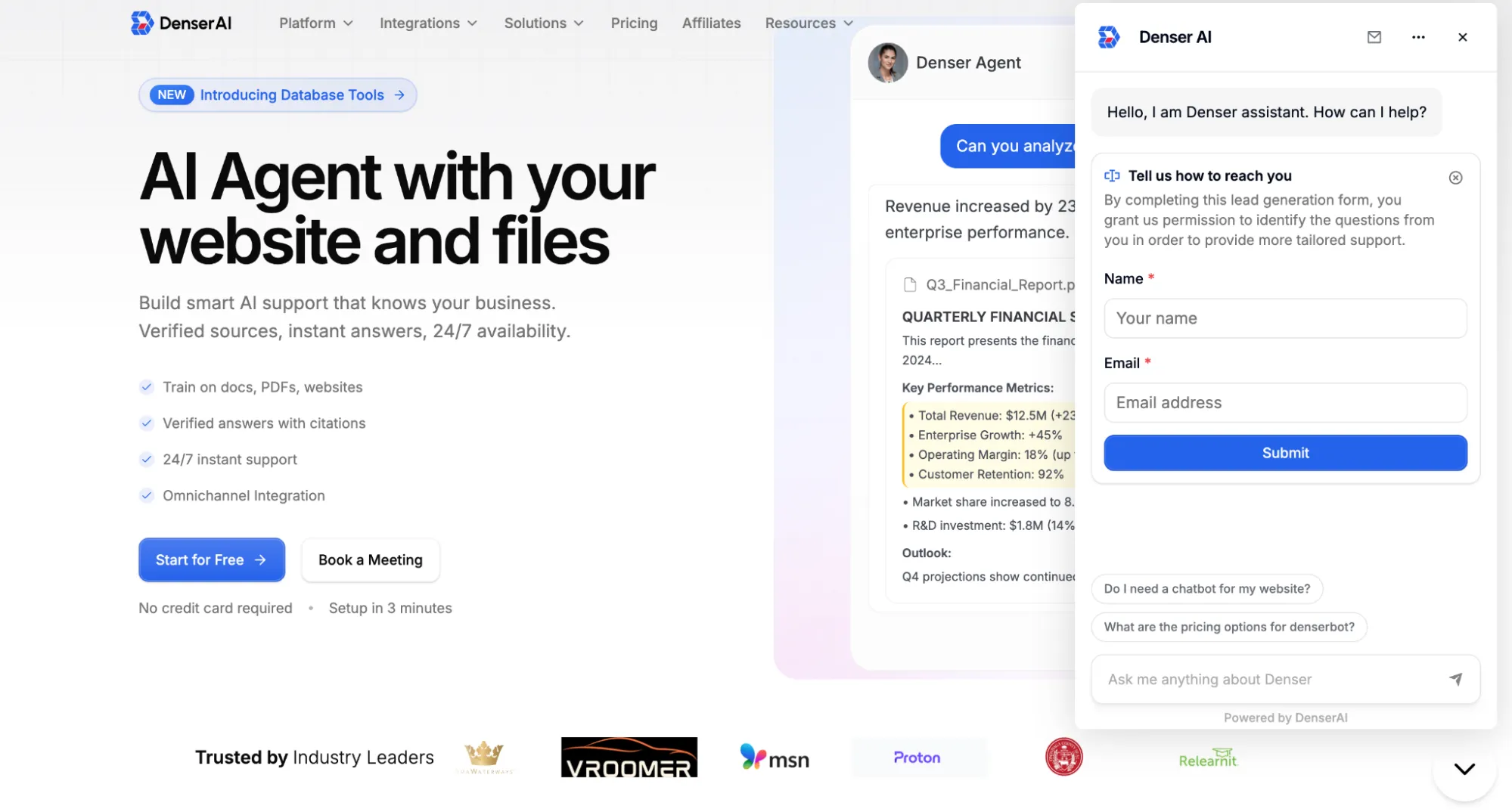
Founded 2023 – Silicon Valley startup, ~4 employees (bootstrapped)✅ Founder Zhiheng Huang – Former Amazon Kendra scientist, Amazon Q lead
70+ research papers – 14,000+ citations; BLSTM-CRF 5,400+ citations
N/A
N/A
R A G-as-a- Service Assessment
✅ TRUE RAG PLATFORM – Hybrid retrieval with open-source transparency
Data source flexibility – Good (documents, websites, Google Drive, SQL)LLM model options – Good (GPT-4o, Claude, multiple embeddings/rerankers)✅ Open-source transparency – Excellent (MIT-licensed core, published benchmarks)
⚠️ Compliance & certifications – Poor (no SOC 2, HIPAA, ISO 27001)
Best for – Technical teams prioritizing retrieval accuracy and validation
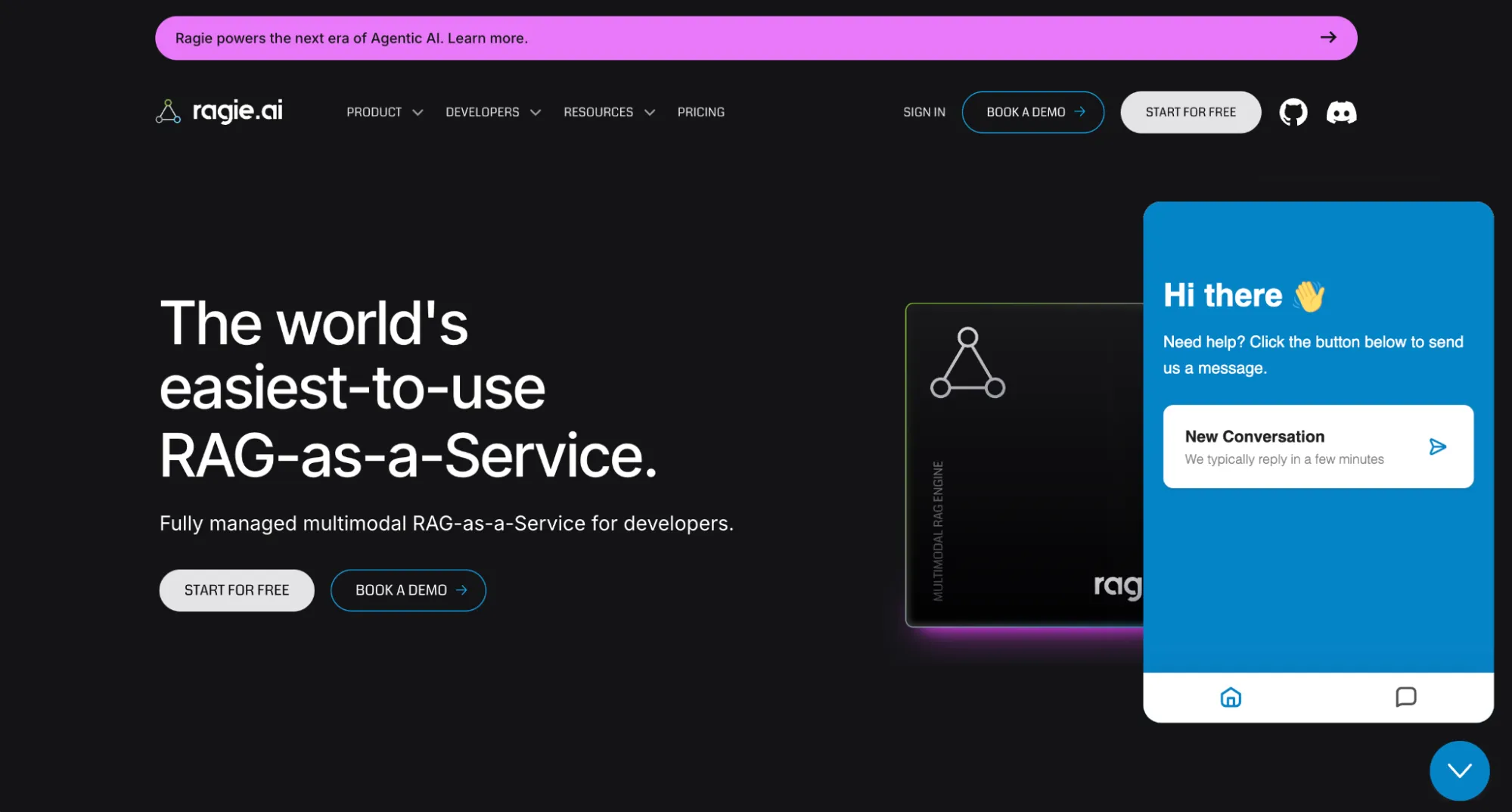
✅ Platform Type – TRUE RAG-AS-A-SERVICE API platform, August 2024, $5.5M seed✅ Core Mission – Developers build AI apps connected to data, outstanding RAG results✅ API-First Architecture – TypeScript/Python SDKs, reliable ingest, latest RAG techniques chunking/re-ranking✅ RAG Leadership – Summary Index, Entity Extraction, Agentic Retrieval, MCP Server✅ Managed Service – Free dev tier, pro for production, enterprise scale, no infrastructure⚠️ vs No-Code – No native widgets/Slack/WhatsApp/builders/analytics/lead capture, requires custom UI
Platform type – TRUE RAG-AS-A-SERVICE with managed infrastructureAPI-first – REST API, Python SDK, OpenAI compatibility, MCP ServerNo-code option – 2-minute wizard deployment for non-developersHybrid positioning – Serves both dev teams (APIs) and business users (no-code)Enterprise ready – SOC 2 Type II, GDPR, WCAG 2.0, flat-rate pricing
vs CustomGPT – Superior retrieval transparency, SQL chat; gaps in compliancevs Glean – Open-source vs proprietary, lower cost; lacks permissions-aware AI✅ Unique strengths – Hybrid retrieval benchmarks, founder pedigree, SQL chat
Target audience – Developers building AI chatbots without strict compliance
✅ Market Position – Developer-friendly RAG balancing no-code dashboard with API flexibility✅ Target Customers – SMBs needing quick chatbot, multi-channel teams, devs wanting flexibility✅ Key Competitors – Chatbase.co, Botsonic, SiteGPT, CustomGPT, SMB no-code chatbot platforms✅ Competitive Advantages – Hybrid search, SourceSync API, Functions, 95+ languages, ready connectors✅ Pricing Advantage – Mid-range $79-$259/month, straightforward tiers, smooth scaling, best value✅ Use Case Fit – Multi-channel support, simple REST API, webhook/Zapier CRM/ticket integration
Market position – Leading RAG platform balancing enterprise accuracy with no-code usability. Trusted by 6,000+ orgs including Adobe, MIT, Dropbox.Key differentiators – #1 benchmarked accuracy • 1,400+ formats • Full white-labeling included • Flat-rate pricingvs OpenAI – 10% lower hallucination, 13% higher accuracy, 34% fastervs Botsonic/Chatbase – More file formats, source citations, no hidden costsvs LangChain – Production-ready in 2 min vs weeks of development
✅ Hybrid retrieval – ES + Milvus vectors + XGBoost reranking
75.33 NDCG@10 on MTEB – vs 73.16 pure vector (3% improvement)96.50% Recall@20 – Anthropic benchmark vs 90.06% baselineSource citation – Visual PDF highlighting with page references98.3% accuracy claimed – 1.2-second average response time
✅ Hybrid Search – Semantic vector + keyword retrieval for comprehensive document matching✅ Re-Ranking Engine – Surfaces most relevant content from retrieved docs✅ Smart Partitioning – Intelligent chunking for optimized retrieval across large KBs✅ Citation Support – Answers grounded in sources with traceable transparency✅ 95+ Languages – Multilingual RAG without separate configurations for global bases⚠️ Retraining Workflow – Manual retraining unless automatic mode enabled, not real-time
GPT-4 + RAG – Outperforms OpenAI in independent benchmarksAnti-hallucination – Responses grounded in your content onlyAutomatic citations – Clickable source links in every responseSub-second latency – Optimized vector search and cachingScale to 300M words – No performance degradation at scale
Customer support chatbots – Website deployment with 24.8% conversion rate✅ SQL database chat (unique) – Natural language queries against major databases
Technical documentation – Hundreds of thousands of pages indexed under 5 minutesMultilingual support – 80+ languages with automatic detectionDeveloper-focused RAG – MIT-licensed denser-retriever for validation
✅ Customer Support – Self-service bots from help articles, reduce tickets up to 70%✅ Internal Assistants – Employee-facing AI with Google Drive, Notion, Confluence knowledge✅ Multi-Channel Support – Unified deployment: Slack, Telegram, WhatsApp, Messenger, Teams✅ Website Widgets – Real-time engagement, lead capture, instant question answering✅ CRM Integration – Functions create tickets, update CRM, trigger workflows from chat
Customer support – 24/7 AI handling common queries with citationsInternal knowledge – HR policies, onboarding, technical docsSales enablement – Product info, lead qualification, educationDocumentation – Help centers, FAQs with auto-crawlingE-commerce – Product recommendations, order assistance
Documentation – docs.denser.ai, retriever.denser.ai, GitHub READMEs⚠️ Documentation fragmented – Information scattered across multiple sites
~4-person team – Impacts enterprise support capacityOpen-source community – 261 GitHub stars, 30 forks, MIT license
✅ Email Support – 24-48hr standard response; faster for Enterprise tier✅ REST API Docs – Clear documentation with live examples covering all endpoints✅ Daily Digests – Automated performance summaries, conversation metrics without logins✅ Partner Program – Agency partnerships for consultants, implementers, resellers ecosystem⚠️ No Phone Support – Email-based only on standard plans; phone Enterprise-reserved
Documentation hub – Docs, tutorials, API referencesSupport channels – Email, in-app chat, dedicated managers (Premium+)Open-source – Python SDK, Postman, GitHub examplesCommunity – User community + 5,000 Zapier integrations
Limitations & Considerations
⚠️ No compliance certifications – Missing SOC 2, HIPAA, ISO 27001, GDPR
⚠️ Small team (~4 people) – Potential scaling constraints for enterprise
⚠️ Heavy Zapier dependency – No native Slack, Teams, CRM integrations
⚠️ Fragmented documentation – Scattered across docs, retriever docs, GitHub
⚠️ User feedback – "Plans restrictive, credit limits reached sooner"
⚠️ OpenAI/Claude Only – Cannot deploy Llama, Mistral, custom open-source models⚠️ Cloud-Only – No self-hosting, on-premise, air-gapped for regulated industries⚠️ Message Credit Caps – High-volume requires plan upgrades or Enterprise pricing⚠️ Crawler Limits – URL/sitemap scope limited by plan tier, large sites need higher⚠️ Emerging Platform – Newer vs established competitors, smaller integration ecosystem
Managed service – Less control over RAG pipeline vs build-your-ownModel selection – OpenAI + Anthropic only; no Cohere, AI21, open-sourceReal-time data – Requires re-indexing; not ideal for live inventory/pricesEnterprise features – Custom SSO only on Enterprise plan
AI agent capabilities – Process data for intelligent automation with customizationMulti-platform deployment – Launch across websites and messaging with single lineAdaptive learning – Chatbot learns over time using conversation analysis24/7 availability – Smart AI support with instant answers
✅ Agentic Retrieval – Multi-step engine: decomposes queries, self-checks, compiles cited answers✅ MCP Server – Context-Aware descriptions enable accurate agent tool routing decisions✅ Multi-Step Reasoning – Sequential retrieval operations with self-validation for complex queries✅ Summary Index – Avoid document affinity problems through intelligent summarization⚠️ No Built-In UI – API platform requires custom chat interfaces, not turnkey
Custom AI Agents – Autonomous GPT-4/Claude agents for business tasksMulti-Agent Systems – Specialized agents for support, sales, knowledgeMemory & Context – Persistent conversation history across sessionsTool Integration – Webhooks + 5,000 Zapier apps for automationContinuous Learning – Auto re-indexing without manual retraining
Conversational interface – Chat with customers in friendly mannerBusiness knowledge integration – Trained on documents, websites, Google DriveMulti-language support – 80+ languages with automatic detectionLead capture – Integrated forms (name, email, company, role)Human handoff – Triggers on complexity with Zendesk tickets
✅ RAG Architecture – Context-aware answers from your data only, reduces hallucinations significantly✅ Multi-Turn Context – Full session history, 95+ languages out of box✅ Lead Capture – Automatic lead capture with human escalation on demand✅ Fallback Handling – Human handoff and messages when bot confidence low
✅ #1 accuracy – Median 5/5 in independent benchmarks, 10% lower hallucination than OpenAI✅ Source citations – Every response includes clickable links to original documents✅ 93% resolution rate – Handles queries autonomously, reducing human workload✅ 92 languages – Native multilingual support without per-language config✅ Lead capture – Built-in email collection, custom forms, real-time notifications✅ Human handoff – Escalation with full conversation context preserved
Customization & Flexibility ( Behavior & Knowledge)
Behavior customization – Define name, tone, response preferencesFile support – PDF, DOCX, XLSX, PPTX, TXT, HTML, CSV, XMLWebsite crawling – Train bot by crawling URLs for knowledge baseEasy knowledge updates – Add documents, re-crawl, update without rebuildFlexible deployment – Web widget, dashboard, or API integration
✅ KB Updates – Hit "retrain," recrawl, upload files anytime in dashboard✅ Personas & Prompts – Set tone, style, quick prompts for behavior✅ Multiple Bots – Spin up bots per team/domain under one account✅ Functions Feature – Perform actions (tickets, CRM) directly in chat
Live content updates – Add/remove content with automatic re-indexingSystem prompts – Shape agent behavior and voice through instructionsMulti-agent support – Different bots for different teamsSmart defaults – No ML expertise required for custom behavior
N/A
✅ Email Support – 24-48hr response; faster for Enterprise customers✅ Submit Request Form – Feature requests, integration suggestions, custom needs✅ Partner Program – Agency partnerships for consultants, resellers, ecosystem growth✅ Live Demo – Interactive environment for evaluating platform before trial⚠️ No Phone Support – Email-based on standard plans; phone likely Enterprise-only
Comprehensive docs – Tutorials, cookbooks, API referencesEmail + in-app support – Under 24hr response timePremium support – Dedicated account managers for Premium/EnterpriseOpen-source SDK – Python SDK, Postman, GitHub examples5,000+ Zapier apps – CRMs, e-commerce, marketing integrations
Additional Considerations N/A
✅ Functions Feature – Bot performs real actions (tickets, CRM) in chat✅ Headless API – SourceSync gives devs fully customizable retrieval layer✅ Free Developer Tier – Test production-grade RAG infrastructure without commitment⚠️ Functions Complexity – Advanced workflows require technical setup, not fully no-code
Time-to-value – 2-minute deployment vs weeks with DIYAlways current – Auto-updates to latest GPT modelsProven scale – 6,000+ organizations, millions of queriesMulti-LLM – OpenAI + Claude reduces vendor lock-in
N/A
✅ OpenAI GPT-4o – "Accurate" mode for depth, comprehensive analysis, highest quality✅ GPT-4o-mini – "Fast" mode balances quality with rapid response times✅ Claude 3.5 Sonnet – Anthropic integration enables Claude model deployment in production✅ 2024 Models – Updated for latest including gpt-4o-mini long-context improvements⚠️ Limited Selection – Only GPT-4o/mini toggle; no multi-model routing by complexity
OpenAI – GPT-5.1 (Optimal/Smart), GPT-4 seriesAnthropic – Claude 4.5 Opus/Sonnet (Enterprise)Auto-routing – Intelligent model selection for cost/performanceManaged – No API keys or fine-tuning required
N/A
✅ AES-256 & TLS – Encryption at rest and in transit, zero training use✅ SOC 2 Type II – Certified for GDPR, HIPAA, CASA, CCPA compliance✅ Domain Allowlisting – Lock chatbots to approved domains for security✅ Audit Logging – Activity tracking for compliance monitoring, incident investigation⚠️ Cloud-Only – No on-premise for air-gapped/highly regulated requirements
SOC 2 Type II + GDPR – Regular third-party audits, full EU compliance256-bit AES encryption – Data at rest; SSL/TLS in transitSSO + 2FA + RBAC – Enterprise access controls with role-based permissionsData isolation – Never trains on customer dataDomain allowlisting – Restrict chatbot to approved domains
N/A
✅ Free Trial – 7 days full access, test everything risk-free✅ Growth – ~$79/month for small teams starting chatbot deployment✅ Pro/Scale – ~$259/month expanded capacity: messages, bots, crawls, uploads✅ Enterprise – Custom pricing for large deployments, dedicated support, SLAs✅ Transparent Pricing – Straightforward tiers without hidden fees or confusing per-feature charges
Standard: $99/mo – 10 chatbots, 60M words, 5K items/botPremium: $449/mo – 100 chatbots, 300M words, 20K items/botEnterprise: Custom – SSO, dedicated support, custom SLAs7-day free trial – Full Standard access, no chargesFlat-rate pricing – No per-query charges, no hidden costs









Join the Discussion
Loading comments...