Fini AI vs Lindy.ai

Make an informed decision with our comprehensive comparison. Discover which RAG solution perfectly fits your needs.

Priyansh Khodiyar's avatar
Priyansh KhodiyarDevRel at CustomGPT.ai

Fact checked and reviewed by Bill Cava

Published: 01.04.2025Updated: 25.04.2025

In this comprehensive guide, we compare Fini AI and Lindy.ai across various parameters including features, pricing, performance, and customer support to help you make the best decision for your business needs.

Overview

When choosing between Fini AI and Lindy.ai, understanding their unique strengths and architectural differences is crucial for making an informed decision. Both platforms serve the RAG (Retrieval-Augmented Generation) space but cater to different use cases and organizational needs.

Quick Decision Guide

  • Choose Fini AI if: you value industry-leading 97-98% accuracy claim backed by customer testimonials
  • Choose Lindy.ai if: you value exceptional no-code usability: 4.9/5 g2 rating, 30-second setup vs 15-60 min with zapier/make

About Fini AI

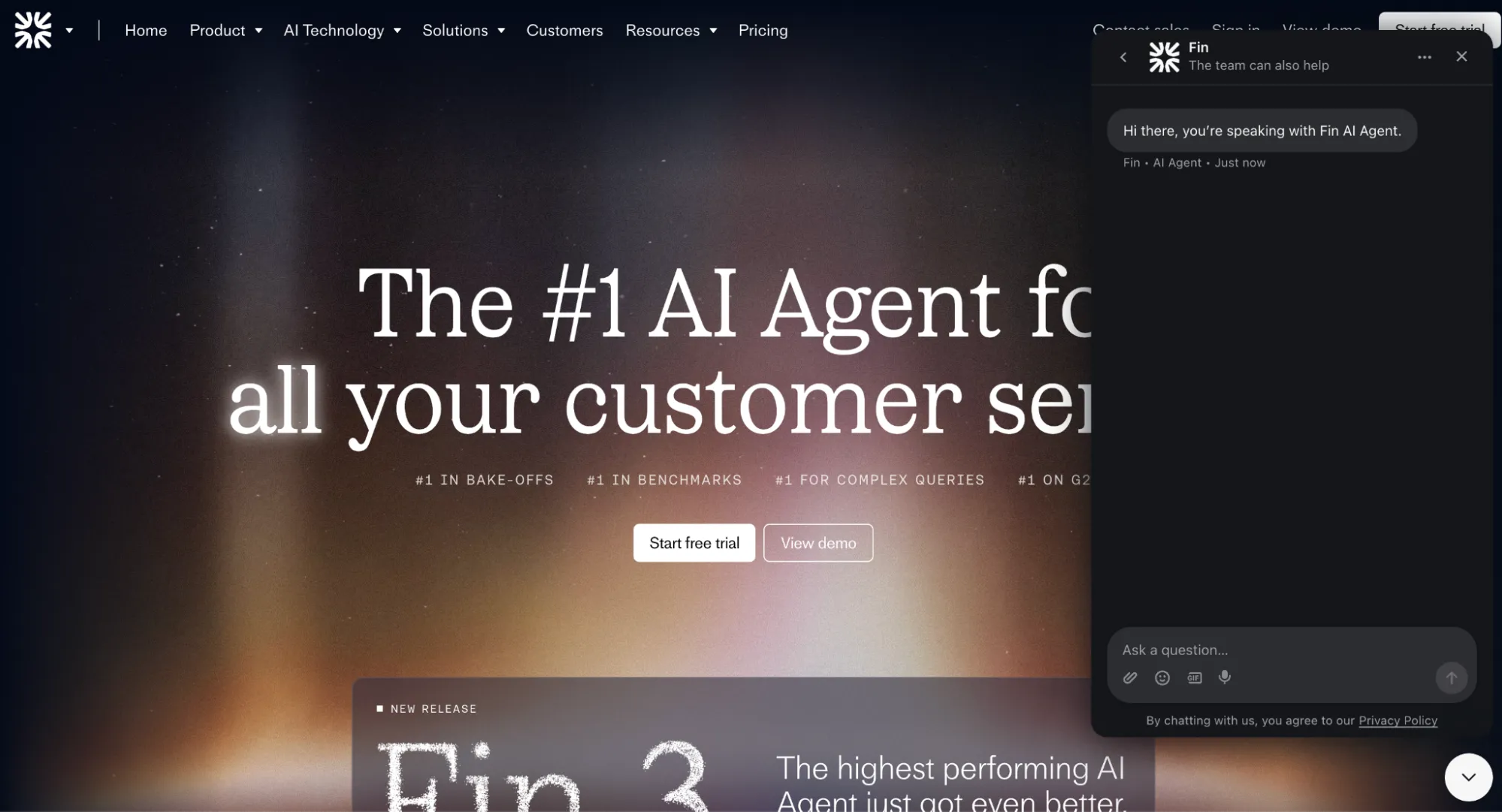
Fini AI Landing Page Screenshot

Fini AI is ragless ai agent for customer support automation. Fini AI is a next-generation customer support platform built on proprietary RAGless architecture, claiming 97-98% accuracy. Founded by ex-Uber engineers and backed by Y Combinator, Fini specializes in action-taking AI agents that execute refunds, update accounts, and verify identities—going beyond traditional RAG document retrieval. Founded in 2022, headquartered in Amsterdam, Netherlands, the platform has established itself as a reliable solution in the RAG space.

Overall Rating
91/100
Starting Price
Custom

About Lindy.ai

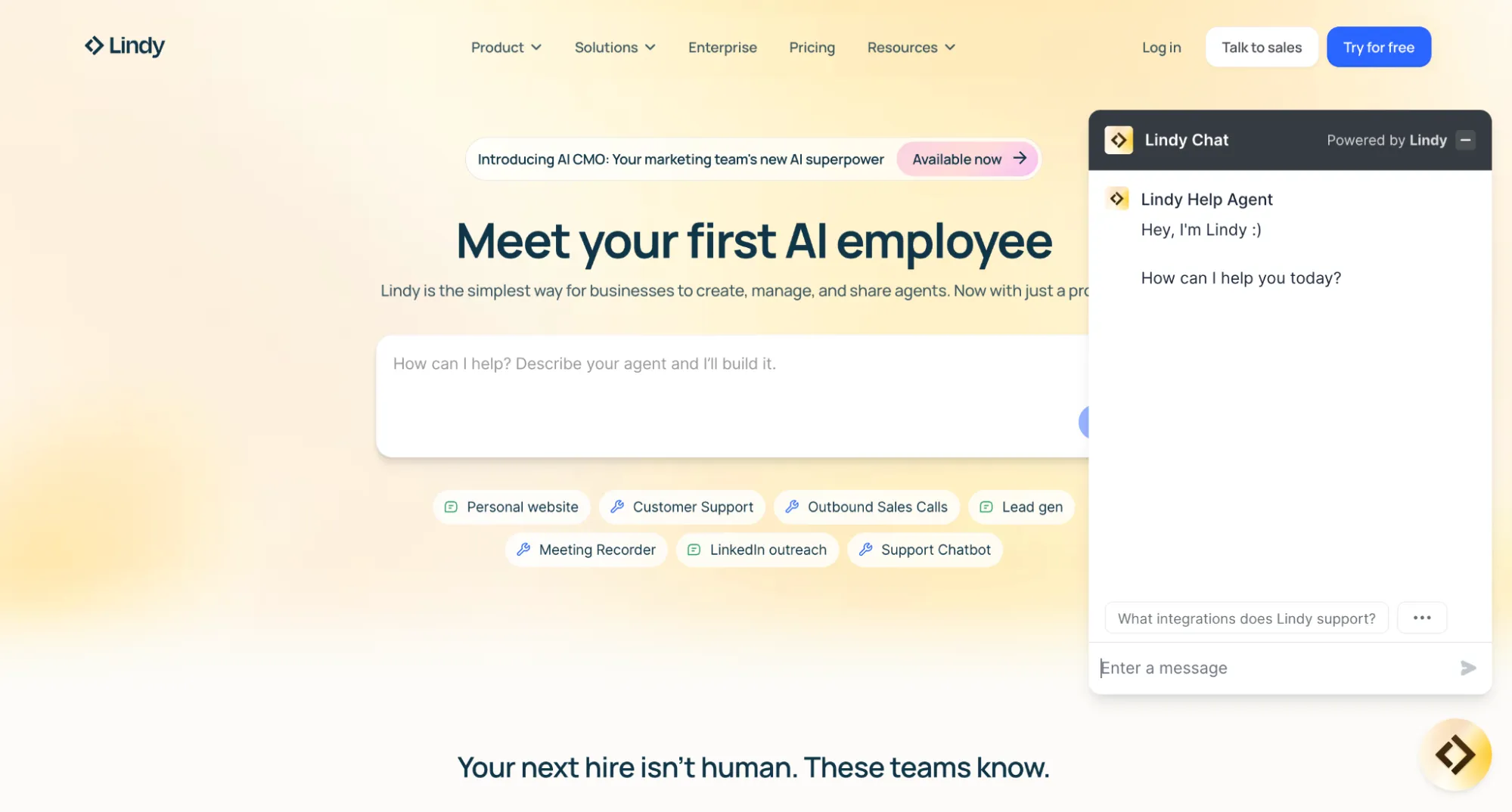
Lindy.ai Landing Page Screenshot

Lindy.ai is ai-powered personal assistant for workflow automation. No-code AI agent platform positioning as 'AI employees' for workflow automation, NOT developer-focused RAG platform. 5,000+ integrations via Pipedream, Claude Sonnet 4.5 default, $5.1M revenue (Oct 2024), 4.9/5 G2 rating. Critical limitation: No public API or SDKs available. Founded in 2023, headquartered in San Francisco, CA, USA, the platform has established itself as a reliable solution in the RAG space.

Overall Rating
81/100
Starting Price
Custom

Key Differences at a Glance

In terms of user ratings, Fini AI in overall satisfaction. From a cost perspective, pricing is comparable. The platforms also differ in their primary focus: AI Agent versus AI Assistant. These differences make each platform better suited for specific use cases and organizational requirements.

⚠️ What This Comparison Covers

We'll analyze features, pricing, performance benchmarks, security compliance, integration capabilities, and real-world use cases to help you determine which platform best fits your organization's needs. All data is independently verified from official documentation and third-party review platforms.

Detailed Feature Comparison

logo of finai
Fini AI
logo of lindy
Lindy.ai
logo of customGPT logo
CustomGPTRECOMMENDED
Data Ingestion & Knowledge Sources
  • Supports PDF, Word/Docs, plain text, JSON, YAML, and CSV files
  • Full website crawling for web links
  • Note: YouTube transcript ingestion NOT supported - LLMs "not great at interpreting images or videos directly"
  • Cloud integrations: Native connections to Google Drive, Notion, Confluence, and Guru
  • Zendesk and Intercom serve as both knowledge sources (historical tickets) and deployment channels
  • Note: Dropbox integration not available
  • Chat2KB feature (Growth/Enterprise): Auto-extracts Q&A pairs from conversations, emails, tickets
  • Real-time knowledge refresh - updated content used immediately
  • Intelligent conflict resolution automatically removes contradictory information
  • Scaling: Starter 50 docs → Growth 1,000 docs → Enterprise unlimited
  • Document Formats: PDF, DOCX, XLSX, CSV, TXT, HTML with 20MB per-file size limit
  • Audio Support: Full audio file support with automatic transcription included in workflow
  • YouTube Integration: Dedicated action for YouTube transcript extraction and processing
  • Website Crawling: Single page or full-site crawling with automatic link following capability
  • Cloud Integrations: Google Drive (including shared drives), OneDrive, Dropbox, Notion, SharePoint, Intercom, Freshdesk with automatic syncing
  • Automatic Refresh: Knowledge bases refresh every 24 hours automatically with manual 'Resync Knowledge Base' actions for immediate updates
  • Storage Limits: 1M characters (Free $0), 20M characters (Pro $49.99), 50M characters (Business $199.99+), custom (Enterprise)
  • Search Constraint: When search fuzziness drops below 100, searches limited to first 1,500 files - meaningful constraint for large enterprise deployments
  • Marketing vs Reality: Documentation claims 'no limit to data you can feed' but practical constraints exist around character limits and file counts
  • Lets you ingest more than 1,400 file formats—PDF, DOCX, TXT, Markdown, HTML, and many more—via simple drag-and-drop or API.
  • Crawls entire sites through sitemaps and URLs, automatically indexing public help-desk articles, FAQs, and docs.
  • Turns multimedia into text on the fly: YouTube videos, podcasts, and other media are auto-transcribed with built-in OCR and speech-to-text. View Transcription Guide
  • Connects to Google Drive, SharePoint, Notion, Confluence, HubSpot, and more through API connectors or Zapier. See Zapier Connectors
  • Supports both manual uploads and auto-sync retraining, so your knowledge base always stays up to date.
Integrations & Channels
  • 20+ native helpdesk integrations (no Zapier dependency)
  • Zendesk: Native marketplace app with full ticket management, auto-tagging, email/chat/social
  • Intercom: Native with Fin compatibility, works within ticketing backend
  • Salesforce Service Cloud: CRM sync, case management
  • Front: AI auto-replies, trains on conversation history
  • Gorgias: Email-to-chat automation, internal note generation
  • HubSpot: CRM integration, customer context sync
  • Also: LiveChat, Freshdesk, Help Scout, Kustomer, Gladly, Re:amaze
  • Omnichannel: Slack, Discord, Microsoft Teams for internal/community support
  • WhatsApp, Messenger, Instagram via Zendesk/Intercom routes (not native)
  • Note: Telegram not explicitly supported
  • Website embedding: Fini Widget (chat bubble), Fini Search Bar, Fini Standalone (full-page)
  • Chrome Extension: "Answer with Fini" for agent productivity across Gmail, Intercom, Zendesk
  • Note: Zapier integration absent - focuses on native integrations
  • Webhooks marked "Coming Soon" (Zendesk-specific available now)
  • Conservative Marketing: Platform claims '200+ integrations' but actually offers 5,000+ apps via Pipedream Connect partnership
  • Pre-Built Actions: 2,500+ ready-to-use actions across Pipedream integration ecosystem
  • Messaging Platforms: Slack (full integration with triggers/actions), WhatsApp (Personal/Business APIs with templates), Microsoft Teams, Telegram, Discord, Twilio SMS
  • CRM Systems: Salesforce (24 actions, 8 triggers with SOQL/SOSL queries), HubSpot (deep integration for contacts/tickets/deals), Pipedrive, Zoho CRM
  • Productivity Tools: Notion (16 actions, 7 triggers), Airtable (full CRUD with webhooks), Google Workspace (Gmail, Calendar, Docs, Sheets, Drive complete integration)
  • Embedding Options: Popup chat widgets, iFrame embeds, unique public links with domain restriction capabilities
  • Platform Deployment: Specific instructions available for Webflow, WordPress, Squarespace, Wix, Framer implementations
  • Webhook Support: Inbound webhooks trigger workflows via POST requests with bearer token authentication
  • HTTP Actions: Call external APIs from within workflows for custom integration needs
  • Embeds easily—a lightweight script or iframe drops the chat widget into any website or mobile app.
  • Offers ready-made hooks for Slack, Zendesk, Confluence, YouTube, Sharepoint, 100+ more. Explore API Integrations
  • Connects with 5,000+ apps via Zapier and webhooks to automate your workflows.
  • Supports secure deployments with domain allowlisting and a ChatGPT Plugin for private use cases.
  • Hosted CustomGPT.ai offers hosted MCP Server with support for Claude Web, Claude Desktop, Cursor, ChatGPT, Windsurf, Trae, etc. Read more here.
  • Supports OpenAI API Endpoint compatibility. Read more here.
Core Chatbot Features
  • Sophie AI Agent: 5-layer supervised execution framework
  • Layer 1 - Safety Guardrails: 40+ filters, PII masking (SSN, credit cards, passports), brand tone compliance
  • Layer 2 - LLM Supervisor: Core orchestration brain that determines resolution paths
  • Layer 3 - Skill Modules: Deterministic modules for Search, Write, Follow Process, Take Action
  • Layer 4 - Live Feedback: Auto-validates outputs, detects errors, learns from corrections
  • Layer 5 - Traceability: Full audit trail of decisions and reasoning
  • 100+ language support with locale-based routing and real-time translation
  • Human handoff preserves full conversation context
  • Configurable escalation triggers: keywords, sentiment analysis, topic-based rules, confidence thresholds
  • Conversation history with sentiment tracking and export (CSV, JSON)
  • AI Categorization auto-tags conversations by topic with intent classification
  • Chatbot vs Agent Philosophy: Lindy differentiates through autonomous agent operation rather than traditional chatbot conversation - emphasizes task execution over conversational interaction
  • Multi-Lingual Voice Agents (Gaia): 30+ language support for voice agents, transcription covers 50+ languages, text agents operate in 85+ languages with automatic detection - no manual language configuration required
  • Lead Capture Excellence: Real-time qualification with email/phone validation, firmographic enrichment, UTM attribution tracking, automatic CRM syncing - claims up to 70% higher conversion vs traditional forms
  • Human Handoff Logic: Configurable escalation conditions with phone agents able to transfer calls directly to human team members with full conversation context and history preservation
  • Conversation Memory System: Tracks conversation history within and across sessions through memory feature - context persists through workflow execution vs vector similarity search in traditional RAG systems
  • Analytics & Performance Tracking: Qualification rates, response times, completion rates, handling times monitored comprehensively with weekly automated email summaries of task usage and agent performance
  • Agent Evals Feature: Dedicated benchmarking system for measuring agent performance against quality standards and preventing regression over time with automated quality monitoring
  • Workflow-Centric Design: Emphasizes autonomous task execution over conversational chatbot patterns - structured workflows with 'agents on rails' philosophy constraining LLM behavior through predefined steps
  • Hallucination Prevention: Architectural constraints vs retrieval optimization - 'poor man's RLHF' with human confirmation before action execution prevents costly mistakes
  • Learning Integration: Corrections from user feedback embedded in vector storage for future retrieval improvement - system learns from mistakes through Memory Snippets saving preferences like scheduling constraints
  • Reduces hallucinations by grounding replies in your data and adding source citations for transparency. Benchmark Details
  • Handles multi-turn, context-aware chats with persistent history and solid conversation management.
  • Speaks 90+ languages, making global rollouts straightforward.
  • Includes extras like lead capture (email collection) and smooth handoff to a human when needed.
Customization & Branding
  • GUI-based chat widget editor (full CSS access not documented)
  • Options: Logo upload, brand color selection, title/description customization
  • Welcome messages, pre-defined FAQ questions, reference link visibility toggles
  • Streaming response toggles
  • White-labeling: Custom domain via CNAME, full logo replacement, agent identity renaming
  • 100+ tone options: Friendly, Professional, TaxAssistant, Finance advisor, Casual, Super polite
  • Domain restrictions: Specific domain lock, wildcard (*.domain.com), or unrestricted
  • Flows (Mini Specialized Agents): No-code specialized workflows for specific tasks
  • User context capture from backend systems
  • Dynamic routing based on user category (VIP, first-time, veteran)
  • Metadata-driven personalization: plan type, churn risk, subscription tier, purchase history
  • Widget Customization: Display name (e.g., 'Technical Support Assistant'), accent color for brand alignment, logo/icon upload for expanded/collapsed states
  • Messaging Customization: Custom greeting and callout messages for initial engagement prompts
  • Domain Restrictions: Specify allowed deployment domains for access control and security
  • White-Labeling Uncertainty: Documentation doesn't explicitly confirm complete Lindy branding removal - unclear if available outside enterprise agreements
  • No Deep CSS Control: Limited to essential branding elements vs full CSS customization or brandless deployments on standard plans
  • Persona Customization: Agent-level prompts define personality, tone, and expertise areas
  • Settings Context: Persists across all task runs for consistent agent behavior
  • Per-Run Context: Allows dynamic customization per execution for adaptive responses
  • Memory Snippets: Learning capability saves preferences like 'Don't schedule meetings before 11am' across all sessions
  • RBAC Controls: Admins can lock configurations and set credit allocation limits per user or team
  • Fully white-labels the widget—colors, logos, icons, CSS, everything can match your brand. White-label Options
  • Provides a no-code dashboard to set welcome messages, bot names, and visual themes.
  • Lets you shape the AI’s persona and tone using pre-prompts and system instructions.
  • Uses domain allowlisting to ensure the chatbot appears only on approved sites.
L L M Model Options
  • Starter (Free): GPT-4o mini only
  • Growth: GPT-4o mini + Claude (version unspecified)
  • Enterprise: GPT-4o + Multi-layer models
  • Multi-layer model architecture (Enterprise): Automatic routing to best-suited LLM per query part
  • Complex queries decomposed into sub-queries with specialized agents per part
  • Maximizes accuracy while controlling costs through intelligent routing
  • Note: No user-controlled runtime model switching - plan-based selection only
  • RAGless architecture: Query-writing AI, not traditional vector search
  • "No embeddings, no hallucinations" - precise source attribution
  • Bypasses retrieval at inference time for deterministic results
  • Anthropic Claude: Sonnet 4.5 (default - 'almost no one overrides' per Anthropic case study), Sonnet 3.7, Haiku 3.5
  • OpenAI Models: GPT-5, GPT-5 Codex, GPT-4o, GPT-4 Turbo, GPT-4.1 family, o3, o1 reasoning models
  • Google Gemini: Gemini 2.5 Pro, Gemini 2.5 Flash, Gemini 2.0 Flash for varied performance/cost trade-offs
  • Default Selection Rationale: Claude Sonnet 4.5 excels at 'navigating ambiguity in large context windows' and handling 'deeply nested data structures requiring nuanced reasoning'
  • Business Impact: Lindy achieved 10x customer growth after implementing Claude as default LLM
  • Per-Action Granularity: Users manually select models per workflow step through visual builder interface
  • Credit Impact: Model selection affects credit consumption - larger models (Sonnet 4.5) consume more credits than smaller models (Haiku 3.5)
  • No Automatic Routing: No dynamic model switching or automatic model selection based on query complexity
  • Manual Configuration: Each workflow action requires explicit model selection vs intelligent automatic routing
  • Taps into top models—OpenAI’s GPT-5.1 series, GPT-4 series, and even Anthropic’s Claude for enterprise needs (4.5 opus and sonnet, etc ).
  • Automatically balances cost and performance by picking the right model for each request. Model Selection Details
  • Uses proprietary prompt engineering and retrieval tweaks to return high-quality, citation-backed answers.
  • Handles all model management behind the scenes—no extra API keys or fine-tuning steps for you.
Developer Experience ( A P I & S D Ks)
  • Base URL: https://api-prod.usefini.com
  • Authentication: Bearer Token via API key (generated per bot in Dashboard)
  • Current Version: v2 (no documented versioning policy)
  • Core Endpoints: /v2/bots/ask-question (Q&A), /v2/bots/links/* (knowledge management)
  • Store Feedback, Get Chat History, Knowledge Items CRUD
  • Supports: messageHistory, instruction, stream, temperature, user_attributes, functions (JSON Schema)
  • Note: NO official SDKs for Python, JavaScript, or any language
  • Documentation provides basic Python (requests) and Node.js examples only
  • Documentation quality:
  • - Completeness: 3/5 (covers main endpoints, lacks depth)
  • - Code examples: 4/5 (good Python/Node.js examples)
  • - Error handling: 2/5 (no error codes documented)
  • - Rate limits: 1/5 (not documented)
  • Paramount: Open-source tool (github.com/ask-fini/paramount) for agent accuracy measurement
  • CRITICAL LIMITATION: Lindy deliberately prioritizes no-code accessibility over developer tooling - most significant gap for RAG platform comparison
  • NO Public REST API: Cannot manage agents, create workflows, or query knowledge base programmatically
  • NO GraphQL Endpoint: No alternative API architecture available for data querying
  • NO Official SDKs: No Python, JavaScript, Ruby, Go, or any other language SDK exists
  • NO OpenAPI/Swagger: No machine-readable API specification for automated client generation
  • NO CLI Tools: No command-line interface for automation or scripting
  • NO Developer Console: No API sandbox or testing environment available
  • Available Workarounds: Inbound webhooks (external systems trigger workflows via POST with bearer token), HTTP Request actions (call external APIs from workflows), Code Action (run Python/JavaScript in E2B sandboxes ~150ms startup), Callback URLs (bidirectional webhook communication)
  • Minimal GitHub Presence: github.com/lindy-ai contains only 3 repositories - build caching utility, ML engineer hiring challenge, no public SDKs or integration libraries
  • Documentation Quality: User-focused Lindy Academy with step-by-step tutorials, but NO API reference, code samples, or technical architecture documentation
  • Developer Path: For programmatic RAG control, custom retrieval pipelines, or embedding integration - Lindy offers no viable path forward
  • Ships a well-documented REST API for creating agents, managing projects, ingesting data, and querying chat. API Documentation
  • Offers open-source SDKs—like the Python customgpt-client—plus Postman collections to speed integration. Open-Source SDK
  • Backs you up with cookbooks, code samples, and step-by-step guides for every skill level.
Performance & Accuracy
  • 97-98% accuracy claim across marketing materials and customer testimonials
  • Customer results:
  • - Column Tax: "Sophie's accurate in over 97% of cases, solves 85%+ of queries"
  • - Qogita: "Maggie's accurate in over 90% of cases"
  • - Qogita case study: 88% ticket resolution, 121% SLA improvement
  • - Column Tax: 94% accuracy, 98% queries resolved
  • Hallucination prevention via 6 mechanisms:
  • 1. RAGless architecture eliminates "black box retrieval"
  • 2. LLM filtering removes irrelevant/outdated knowledge pre-response
  • 3. Confidence-based gating escalates to humans when uncertain
  • 4. Every answer "LLM-reviewed—not just LLM-generated"
  • 5. Guardrails layer provides proactive safety checks
  • 6. Deterministic Skill Modules ensure business logic consistency
  • Accuracy measurement tools:
  • - Sophia AI Evaluator (Growth/Enterprise): Auto-evaluates correctness, tone, completeness
  • - Paramount: Open-source Python tool for tracking accuracy improvements
  • - CXACT Benchmarking Suite: Proprietary framework (whitepaper)
  • General claim: 80% of support tickets resolved end-to-end without human intervention
  • Hybrid Search: Semantic + keyword search with configurable 'Search Fuzziness' (0-100 scale) - at 100 (pure semantic) no file limit, lower values add keyword matching but limit to 1,500 files
  • Default Results: 4 search results returned (adjustable up to 10 maximum)
  • Vector Database: NOT disclosed - no documentation mentions Pinecone, Chroma, Qdrant, or any specific vector store
  • Embedding Models: Undocumented - no information about which embedding models power semantic search
  • Hallucination Reduction: Architectural constraints vs retrieval optimization - 'poor man's RLHF' with human confirmation before action execution
  • Learning Integration: Corrections from feedback embedded in vector storage for future retrieval improvement
  • Structured Workflows: 'Agents on rails' philosophy constrains LLM behavior through predefined workflow steps
  • NO Published Benchmarks: No RAG accuracy metrics, retrieval precision/recall scores, or latency measurements available
  • Black Box Implementation: RAG treated as opaque system - no transparency into vector similarity scores, embedding quality, or retrieval mechanisms
  • Enterprise Concern: Opacity may concern organizations requiring transparency into AI decision-making for compliance or auditing
  • Delivers sub-second replies with an optimized pipeline—efficient vector search, smart chunking, and caching.
  • Independent tests rate median answer accuracy at 5/5—outpacing many alternatives. Benchmark Results
  • Always cites sources so users can verify facts on the spot.
  • Maintains speed and accuracy even for massive knowledge bases with tens of millions of words.
Customization & Flexibility ( Behavior & Knowledge)
  • Guidelines system: Define tone, preferred phrases, forbidden terminology, formatting rules
  • Response length options: Short, Medium, Long
  • Welcome messages and starter questions customizable
  • Bot duplication for creating similar agents quickly
  • Multiple bots per tier: Starter 2 bots → Growth unlimited → Enterprise unlimited
  • Real-time knowledge updates - content used immediately after ingestion
  • Chat2KB auto-learning eliminates duplicate responses with MECE classification
  • Flows enable specialized workflows per customer segment or task type
  • User context from backend systems enables dynamic personalization
  • Behavior Customization Layers: Settings Context (agent-level configuration persisting across all task runs), Per-Run Context (dynamic customization per execution for adaptive responses), Memory Snippets (learning preferences saved across sessions)
  • Workflow Flexibility: Visual builder allows business users to modify agent logic without coding - drag-and-drop interface for conversation flows, conditional logic, API integrations, data transformations
  • Agent Personality Configuration: Configurable tone, expertise areas, communication style through prompt configuration - define professional vs casual voice, technical depth, response verbosity
  • Knowledge Base Management: Automatic refresh every 24 hours for all connected cloud sources (Google Drive, OneDrive, Dropbox, Notion, SharePoint, Intercom, Freshdesk) with manual 'Resync Knowledge Base' actions for immediate updates
  • Search Fuzziness Controls: Configurable slider (0-100 scale) balancing semantic vs keyword search - at 100 (pure semantic) no file limit, lower values add keyword matching but constrain to 1,500 files
  • Retrieval Configuration: Default 4 search results returned (adjustable up to 10 maximum) with hybrid search combining semantic similarity and keyword matching for precision
  • RBAC Controls: Admins can lock configurations and set credit allocation limits per user or team - prevents unauthorized changes and controls spending across organization
  • CRITICAL LIMITATION - No Embedding Control: Cannot customize embedding models, vector similarity thresholds, or retrieval parameters - black-box RAG implementation prevents optimization of retrieval pipeline
  • Developer Flexibility Gap: No programmatic access to knowledge base management, no API for document upload or retrieval configuration, no ability to tune vector search parameters or chunking strategies
  • Lets you add, remove, or tweak content on the fly—automatic re-indexing keeps everything current.
  • Shapes agent behavior through system prompts and sample Q&A, ensuring a consistent voice and focus. Learn How to Update Sources
  • Supports multiple agents per account, so different teams can have their own bots.
  • Balances hands-on control with smart defaults—no deep ML expertise required to get tailored behavior.
Pricing & Scalability
  • Note: Pricing NOT publicly disclosed - requires sales contact
  • Starter (Free): GPT-4o mini, ~50 questions/month, ~50 docs, ~5 users, 2 bots, SSO only
  • Growth: Estimated $999/mo (3rd party) - GPT-4o mini/Claude, 1K docs, unlimited users
  • Growth includes: SOC 2, GDPR, ISO 27001, RBAC, Chat2KB, Sophia AI Evaluator
  • Enterprise: Custom pricing - GPT-4o, Multi-layer models, unlimited docs
  • Enterprise adds: Dedicated AI instance, AI Actions, full compliance, white-glove onboarding
  • Cost model: Cost-per-resolution rather than per-seat pricing
  • Zero-Pay Guarantee: Only pay if >80% accuracy thresholds met
  • Note: Third-party mentions: "$0.10/interaction" (SaaSworthy) - unverified
  • Support tiers: White-glove onboarding, 60-day implementation program
  • Weekly alignment calls during implementation
  • Enterprise: Dedicated AI engineers, customer success managers, 24/7 Slack channels
  • Free Plan: $0/month, 400 credits, 1M character knowledge base, basic automations with 100+ integrations
  • Pro Plan: $49.99/month, 5,000 credits, 20M character knowledge base, phone calls, full integrations, Lindy branding on embed
  • Business Plans: $199.99-$299.99/month, 20,000-30,000 credits, 50M character knowledge base, custom branding, 30+ languages, unlimited calls
  • Enterprise Plan: Custom pricing with SSO, SCIM provisioning, dedicated support, custom training
  • Additional Costs: Phone calls $0.19/minute (GPT-4o), team members $19.99/member/month (Pro/Business), custom automation building $500 one-time, credits $19-$1,199/month (10,000-1,000,000 credits)
  • Credit Consumption: Varies by model choice and complexity - larger models (Claude Sonnet 4.5) consume more credits than smaller models
  • Primary User Complaint: Unpredictable costs - credit depletion speed consistently frustrating in reviews, particularly for complex workflows with premium actions
  • Pricing Transparency Issue: Credit system creates forecasting difficulty vs fixed per-seat or usage-based pricing
  • Scalability: Character limits constrain large knowledge bases - 50M character cap on Business tier may limit enterprise deployments
  • Runs on straightforward subscriptions: Standard (~$99/mo), Premium (~$449/mo), and customizable Enterprise plans.
  • Gives generous limits—Standard covers up to 60 million words per bot, Premium up to 300 million—all at flat monthly rates. View Pricing
  • Handles scaling for you: the managed cloud infra auto-scales with demand, keeping things fast and available.
Security & Privacy
  • Confirmed certifications:
  • - SOC 2 Type II: Certified (zero audit findings per Sprinto case study)
  • - ISO 27001: Certified
  • - ISO 42001: Certified (AI governance standard - rare achievement)
  • - GDPR: Compliant with full data subject rights, EU data residency option
  • Note: HIPAA status conflicting: Marketing claims compliance, but case study says "next up"
  • PCI DSS: Claimed but not on official pricing page security section
  • Data privacy guarantees:
  • - "We do not train on your data" policy with formal DPA with OpenAI
  • - PII Shield Layer: Auto-masks SSN, passport, driver's license, taxpayer ID, credit cards
  • - AES-256 encryption at rest, TLS 1.3 in transit
  • - EU and US data residency options
  • - Dedicated AI instance option (Enterprise only)
  • Access controls: RBAC (Growth/Enterprise), SSO (all tiers), audit logging
  • Note: IP whitelisting not documented
  • SOC 2 Type II: Certified by Johanson Group audit - independently validated security controls
  • HIPAA Compliant: Business Associate Agreement (BAA) available for healthcare deployments
  • GDPR Compliant: EU data protection and privacy rights compliance
  • PIPEDA Compliant: Canadian Personal Information Protection and Electronic Documents Act
  • CCPA Compliant: California Consumer Privacy Act compliance
  • No AI Training: Customer data NEVER used for AI model training - explicitly stated in privacy policy
  • Encryption: AES-256 at rest, TLS 1.2+ in transit for comprehensive data protection
  • Infrastructure: Google Cloud Platform hosting with multi-zone redundancy for high availability
  • Backups: Daily encrypted backups with secure key management
  • Access Controls: RBAC (Role-Based Access Control), MFA (Multi-Factor Authentication), Enterprise SSO via existing identity providers, SCIM provisioning for automated user lifecycle
  • Audit Logs: Track agent activity, data access, configuration changes - available on Business/Enterprise plans
  • Data Residency Limitation: US-based only - no explicit EU data residency option documented (enterprise inquiries required for region-specific deployments)
  • No ISO 27001: Information security management certification not documented
  • Protects data in transit with SSL/TLS and at rest with 256-bit AES encryption.
  • Holds SOC 2 Type II certification and complies with GDPR, so your data stays isolated and private. Security Certifications
  • Offers fine-grained access controls—RBAC, two-factor auth, and SSO integration—so only the right people get in.
Observability & Monitoring
  • Fini 2.0 Observability (January 2025 release):
  • - AI resolution rate and fallback frequency
  • - Message quality and confidence scores per response
  • - CSAT trends over time
  • - Agent productivity metrics (resolution time, escalation frequency)
  • - Category-level performance breakdowns
  • - Step-level drop-off analysis
  • Chat History dashboard (February 2025):
  • - Centralized view: source, question, answer, thread, categories, ticket ID, knowledge source
  • - Filtering by channel, intent, escalation status, resolution rate, KB tags
  • - Keyword/phrase search across historical conversations
  • - CSV and JSON export for Looker, Tableau
  • - Real-time updates as conversations occur
  • AI Categorization: Auto-tags by topic (returns, login, pricing, shipping)
  • Knowledge gap analysis: Identifies unanswerable questions with automated content improvement suggestions
  • Bulk-flagging of problematic conversations
  • Workflow Performance: Agent action visibility showing connected apps, recent runs, outcomes for comprehensive monitoring
  • Error Tracking: Built-in retry mechanisms with detailed failure monitoring and debugging
  • Trigger History: Task completion logs track every workflow execution and result
  • Qualification Metrics: Lead conversion rates and response time tracking for sales/marketing workflows
  • Completion Rates: Workflow success measurement and handling time analysis
  • Weekly Digests: Automated email summaries of task usage delivered to administrators
  • Agent Evals: Benchmarking feature against quality standards with regression prevention
  • Log Retention: 1 day (Free tier - severely constrains troubleshooting) to 30+ days (Enterprise tier)
  • Audit Logs: User actions, data access, configuration changes tracked on Business/Enterprise plans
  • Export Capabilities: Available but SIEM integration specifics require sales confirmation
  • No RAG-Specific Metrics: Cannot track retrieval precision, recall, embedding quality, or vector similarity scores
  • Workflow-Centric: Focuses on output quality rather than retrieval precision - notable gap for RAG-specific monitoring vs platforms like LangSmith or Arize
  • Comes with a real-time analytics dashboard tracking query volumes, token usage, and indexing status.
  • Lets you export logs and metrics via API to plug into third-party monitoring or BI tools. Analytics API
  • Provides detailed insights for troubleshooting and ongoing optimization.
Support & Ecosystem
  • Founding team: Ex-Uber engineers (CEO led 4M+ interactions/month at Uber)
  • Backed by: Y Combinator Summer 2022 ($125K seed), Matrix Partners
  • Angel investors from Uber, Intercom, Softbank, McKinsey, Twitter
  • Company metrics: ~$2.5M annual revenue, 14 employees, 500K+ tickets/month
  • Customers: HackerRank, Qogita, Column Tax, Atlas, TrainingPeaks, Bitdefender, Duolingo, Meesho
  • Implementation program: 60-day structured program (Discovery → Deployment → Optimization → Production)
  • White-glove onboarding with dedicated implementation managers
  • Enterprise: Dedicated AI engineers and customer success managers
  • Dedicated Slack channels for 24/7 support
  • Product roadmap: Upcoming SDKs, multi-agent systems with collaboration/self-repair
  • Email Support: support@lindy.ai (general), security@lindy.ai (security), privacy@lindy.ai (privacy concerns)
  • Slack Community: Peer support and knowledge sharing among Lindy users
  • Community Forum: community.lindy.ai for discussions and troubleshooting
  • Enterprise Support: Dedicated solutions engineer, custom SLAs, quarterly business reviews, phone access
  • Documentation: Lindy Academy with step-by-step tutorials for business users
  • Pre-Built Templates: 100+ templates covering common workflow automation scenarios
  • Changelog: Regular feature update tracking for transparency
  • Video Tutorials: Including CEO-led walkthroughs explaining platform capabilities
  • Support Quality Concerns: User reviews note inconsistent responsiveness on lower tiers - common Trustpilot criticism
  • Developer Documentation Gap: No API reference, code samples, or technical architecture documentation available
  • User-Focused Resources: Strong for business user adoption, weak for developer integration needs
  • Supplies rich docs, tutorials, cookbooks, and FAQs to get you started fast. Developer Docs
  • Offers quick email and in-app chat support—Premium and Enterprise plans add dedicated managers and faster SLAs. Enterprise Solutions
  • Benefits from an active user community plus integrations through Zapier and GitHub resources.
Additional Considerations
  • RAGless positioning: Fini criticizes RAG as "just smarter search engines"
  • Claims RAG "fails in mission-critical customer support" and "will become obsolete"
  • Action-taking vs. information-only: Key differentiator from traditional chatbots
  • "It's the difference between 'You can find details here' and 'Done! I've processed that refund'"
  • Target customer: Enterprise B2C with high support volume (fintech, e-commerce, healthcare)
  • Less suitable for general-purpose document Q&A or content generation
  • Competitive target: Positions against Intercom Fin with "agentic" narrative
  • Claims 95%+ accuracy vs. Intercom's ~80%
  • Platform agnostic: Works with any helpdesk vs. vendor lock-in
  • Best Use Cases: Operations teams automating repetitive workflows without developer resources - lead qualification, email triage, meeting scheduling, CRM updates, customer support routing excel
  • Primary Strength: Zero-training deployment with Agent Builder ('vibe coding') creates sophisticated automations in 30 seconds vs 15-60 minutes with Zapier/Make for equivalent workflows
  • Unique Capabilities: Autopilot (Computer Use) enables automations impossible through traditional integrations - can interact with any web-based application without published APIs through AI-powered browser control
  • Multi-Agent Societies: Multiple specialized Lindies collaborate on complex tasks through delegation rules - Sales (SDR → AE → CS), Support (Triage → Technical → Escalation), Research with specialized investigators
  • Credit-Based Pricing Reality: Most common user complaint is unpredictable costs - 'credits consumed quickly and unpredictably' makes budget forecasting difficult vs fixed per-seat or usage-based pricing in competitors
  • Enterprise Limitations: Character limits (50M cap on Business tier) may constrain large deployments, US-only data residency blocks EU customers with strict localization requirements, no ISO 27001 certification may limit procurement
  • Developer Friction: Deliberately prioritizes no-code accessibility over developer tooling - NO public REST API, NO SDKs, NO CLI tools, NO programmatic RAG control makes it unsuitable for API-first use cases
  • Support Inconsistency: User reviews note 'inconsistent responsiveness on lower tiers' and 'writing to support twice with no response' - support quality varies significantly by plan tier
  • Platform Comparison Warning: Fundamentally different architecture from RAG-as-a-Service platforms - comparing Lindy to CustomGPT is misleading as they serve different product categories (workflow automation vs knowledge retrieval)
  • Slashes engineering overhead with an all-in-one RAG platform—no in-house ML team required.
  • Gets you to value quickly: launch a functional AI assistant in minutes.
  • Stays current with ongoing GPT and retrieval improvements, so you’re always on the latest tech.
  • Balances top-tier accuracy with ease of use, perfect for customer-facing or internal knowledge projects.
No- Code Interface & Usability
  • Time to go live:
  • - "2 minutes" initial setup (provide links to knowledge base)
  • - "Day 1 Ready-to-Use" confirmed
  • - Less than 1 week full integration (G2 review verified)
  • - Enterprise: 1-2 weeks with no-code dashboard
  • No-code deployment options:
  • 1. Fini Widget (chat bubble - JavaScript snippet)
  • 2. Fini Search Bar (embeddable knowledge search)
  • 3. Fini Standalone (full-page interface)
  • 4. Native helpdesk installations (one-click for Zendesk, Intercom)
  • 5. Chrome Extension for agent productivity
  • Admin dashboard structure:
  • - Home Screen: Central hub for AI agent creation and deployment tracking
  • - Knowledge Hub: External sync (Notion, Confluence, Drive), knowledge items
  • - Prompt Configurator: Escalation guidelines, incident instructions, categorization, guardrails
  • - All configurable without code
  • Pre-built templates: E-commerce, fintech, SaaS onboarding workflows
  • Exceptional Ease of Use: 4.9/5 G2 rating across 109+ reviews validates user-friendly design
  • Drag-and-Drop Builder: Visual workflow construction requires zero coding knowledge
  • Agent Builder ('Vibe Coding'): Create complex agents from natural language prompts in minutes
  • Setup Speed Advantage: 30 seconds with Lindy vs 15-60 minutes with Zapier/Make for equivalent workflows (user testimonials)
  • Pre-Built Templates: 100+ templates for sales outreach, meeting management, email triage, customer support, lead qualification, CRM updates
  • Natural Language Configuration: Describe automations in plain English through Agent Builder vs manual workflow construction
  • Role-Based Access Controls: Admins lock configurations and set credit allocation limits per user/team
  • Tradeoff Clarity: Exceptional ease-of-use for business users comes at cost of developer flexibility
  • No Technical Prerequisite: Operations teams can deploy sophisticated automations without IT department involvement
  • Developer Limitation: For custom RAG pipelines, retrieval optimization, or programmatic integration - Lindy offers no viable path
  • Offers a wizard-style web dashboard so non-devs can upload content, brand the widget, and monitor performance.
  • Supports drag-and-drop uploads, visual theme editing, and in-browser chatbot testing. User Experience Review
  • Uses role-based access so business users and devs can collaborate smoothly.
Competitive Positioning
  • Market position: Agentic AI platform specifically designed for customer support automation with Sophie's 5-layer supervised execution framework and RAGless architecture claiming 97-98% accuracy
  • Target customers: Enterprise B2C companies with high support volumes (fintech, e-commerce, healthcare), helpdesk teams using Zendesk/Intercom/Salesforce Service Cloud, and organizations needing action-taking AI beyond simple Q&A
  • Key competitors: Intercom Fin, Zendesk Answer Bot, Ada, Ultimate.ai, and traditional RAG chatbots (positions against Intercom with "agentic" differentiation)
  • Competitive advantages: 97-98% accuracy vs. ~80% competitors, 20+ native helpdesk integrations without Zapier dependency, RAGless architecture eliminating "black box retrieval," Sophie's 5-layer supervised execution with PII masking, 100+ language support, AI Actions for autonomous CRM/Stripe/Shopify updates, Zero-Pay Guarantee (only pay if >80% accuracy), and Y Combinator backing with ex-Uber engineers
  • Pricing advantage: Pricing not publicly disclosed (estimated ~$999/month Growth tier); cost-per-resolution model vs. per-seat pricing may benefit high-volume teams; 80% ticket resolution claim reduces support costs significantly; best value for enterprises prioritizing accuracy over affordability
  • Use case fit: Ideal for enterprise B2C support teams needing action-taking AI (refunds, account updates, CRM sync) beyond information retrieval, organizations using Zendesk/Intercom/Salesforce requiring 20+ native integrations, and companies prioritizing 97-98% accuracy with ISO 42001 certification for regulated industries (fintech, healthcare)
  • Primary Advantage: Exceptional no-code usability (4.9/5 G2) with 5,000+ integrations via Pipedream and Autopilot (Computer Use) unique capabilities
  • Claude Sonnet 4.5 Default: Best-in-class language understanding driving 10x customer growth - 'almost no one overrides' per Anthropic
  • Multi-Agent Sophistication: Societies of Lindies enable complex task delegation impossible with single-bot platforms
  • Strong Compliance: SOC 2 Type II, HIPAA with BAA, GDPR, PIPEDA, CCPA enables regulated industry adoption
  • Financial Validation: $5.1M revenue (Oct 2024), $50M+ funding from Menlo Ventures, Battery Ventures, Coatue validates market fit
  • Setup Speed: 30 seconds vs 15-60 minutes with Zapier/Make - dramatic productivity advantage for business users
  • Primary Challenge: NOT a developer-focused RAG platform - no API, no SDKs, opaque RAG implementation blocks technical evaluation
  • Developer Friction: Cannot customize retrieval pipelines, access embeddings, tune vector search, or integrate programmatically
  • Pricing Unpredictability: Credit-based model most common user complaint - costs difficult to forecast vs fixed tiers
  • Data Residency Limitation: US-only hosting blocks EU customers with strict data localization requirements
  • Market Position: Competes with Zapier, Make, n8n for workflow automation budget vs RAG API platforms (CustomGPT.ai, Pinecone Assistant)
  • Use Case Fit: Exceptional for business users automating workflows without developers; poor fit for developers requiring programmatic RAG capabilities
  • Comparison Warning: Direct feature comparison with RAG-as-a-Service platforms is misleading - different product categories, target audiences, and value propositions
  • Market position: Leading all-in-one RAG platform balancing enterprise-grade accuracy with developer-friendly APIs and no-code usability for rapid deployment
  • Target customers: Mid-market to enterprise organizations needing production-ready AI assistants, development teams wanting robust APIs without building RAG infrastructure, and businesses requiring 1,400+ file format support with auto-transcription (YouTube, podcasts)
  • Key competitors: OpenAI Assistants API, Botsonic, Chatbase.co, Azure AI, and custom RAG implementations using LangChain
  • Competitive advantages: Industry-leading answer accuracy (median 5/5 benchmarked), 1,400+ file format support with auto-transcription, SOC 2 Type II + GDPR compliance, full white-labeling included, OpenAI API endpoint compatibility, hosted MCP Server support (Claude, Cursor, ChatGPT), generous data limits (60M words Standard, 300M Premium), and flat monthly pricing without per-query charges
  • Pricing advantage: Transparent flat-rate pricing at $99/month (Standard) and $449/month (Premium) with generous included limits; no hidden costs for API access, branding removal, or basic features; best value for teams needing both no-code dashboard and developer APIs in one platform
  • Use case fit: Ideal for businesses needing both rapid no-code deployment and robust API capabilities, organizations handling diverse content types (1,400+ formats, multimedia transcription), teams requiring white-label chatbots with source citations for customer-facing or internal knowledge projects, and companies wanting all-in-one RAG without managing ML infrastructure
A I Models
  • Starter (Free): GPT-4o mini only for ~50 questions/month
  • Growth: GPT-4o mini + Claude (version unspecified) with 1K docs and unlimited users
  • Enterprise: GPT-4o + Multi-layer model architecture with unlimited documents
  • Multi-layer model architecture (Enterprise): Automatic routing to best-suited LLM per query part - complex queries decomposed into sub-queries with specialized agents
  • Cost optimization: Maximizes accuracy while controlling costs through intelligent model routing
  • No user-controlled runtime switching: Plan-based model selection only, no manual model switching interface
  • Target accuracy: 97-98% accuracy claim across marketing materials and customer testimonials
  • Human-in-the-loop: Suggested reply customization before sending when confidence is low
  • Default Model - Claude Sonnet 4.5: Primary LLM 'almost no one overrides' according to Anthropic case study - excels at navigating ambiguity in large context windows
  • Anthropic Claude Family: Sonnet 4.5 (default, best performance), Sonnet 3.7 (balanced), Haiku 3.5 (fast, cost-effective) with 200K token context windows
  • OpenAI GPT Models: GPT-5, GPT-5 Codex, GPT-4o, GPT-4 Turbo, GPT-4.1 family, o3, o1 reasoning models for specialized tasks
  • Google Gemini: Gemini 2.5 Pro (advanced reasoning), Gemini 2.5 Flash (balanced), Gemini 2.0 Flash (cost-effective) for varied performance/cost trade-offs
  • Per-Action Model Selection: Manually choose models per workflow step through visual builder interface - granular control over cost vs performance
  • Credit Impact: Larger models (Claude Sonnet 4.5, GPT-4o) consume more credits than smaller models (Haiku 3.5, GPT-3.5) - affects operational costs
  • Claude Sonnet 4.5 Rationale: Selected for 'navigating ambiguity in large context windows' and handling 'deeply nested data structures requiring nuanced reasoning'
  • Business Impact: Lindy achieved 10x customer growth after implementing Claude as default LLM - significant competitive advantage
  • Model Switching: Each workflow action requires explicit model selection - no automatic routing based on query complexity or cost optimization
  • No Dynamic Model Routing: Cannot intelligently switch between models based on task requirements - manual configuration only vs AI-powered model selection
  • Limited Model Experimentation: No A/B testing capabilities or automatic model performance comparison across different LLMs
  • Primary models: GPT-5.1 and 4 series from OpenAI, and Anthropic's Claude 4.5 (opus and sonnet) for enterprise needs
  • Automatic model selection: Balances cost and performance by automatically selecting the appropriate model for each request Model Selection Details
  • Proprietary optimizations: Custom prompt engineering and retrieval enhancements for high-quality, citation-backed answers
  • Managed infrastructure: All model management handled behind the scenes - no API keys or fine-tuning required from users
  • Anti-hallucination technology: Advanced mechanisms ensure chatbot only answers based on provided content, improving trust and factual accuracy
R A G Capabilities
  • RAGless architecture: Query-writing AI, not traditional vector search - "no embeddings, no hallucinations" with precise source attribution
  • Bypasses retrieval at inference: Deterministic results without "black box retrieval" typical of RAG systems
  • 6-mechanism hallucination prevention: LLM filtering, confidence-based gating, LLM-reviewed responses, guardrails layer, deterministic skill modules
  • Real-time knowledge updates: Content used immediately after ingestion without retraining delays
  • Chat2KB auto-learning (Growth/Enterprise): Auto-extracts Q&A pairs from conversations, emails, tickets with MECE classification
  • Intelligent conflict resolution: Automatically removes contradictory information from knowledge base
  • Customer accuracy results: Column Tax (94% accuracy, 98% queries resolved), Qogita (90% accuracy, 88% ticket resolution, 121% SLA improvement)
  • Positioning: Criticizes RAG as "just smarter search engines" claiming "will become obsolete" - emphasizes action-taking over information-only responses
  • Hybrid Search Engine: Semantic search (vector embeddings) + keyword search (BM25) with configurable 'Search Fuzziness' slider (0-100 scale)
  • Search Fuzziness: 100 = pure semantic search (no file limit), lower values add keyword matching but limit to first 1,500 files - trade-off between precision and scale
  • Default Retrieval: 4 search results returned per query (adjustable up to 10 maximum) for context-aware responses
  • Document Processing: PDF, DOCX, XLSX, CSV, TXT, HTML with 20MB per-file size limit and automatic text extraction
  • Audio & Video: Full audio file support with automatic transcription, YouTube transcript extraction via dedicated action
  • Website Crawling: Single page or full-site crawling with automatic link following and sitemap discovery
  • Cloud Integration: Google Drive (shared drives), OneDrive, Dropbox, Notion, SharePoint, Intercom, Freshdesk with automatic 24-hour sync
  • Manual Refresh: 'Resync Knowledge Base' actions for immediate updates when 24-hour sync insufficient
  • Storage Limits: 1M characters (Free), 20M characters (Pro $49.99), 50M characters (Business $199.99+), custom (Enterprise)
  • Vector Database: NOT disclosed - no documentation mentions Pinecone, Chroma, Qdrant, or proprietary implementation
  • Embedding Models: Undocumented - no information about which embedding models power semantic search or customization options
  • Chunking Strategy: Not configurable - automatic text segmentation with undisclosed chunk size and overlap parameters
  • Hallucination Reduction: 'Agents on rails' philosophy constrains LLM behavior through predefined workflow steps - architectural constraints vs retrieval optimization
  • Learning Integration: Human feedback corrections embedded in vector storage for future retrieval improvement
  • CRITICAL LIMITATION - Black Box Implementation: RAG treated as opaque system - no transparency into vector similarity scores, embedding quality, retrieval mechanisms
  • CRITICAL LIMITATION - No Published Benchmarks: No RAG accuracy metrics, retrieval precision/recall scores, or latency measurements available
  • CRITICAL LIMITATION - No Developer Control: Cannot customize embedding models, similarity thresholds, reranking, or retrieval parameters
  • Enterprise Concern: Opacity may concern organizations requiring transparency into AI decision-making for compliance auditing or regulatory requirements
  • Core architecture: GPT-4 combined with Retrieval-Augmented Generation (RAG) technology, outperforming OpenAI in RAG benchmarks RAG Performance
  • Anti-hallucination technology: Advanced mechanisms reduce hallucinations and ensure responses are grounded in provided content Benchmark Details
  • Automatic citations: Each response includes clickable citations pointing to original source documents for transparency and verification
  • Optimized pipeline: Efficient vector search, smart chunking, and caching for sub-second reply times
  • Scalability: Maintains speed and accuracy for massive knowledge bases with tens of millions of words
  • Context-aware conversations: Multi-turn conversations with persistent history and comprehensive conversation management
  • Source verification: Always cites sources so users can verify facts on the spot
Use Cases
  • Enterprise B2C customer support: High-volume fintech, e-commerce, and healthcare companies needing 80% ticket resolution with 97-98% accuracy
  • Action-taking AI agents: Autonomous refund processing, account updates, CRM sync (Salesforce), Stripe payment handling, Shopify order management beyond simple Q&A
  • Helpdesk platform integration: 20+ native integrations (Zendesk, Intercom, Salesforce Service Cloud, Front, Gorgias, HubSpot, LiveChat, Freshdesk, Help Scout) without Zapier
  • Multi-channel support: Slack, Discord, Microsoft Teams for internal/community support; website embedding (Fini Widget, Search Bar, Standalone)
  • 100+ languages: Locale-based routing and real-time translation for global customer bases
  • PII-sensitive industries: Auto-masking of SSN, passport, driver's license, taxpayer ID, credit cards with PII Shield Layer
  • NOT suitable for: General-purpose document Q&A, content generation, or organizations without existing helpdesk platforms (Zendesk/Intercom/Salesforce)
  • Primary Use Case: No-code workflow automation for operations teams, sales teams, marketing teams requiring AI-powered task execution without developers
  • Sales Automation: Lead qualification with real-time scoring, email/phone validation, firmographic enrichment, CRM syncing (Salesforce, HubSpot, Pipedrive)
  • Customer Support: Email triage, ticket routing, FAQ responses, escalation workflows with human handoff and context transfer
  • Meeting Management: Automatic scheduling, calendar coordination, meeting transcription, action item extraction, follow-up automation
  • Email Management: Inbox triage, priority flagging, automatic responses, forwarding rules, attachment processing with AI classification
  • Data Entry & CRM Updates: Automatic contact creation, deal updates, opportunity tracking, data enrichment without manual entry
  • Marketing Automation: Lead nurturing, email sequences, content distribution, social media posting, campaign tracking
  • Recruitment: Candidate screening, interview scheduling, application tracking, communication automation with personalization
  • Finance & Operations: Invoice processing, expense tracking, approval workflows, document routing with compliance rules
  • Healthcare: Patient appointment scheduling, medical record processing (HIPAA-compliant), insurance verification, billing automation
  • Legal: Document review, contract analysis, case research, deadline tracking with confidentiality controls
  • Voice Agents (Gaia): Phone call automation with 30+ language support, call transcription in 50+ languages, call transfer to humans
  • Team Sizes: Individual contributors to enterprise teams (1-500+ users) - scales from solopreneurs to Fortune 500 companies
  • Industries: Technology, professional services, healthcare, legal, financial services, e-commerce, real estate - any industry with repetitive workflows
  • Implementation Speed: 30 seconds with Agent Builder ('vibe coding') vs 15-60 minutes with Zapier/Make - fastest setup in automation category
  • NOT Ideal For: Developers needing programmatic RAG APIs, custom retrieval pipeline tuning, embedding model experimentation, transparent RAG implementation details, organizations requiring EU data residency
  • Customer support automation: AI assistants handling common queries, reducing support ticket volume, providing 24/7 instant responses with source citations
  • Internal knowledge management: Employee self-service for HR policies, technical documentation, onboarding materials, company procedures across 1,400+ file formats
  • Sales enablement: Product information chatbots, lead qualification, customer education with white-labeled widgets on websites and apps
  • Documentation assistance: Technical docs, help centers, FAQs with automatic website crawling and sitemap indexing
  • Educational platforms: Course materials, research assistance, student support with multimedia content (YouTube transcriptions, podcasts)
  • Healthcare information: Patient education, medical knowledge bases (SOC 2 Type II compliant for sensitive data)
  • Financial services: Product guides, compliance documentation, customer education with GDPR compliance
  • E-commerce: Product recommendations, order assistance, customer inquiries with API integration to 5,000+ apps via Zapier
  • SaaS onboarding: User guides, feature explanations, troubleshooting with multi-agent support for different teams
Security & Compliance
  • SOC 2 Type II certified: Zero audit findings per Sprinto case study with annual audits
  • ISO 27001 certified: International information security management standard
  • ISO 42001 certified: AI governance standard - rare achievement demonstrating AI-specific compliance
  • GDPR compliant: Full data subject rights with EU data residency option available
  • HIPAA status conflicting: Marketing claims compliance, but case study says "next up" - verify before healthcare deployment
  • PCI DSS: Claimed but not listed on official pricing page security section - verify for payment data
  • "We do not train on your data" policy: Formal Data Processing Agreement (DPA) with OpenAI
  • PII Shield Layer: Auto-masks SSN, passport, driver's license, taxpayer ID, credit cards in conversations
  • AES-256 encryption at rest, TLS 1.3 in transit
  • EU and US data residency options: Choose data storage location
  • Dedicated AI instance (Enterprise): Single-tenant deployment for maximum data control
  • RBAC (Growth/Enterprise), SSO (all tiers), audit logging
  • SOC 2 Type II Certified: Independently audited by Johanson Group validating security controls for data protection, availability, processing integrity
  • HIPAA Compliant: Business Associate Agreement (BAA) available for healthcare organizations handling Protected Health Information (PHI)
  • GDPR Compliant: EU General Data Protection Regulation compliance with data processing agreements, right to deletion, consent management
  • PIPEDA Compliant: Canadian Personal Information Protection and Electronic Documents Act for Canadian customer data
  • CCPA Compliant: California Consumer Privacy Act compliance for California residents with data access/deletion rights
  • No AI Training on Customer Data: Explicitly stated in privacy policy - customer data NEVER used for AI model training or improvement
  • Encryption Standards: AES-256 at rest, TLS 1.2+ in transit for comprehensive data protection across all storage and transmission
  • Infrastructure: Google Cloud Platform hosting with multi-zone redundancy for 99.9%+ uptime and disaster recovery
  • Daily Backups: Encrypted backups with secure key management and point-in-time recovery capabilities
  • Access Controls: RBAC (Role-Based Access Control), MFA (Multi-Factor Authentication), audit logs tracking agent activity and data access
  • Enterprise SSO: Single Sign-On via existing identity providers (Okta, Azure AD, Google Workspace) for centralized authentication
  • SCIM Provisioning: Automated user lifecycle management with automatic provisioning/deprovisioning for enterprise security
  • Admin Controls: Lock configurations, set credit allocation limits per user/team, monitor usage for cost control and security
  • Audit Logs: Track agent activity, data access, configuration changes on Business/Enterprise plans for compliance and security monitoring
  • Log Retention: 1 day (Free - severely limits troubleshooting), 7-30 days (Pro/Business), 30+ days (Enterprise with custom retention)
  • LIMITATION - No ISO 27001: Information Security Management System certification not documented - may limit enterprise procurement
  • LIMITATION - US Data Residency Only: No explicit EU data residency option documented - enterprise inquiries required for region-specific deployments
  • LIMITATION - Free Tier Log Retention: 1 day severely constrains security incident investigation and compliance auditing vs 30+ day industry standard
  • Encryption: SSL/TLS for data in transit, 256-bit AES encryption for data at rest
  • SOC 2 Type II certification: Industry-leading security standards with regular third-party audits Security Certifications
  • GDPR compliance: Full compliance with European data protection regulations, ensuring data privacy and user rights
  • Access controls: Role-based access control (RBAC), two-factor authentication (2FA), SSO integration for enterprise security
  • Data isolation: Customer data stays isolated and private - platform never trains on user data
  • Domain allowlisting: Ensures chatbot appears only on approved sites for security and brand protection
  • Secure deployments: ChatGPT Plugin support for private use cases with controlled access
Pricing & Plans
  • Pricing NOT publicly disclosed - requires sales contact for quotes
  • Starter (Free): GPT-4o mini, ~50 questions/month, ~50 docs, ~5 users, 2 bots, SSO only
  • Growth (estimated $999/mo): GPT-4o mini/Claude, 1K docs, unlimited users, SOC 2, GDPR, ISO 27001, RBAC, Chat2KB, Sophia AI Evaluator
  • Enterprise (custom): GPT-4o, Multi-layer models, unlimited docs, dedicated AI instance, AI Actions, full compliance, white-glove onboarding
  • Cost-per-resolution model: Pay based on resolved tickets rather than per-seat pricing - benefits high-volume teams
  • Zero-Pay Guarantee: Only pay if >80% accuracy thresholds met (unique risk mitigation)
  • Third-party estimates: "$0.10/interaction" (SaaSworthy) - unverified
  • Implementation program: 60-day structured program (Discovery → Deployment → Optimization → Production) with weekly alignment calls
  • Enterprise support: Dedicated AI engineers, customer success managers, 24/7 Slack channels
  • Free Plan - $0/month: 400 credits, 1M character knowledge base, 100+ integrations, basic automations, 1-day log retention for evaluation
  • Pro Plan - $49.99/month: 5,000 credits, 20M character knowledge base, phone calls, full integrations, Lindy branding on embed, 7-day logs
  • Business Plan - $199.99-$299.99/month: 20,000-30,000 credits, 50M character knowledge base, custom branding, 30+ languages, unlimited calls, 30-day logs
  • Enterprise Plan - Custom Pricing: Unlimited credits/users, custom knowledge base limits, SSO, SCIM provisioning, dedicated support, custom SLAs, custom training
  • Additional Team Members: $19.99/member/month on Pro/Business plans for expanding user access and collaboration
  • Phone Calls: $0.19/minute using GPT-4o for voice interactions - additional cost on top of plan credits
  • Custom Automation Building: $500 one-time fee for professional automation development by Lindy team
  • Credit Add-Ons: $19-$1,199/month for 10,000-1,000,000 credits for high-volume usage beyond plan limits
  • Credit Consumption Variability: Varies by model choice (Claude Sonnet 4.5 vs Haiku 3.5), workflow complexity, premium actions - unpredictable costs
  • Billing Cycle: Monthly subscription with automatic renewal, credit rollover not documented (likely use-it-or-lose-it monthly)
  • Payment Methods: Credit card, Enterprise invoicing with wire transfer options for annual contracts
  • Comparison: vs Zapier ($19.99-$69/month), Make ($9-$29/month), n8n (self-hosted free) - Lindy premium pricing justified by AI capabilities
  • PRIMARY USER COMPLAINT - Unpredictable Costs: Credit depletion speed consistently frustrating in reviews - 'credits consumed quickly and unpredictably'
  • CRITICAL LIMITATION - Pricing Transparency: Credit system creates forecasting difficulty vs fixed per-seat or usage-based pricing - budget planning challenging
  • LIMITATION - Character Limits: 50M character cap on Business tier may limit large enterprise deployments vs unlimited competitors
  • Standard Plan: $99/month or $89/month annual - 10 custom chatbots, 5,000 items per chatbot, 60 million words per bot, basic helpdesk support, standard security View Pricing
  • Premium Plan: $499/month or $449/month annual - 100 custom chatbots, 20,000 items per chatbot, 300 million words per bot, advanced support, enhanced security, additional customization
  • Enterprise Plan: Custom pricing - Comprehensive AI solutions, highest security and compliance, dedicated account managers, custom SSO, token authentication, priority support with faster SLAs Enterprise Solutions
  • 7-Day Free Trial: Full access to Standard features without charges - available to all users
  • Annual billing discount: Save 10% by paying upfront annually ($89/mo Standard, $449/mo Premium)
  • Flat monthly rates: No per-query charges, no hidden costs for API access or white-labeling (included in all plans)
  • Managed infrastructure: Auto-scaling cloud infrastructure included - no additional hosting or scaling fees
Support & Documentation
  • Founding team: Ex-Uber engineers with CEO leading 4M+ interactions/month at Uber
  • Backed by: Y Combinator Summer 2022 ($125K seed), Matrix Partners, angel investors from Uber, Intercom, Softbank, McKinsey, Twitter
  • Company metrics: ~$2.5M annual revenue, 14 employees, 500K+ tickets/month processed
  • Customers: HackerRank, Qogita, Column Tax, Atlas, TrainingPeaks, Bitdefender, Duolingo, Meesho
  • 60-day implementation program: White-glove onboarding with dedicated implementation managers (Discovery → Deployment → Optimization → Production)
  • Enterprise support tiers: Dedicated AI engineers and customer success managers with 24/7 Slack channels
  • Documentation quality: Basic REST API documentation with Python and Node.js examples (completeness 3/5, error handling 2/5, rate limits 1/5)
  • NO official SDKs: No Python, JavaScript, or other language SDKs - only API examples provided
  • Open-source tool: Paramount (github.com/ask-fini/paramount) for agent accuracy measurement
  • Product roadmap: Upcoming SDKs, multi-agent systems with collaboration/self-repair capabilities
  • Email Support: support@lindy.ai (general), security@lindy.ai (security issues), privacy@lindy.ai (privacy concerns) with tier-based response times
  • Slack Community: Peer support network for knowledge sharing among Lindy users and automation best practices
  • Community Forum: community.lindy.ai for discussions, troubleshooting, feature requests with active user participation
  • Documentation: Lindy Academy with step-by-step tutorials for business users, video walkthroughs, use case examples
  • Pre-Built Templates: 100+ workflow templates covering sales outreach, meeting management, email triage, customer support, lead qualification, CRM updates
  • Video Tutorials: CEO-led walkthroughs, feature demonstrations, use case implementations on YouTube and Lindy Academy
  • Changelog: Regular feature update tracking at lindy.ai/changelog for transparency into platform evolution
  • Enterprise Support: Dedicated solutions engineer, custom SLAs (4-hour response critical), quarterly business reviews, phone access, implementation assistance
  • Response Times: Free/Pro (email, 24-72 hours), Business (priority email, 12-24 hours), Enterprise (dedicated support, <4 hours critical)
  • Onboarding: Self-service for Free/Pro, guided onboarding for Business, white-glove implementation for Enterprise with custom training
  • User-Focused Resources: Strong for business user adoption with non-technical language, visual guides, practical examples
  • CRITICAL GAP - No Developer Documentation: No API reference, code samples, technical architecture documentation, OpenAPI specs
  • CRITICAL GAP - No Phone Support: Email and community only for Free/Pro/Business tiers - phone access restricted to Enterprise only
  • LIMITATION - Support Quality Inconsistency: User reviews note 'inconsistent responsiveness on lower tiers' - common Trustpilot criticism
  • LIMITATION - Slow Response Times: Some users report 'writing to support twice with no response' - support quality concerns for non-enterprise customers
  • Documentation hub: Rich docs, tutorials, cookbooks, FAQs, API references for rapid onboarding Developer Docs
  • Email and in-app support: Quick support via email and in-app chat for all users
  • Premium support: Premium and Enterprise plans include dedicated account managers and faster SLAs
  • Code samples: Cookbooks, step-by-step guides, and examples for every skill level API Documentation
  • Open-source resources: Python SDK (customgpt-client), Postman collections, GitHub integrations Open-Source SDK
  • Active community: User community plus 5,000+ app integrations through Zapier ecosystem
  • Regular updates: Platform stays current with ongoing GPT and retrieval improvements automatically
Limitations & Considerations
  • Pricing opacity: No public pricing - requires sales contact creating friction for evaluation vs transparent competitors
  • HIPAA status conflicting: Marketing claims compliance but case study says "next up" - verify before healthcare deployment
  • PCI DSS unverified: Claimed but not on official pricing page - verify for payment data handling
  • Documentation limitations: Basic API docs (3/5 completeness, 2/5 error handling, 1/5 rate limits), no official SDKs
  • Small team (14 employees): Limited support capacity compared to enterprise competitors (Intercom, Zendesk)
  • RAGless positioning controversial: Claims RAG "will become obsolete" but many enterprises rely on proven RAG architectures
  • Platform lock-in: Requires existing helpdesk platform (Zendesk/Intercom/Salesforce) - not standalone solution
  • Less suitable for: General-purpose document Q&A, content generation, startups without established helpdesk infrastructure, organizations prioritizing transparent pricing
  • Best for: Enterprise B2C support teams with high volumes prioritizing 97-98% accuracy over pricing transparency, willing to commit to 60-day implementation
  • NO Public REST API: Cannot manage agents, create workflows, or query knowledge base programmatically - blocks developer integration
  • NO Official SDKs: No Python, JavaScript, Ruby, Go, or any language SDK for programmatic access - workflow automation only
  • NO CLI Tools: No command-line interface for automation or scripting - dashboard-only management
  • NO Developer Console: No API sandbox, testing environment, or technical documentation for developers
  • Black Box RAG Implementation: Vector database, embedding models, similarity thresholds completely undisclosed - no transparency
  • No RAG Benchmarks: No published accuracy metrics, retrieval precision/recall, or latency measurements for evaluation
  • Search Fuzziness Constraint: Lower fuzziness values limit searches to first 1,500 files - meaningful limitation for large deployments
  • Character Storage Limits: 50M character maximum on Business tier - may constrain large enterprise knowledge bases vs unlimited competitors
  • Unpredictable Credit Consumption: Most common user complaint - 'credits depleted quickly and unpredictably' makes budgeting difficult
  • US-Only Data Residency: No documented EU data residency option - blocks customers with strict data localization requirements (GDPR, Digital Sovereignty)
  • No ISO 27001 Certification: Only SOC 2 Type II documented - ISO 27001 absence may limit enterprise procurement in regulated industries
  • 1-Day Free Tier Log Retention: Severely limits troubleshooting and security incident investigation vs 30+ day industry standard
  • Learning Curve for Complex Workflows: Despite 'vibe coding' simplicity, sophisticated multi-agent systems and delegation rules require workflow design expertise
  • Support Quality Inconsistency: Mixed reviews noting slow/unresponsive support for non-enterprise tiers - support quality varies significantly by plan
  • No Manual Model Performance Comparison: Cannot A/B test different LLMs or compare model performance - manual experimentation required
  • Limited RAG Customization: Cannot tune embedding models, chunk sizes, overlap, similarity thresholds, reranking - black box implementation
  • Credit-Based Pricing Opacity: Difficult to forecast costs vs fixed per-seat or per-query pricing - budget planning challenging
  • NOT Ideal For: Developers needing RAG APIs, teams requiring transparent RAG implementation, EU data residency requirements, organizations needing predictable pricing, technical teams wanting embedding/retrieval control
  • Platform Category Mismatch: Fundamentally a workflow automation platform (competes with Zapier/Make) NOT a RAG-as-a-Service platform - architectural comparison to CustomGPT.ai is misleading
  • Managed service approach: Less control over underlying RAG pipeline configuration compared to build-your-own solutions like LangChain
  • Vendor lock-in: Proprietary platform - migration to alternative RAG solutions requires rebuilding knowledge bases
  • Model selection: Limited to OpenAI (GPT-5.1 and 4 series) and Anthropic (Claude, opus and sonnet 4.5) - no support for other LLM providers (Cohere, AI21, open-source models)
  • Pricing at scale: Flat-rate pricing may become expensive for very high-volume use cases (millions of queries/month) compared to pay-per-use models
  • Customization limits: While highly configurable, some advanced RAG techniques (custom reranking, hybrid search strategies) may not be exposed
  • Language support: Supports 90+ languages but performance may vary for less common languages or specialized domains
  • Real-time data: Knowledge bases require re-indexing for updates - not ideal for real-time data requirements (stock prices, live inventory)
  • Enterprise features: Some advanced features (custom SSO, token authentication) only available on Enterprise plan with custom pricing
Core Agent Features
  • Sophie AI Agent: Fully autonomous customer service agent designed to act like a company's best support representative, resolving up to 80% of tickets end-to-end without human intervention
  • 5-Layer Supervised Execution Framework:
    • Layer 1 - Safety Guardrails: 40+ filters, PII masking (SSN, credit cards, passports), brand tone compliance
    • Layer 2 - LLM Supervisor: Core orchestration brain determining resolution paths and task routing
    • Layer 3 - Skill Modules: Deterministic modules for Search, Write, Follow Process, Take Action capabilities
    • Layer 4 - Live Feedback: Auto-validates outputs, detects errors, learns from corrections in real-time
    • Layer 5 - Traceability: Full audit trail of decisions and reasoning for transparency and compliance
  • Multi-Layer Model Architecture (Enterprise): Automatic routing to best-suited LLM per query part - complex queries decomposed into sub-queries with specialized agents handling each component for maximum accuracy while controlling costs
  • Action-Taking Capabilities: Goes beyond information retrieval - autonomous refund processing, account updates, CRM sync (Salesforce), Stripe payment handling, Shopify order management without human involvement
  • AI Actions (Growth/Enterprise): Autonomous CRM/Stripe/Shopify updates triggered by conversation context - "It's the difference between 'You can find details here' and 'Done! I've processed that refund'"
  • Continuous Learning: Sophie learns from every interaction through Chat2KB auto-learning (Growth/Enterprise), getting smarter, faster, and more accurate over time with MECE classification eliminating duplicate responses
  • 100+ Language Support: Automatic translation with locale-based routing and real-time language detection - serve global customer bases without multilingual content management
  • Intelligent Escalation: Human handoff preserves full conversation context with configurable triggers (keywords, sentiment analysis, topic-based rules, confidence thresholds) - seamless transition to human agents when needed
  • Agent Autonomy Focus: Differentiates through autonomous operation rather than traditional chatbot conversation functionality
  • Multi-Lingual Support: Voice agents (Gaia) support 30+ languages, transcription covers 50+ languages, text agents operate in 85+ languages with automatic detection
  • Lead Capture Excellence: Real-time qualification, email/phone validation, firmographic enrichment, UTM attribution, automatic CRM syncing - claims up to 70% higher conversion vs traditional forms
  • Human Handoff: Configurable escalation conditions with phone agents able to transfer calls directly to human team members with full context
  • Conversation Memory: Tracks conversation history within and across sessions through memory feature, but differs from typical RAG retrieval - context persists through workflow execution vs vector similarity search
  • Analytics Tracking: Qualification rates, response times, completion rates, handling times monitored comprehensively
  • Weekly Digests: Automated email summaries of task usage and agent performance
  • Agent Evals: Dedicated feature for benchmarking agent performance against quality standards and preventing regression
  • Workflow-Centric: Emphasizes autonomous task execution over conversational interaction - fundamentally different from chatbot platforms
  • Custom AI Agents: Build autonomous agents powered by GPT-4 and Claude that can perform tasks independently and make real-time decisions based on business knowledge
  • Decision-Support Capabilities: AI agents analyze proprietary data to provide insights, recommendations, and actionable responses specific to your business domain
  • Multi-Agent Systems: Deploy multiple specialized AI agents that can collaborate and optimize workflows in areas like customer support, sales, and internal knowledge management
  • Memory & Context Management: Agents maintain conversation history and persistent context for coherent multi-turn interactions View Agent Documentation
  • Tool Integration: Agents can trigger actions, integrate with external APIs via webhooks, and connect to 5,000+ apps through Zapier for automated workflows
  • Hyper-Accurate Responses: Leverages advanced RAG technology and retrieval mechanisms to deliver context-aware, citation-backed responses grounded in your knowledge base
  • Continuous Learning: Agents improve over time through automatic re-indexing of knowledge sources and integration of new data without manual retraining
R A G-as-a- Service Assessment
  • Platform Type: AGENTIC AI CUSTOMER SUPPORT PLATFORM with RAGless architecture - NOT traditional RAG-as-a-Service but query-writing AI specifically designed for customer support automation
  • Architectural Approach: RAGless architecture using query-writing AI instead of traditional vector search - "no embeddings, no hallucinations" with precise source attribution and deterministic results Platform Overview
  • Controversial Positioning: Criticizes RAG as "just smarter search engines" claiming "will become obsolete" - emphasizes action-taking over information-only responses, positioning against traditional RAG platforms
  • Agent Capabilities: Sophie's 5-layer supervised execution framework with Safety Guardrails, LLM Supervisor, Skill Modules (Search, Write, Follow Process, Take Action), Live Feedback, and Traceability - 97-98% accuracy claim
  • Developer Experience: Basic REST API (v2) with Bearer Token authentication but LIMITED - NO official SDKs (Python, JavaScript, or any language), only basic Python/Node.js examples, documentation quality concerns (3/5 completeness, 2/5 error handling, 1/5 rate limits)
  • No-Code Capabilities: Dashboard for agent configuration, 20+ native helpdesk integrations (Zendesk, Intercom, Salesforce), "2 minutes" initial setup, "Day 1 Ready-to-Use" - but requires existing helpdesk platform
  • Target Market: Enterprise B2C companies with high support volumes (fintech, e-commerce, healthcare), helpdesk teams using Zendesk/Intercom/Salesforce Service Cloud requiring action-taking AI beyond simple Q&A
  • Technology Differentiation: 6-mechanism hallucination prevention (RAGless architecture, LLM filtering, confidence-based gating, LLM-reviewed responses, guardrails, deterministic skill modules), 97-98% accuracy vs ~80% competitors, Zero-Pay Guarantee (only pay if >80% accuracy)
  • Deployment Model: Cloud-hosted SaaS tightly integrated with helpdesk platforms - NOT standalone deployment, requires Zendesk/Intercom/Salesforce as foundation
  • Enterprise Features: SOC 2 Type II, ISO 27001, ISO 42001 (AI governance), GDPR compliant, HIPAA status conflicting (verify before healthcare use), PII Shield Layer auto-masking, EU/US data residency, dedicated AI instance (Enterprise)
  • Pricing Model: NOT publicly disclosed (estimated ~$999/month Growth tier), cost-per-resolution model vs per-seat pricing, Zero-Pay Guarantee, 60-day implementation program with weekly alignment calls
  • Use Case Fit: Enterprise B2C support teams needing action-taking AI (refunds, account updates, CRM sync) beyond information retrieval, organizations using Zendesk/Intercom/Salesforce requiring 20+ native integrations, companies prioritizing 97-98% accuracy with ISO 42001 certification
  • NOT A RAG PLATFORM: Explicitly positions AGAINST traditional RAG - uses query-writing AI bypassing retrieval at inference for deterministic results, fundamentally different approach than RAG-as-a-Service competitors
  • NOT Suitable For: General-purpose document Q&A, content generation, organizations without existing helpdesk platforms, developers needing programmatic RAG API access, teams wanting traditional RAG architecture
  • Competitive Positioning: Positions against Intercom Fin with "agentic" differentiation claiming 95%+ accuracy vs ~80%, competes with Zendesk Answer Bot, Ada, Ultimate.ai - unique RAGless approach vs traditional RAG chatbots
  • Platform Type: NOT A RAG-AS-A-SERVICE PLATFORM - No-code AI agent/workflow automation platform targeting business users vs developers
  • Critical Distinction: Lindy prioritizes business user accessibility over programmatic RAG control - fundamentally different design philosophy
  • RAG Implementation: Black-box hybrid search (semantic + keyword) with configurable fuzziness but no exposed retrieval controls
  • Vector Database: Undisclosed - no documentation of Pinecone, Chroma, Qdrant, or specific vector store
  • Embedding Models: Undocumented - no information about which models power semantic search
  • API Availability: NO public REST API, GraphQL endpoint, or official SDKs for programmatic access
  • Developer Tools: NO OpenAPI spec, CLI tools, developer console, API sandbox, or technical documentation
  • RAG Monitoring: Cannot track retrieval precision/recall, embedding quality, or vector similarity scores
  • Benchmarks: No published RAG accuracy, latency, or performance metrics available
  • Target Audience: Operations teams automating workflows vs developers building custom RAG applications
  • Use Case Mismatch: Comparing Lindy to CustomGPT.ai is architecturally misleading - fundamentally different product categories serving different user personas
  • Platform Type: TRUE RAG-AS-A-SERVICE PLATFORM - all-in-one managed solution combining developer APIs with no-code deployment capabilities
  • Core Architecture: Serverless RAG infrastructure with automatic embedding generation, vector search optimization, and LLM orchestration fully managed behind API endpoints
  • API-First Design: Comprehensive REST API with well-documented endpoints for creating agents, managing projects, ingesting data (1,400+ formats), and querying chat API Documentation
  • Developer Experience: Open-source Python SDK (customgpt-client), Postman collections, OpenAI API endpoint compatibility, and extensive cookbooks for rapid integration
  • No-Code Alternative: Wizard-style web dashboard enables non-developers to upload content, brand widgets, and deploy chatbots without touching code
  • Hybrid Target Market: Serves both developer teams wanting robust APIs AND business users seeking no-code RAG deployment - unique positioning vs pure API platforms (Cohere) or pure no-code tools (Jotform)
  • RAG Technology Leadership: Industry-leading answer accuracy (median 5/5 benchmarked), 1,400+ file format support with auto-transcription, proprietary anti-hallucination mechanisms, and citation-backed responses Benchmark Details
  • Deployment Flexibility: Cloud-hosted SaaS with auto-scaling, API integrations, embedded chat widgets, ChatGPT Plugin support, and hosted MCP Server for Claude/Cursor/ChatGPT
  • Enterprise Readiness: SOC 2 Type II + GDPR compliance, full white-labeling, domain allowlisting, RBAC with 2FA/SSO, and flat-rate pricing without per-query charges
  • Use Case Fit: Ideal for organizations needing both rapid no-code deployment AND robust API capabilities, teams handling diverse content types (1,400+ formats, multimedia transcription), and businesses requiring production-ready RAG without building ML infrastructure from scratch
  • Competitive Positioning: Bridges the gap between developer-first platforms (Cohere, Deepset) requiring heavy coding and no-code chatbot builders (Jotform, Kommunicate) lacking API depth - offers best of both worlds
Customization & Flexibility
N/A
  • Knowledge Updates: Automatic refresh every 24 hours for all connected cloud sources
  • Manual Resync: 'Resync Knowledge Base' actions available for immediate updates when needed
  • Cloud Source Syncing: Google Drive, OneDrive, Dropbox, Notion, SharePoint, Intercom, Freshdesk automatically stay current
  • Settings Context: Agent-level configuration persists across all task runs for consistent behavior
  • Per-Run Context: Dynamic customization per execution allows adaptive agent responses
  • Memory Snippets: Learning preferences saved across sessions (e.g., scheduling constraints, communication style preferences)
  • Workflow Customization: Visual builder allows business users to modify agent logic without coding
  • Agent Personality: Configurable tone, expertise areas, and communication style through prompt configuration
  • No Embedding Control: Cannot customize embedding models, vector similarity thresholds, or retrieval parameters
  • Limited Developer Flexibility: Black-box RAG implementation prevents optimization of retrieval pipeline or tuning of vector search
N/A
Autopilot & Computer Use
N/A
  • Unique Capability: AI agents operate cloud-based virtual computers for any website/application interaction
  • No API Required: Enables automations impossible through traditional integrations - can interact with platforms without published APIs
  • Computer Vision: Agents 'see' and interact with UIs just like humans - click buttons, fill forms, navigate applications
  • Workflow Expansion: Breaks beyond 5,000+ integration catalog to access literally any web-based application
  • Use Cases: Legacy system automation, platforms without APIs, visual task completion, web scraping with context
  • E2B Sandboxes: Secure Python/JavaScript execution environment (~150ms startup time) for code-based tasks
  • Disposable Apps: Creates temporary code snippets to complete one-time tasks without permanent deployment
  • Security Isolation: Virtual computer environments prevent cross-contamination and maintain security boundaries
  • Market Differentiation: Computer Use capability unique among no-code automation platforms - significant competitive advantage
N/A
Multi- Agent Collaboration
N/A
  • Societies of Lindies: Multiple specialized agents collaborate on complex tasks through delegation rules
  • Agent Specialization: Each Lindy can have unique expertise, knowledge base access, and capabilities
  • Delegation Rules: Define when and how agents hand off tasks to specialized team members
  • Workflow Orchestration: Coordinate multi-step processes across different agent specializations
  • Context Preservation: Full conversation and task history passed between collaborating agents
  • Use Cases: Sales (SDR → Account Executive → Customer Success), Support (Triage → Technical → Escalation), Complex research with specialized investigators
  • Learning Across Agents: Feedback and corrections shared across agent society for collective improvement
  • Sophisticated Workflows: Enable enterprise-grade automation previously requiring human coordination
  • Agent Builder Integration: Natural language creation of multi-agent systems vs manual workflow mapping
N/A
Lead Capture & Conversion
N/A
  • Real-Time Qualification: AI evaluates lead quality during initial conversation vs post-submission scoring
  • Email/Phone Validation: Automatic verification prevents fake submissions and improves data quality
  • Firmographic Enrichment: Company data appended to leads automatically (size, industry, revenue, etc.)
  • UTM Attribution: Marketing source tracking preserved through entire lead journey
  • Automatic CRM Syncing: Qualified leads flow directly to Salesforce, HubSpot, Pipedrive, Zoho without manual data entry
  • Conversion Claims: Up to 70% higher conversion vs traditional forms (vendor claim - not independently validated)
  • Conversational Forms: Natural dialogue collection vs static form fields improves completion rates
  • Routing Logic: Automatically assign leads to appropriate sales reps based on territory, product interest, company size
  • Follow-Up Automation: Trigger email sequences, meeting scheduling, nurture campaigns based on qualification results
N/A

Ready to experience the CustomGPT difference?

Start Free Trial →

Final Thoughts

Final Verdict: Fini AI vs Lindy.ai

After analyzing features, pricing, performance, and user feedback, both Fini AI and Lindy.ai are capable platforms that serve different market segments and use cases effectively.

When to Choose Fini AI

  • You value industry-leading 97-98% accuracy claim backed by customer testimonials
  • True action-taking capabilities - executes refunds, KYC, account updates beyond Q&A
  • RAGless architecture eliminates hallucinations with precise source attribution

Best For: Industry-leading 97-98% accuracy claim backed by customer testimonials

When to Choose Lindy.ai

  • You value exceptional no-code usability: 4.9/5 g2 rating, 30-second setup vs 15-60 min with zapier/make
  • Massive integration ecosystem: 5,000+ apps via Pipedream Connect with 2,500+ pre-built actions
  • Claude Sonnet 4.5 default drives 10x customer growth - best-in-class language understanding

Best For: Exceptional no-code usability: 4.9/5 G2 rating, 30-second setup vs 15-60 min with Zapier/Make

Migration & Switching Considerations

Switching between Fini AI and Lindy.ai requires careful planning. Consider data export capabilities, API compatibility, and integration complexity. Both platforms offer migration support, but expect 2-4 weeks for complete transition including testing and team training.

Pricing Comparison Summary

Fini AI starts at custom pricing, while Lindy.ai begins at custom pricing. Total cost of ownership should factor in implementation time, training requirements, API usage fees, and ongoing support. Enterprise deployments typically see annual costs ranging from $10,000 to $500,000+ depending on scale and requirements.

Our Recommendation Process

  1. Start with a free trial - Both platforms offer trial periods to test with your actual data
  2. Define success metrics - Response accuracy, latency, user satisfaction, cost per query
  3. Test with real use cases - Don't rely on generic demos; use your production data
  4. Evaluate total cost - Factor in implementation time, training, and ongoing maintenance
  5. Check vendor stability - Review roadmap transparency, update frequency, and support quality

For most organizations, the decision between Fini AI and Lindy.ai comes down to specific requirements rather than overall superiority. Evaluate both platforms with your actual data during trial periods, focusing on accuracy, latency, ease of integration, and total cost of ownership.

📚 Next Steps

Ready to make your decision? We recommend starting with a hands-on evaluation of both platforms using your specific use case and data.

  • Review: Check the detailed feature comparison table above
  • Test: Sign up for free trials and test with real queries
  • Calculate: Estimate your monthly costs based on expected usage
  • Decide: Choose the platform that best aligns with your requirements

Last updated: December 10, 2025 | This comparison is regularly reviewed and updated to reflect the latest platform capabilities, pricing, and user feedback.

Ready to Get Started with CustomGPT?

Join thousands of businesses that trust CustomGPT for their AI needs. Choose the path that works best for you.

Why Choose CustomGPT?

97% Accuracy

Industry-leading benchmarks

5-Min Setup

Get started instantly

24/7 Support

Expert help when you need it

Enterprise Ready

Scale with confidence

Trusted by leading companies worldwide

Fortune 500Fortune 500Fortune 500Fortune 500Fortune 500Fortune 500

CustomGPT

The most accurate RAG-as-a-Service API. Deliver production-ready reliable RAG applications faster. Benchmarked #1 in accuracy and hallucinations for fully managed RAG-as-a-Service API.

Get in touch
Contact Us

Join the Discussion

Loading comments...

Priyansh Khodiyar's avatar

Priyansh Khodiyar

DevRel at CustomGPT.ai. Passionate about AI and its applications. Here to help you navigate the world of AI tools and make informed decisions for your business.

Watch: Understanding AI Tool Comparisons