Data Ingestion & Knowledge Sources
File Support – PDF, Word, text, JSON, YAML, CSV; full website crawlingCloud Integrations – Native Google Drive, Notion, Confluence, Guru (⚠️ no Dropbox)Chat2KB (Growth/Enterprise) – Auto-extracts Q&A from conversations with conflict resolutionReal-time Updates – Starter 50 docs → Growth 1K → Enterprise unlimited⚠️ YouTube transcripts NOT supported – LLMs "not great at video interpretation"
Document Formats – PDF, DOC, MD, TXT with automatic OCR parsingSpreadsheets – CSV, XLS, XLSX with header+row slicing methodologyCloud Integrations – Google Drive auto-sync, Notion, Microsoft Word scheduled updatesWebsite Crawling – Sitemap mode with scheduled refresh for automatic updatesAudio/Video – ASR services, YouTube transcript extraction via official toolsDatabase Support – MySQL, PostgreSQL, SQL Server, Oracle, MongoDB, Redis queries✅ Real-Time Activation – Knowledge effective immediately after saving without deployment delays
✅ Conversation-to-Knowledge – One-click training from logs with automatic Q&A pair generation
1,400+ file formats – PDF, DOCX, Excel, PowerPoint, Markdown, HTML + auto-extraction from ZIP/RAR/7Z archivesWebsite crawling – Sitemap indexing with configurable depth for help docs, FAQs, and public contentMultimedia transcription – AI Vision, OCR, YouTube/Vimeo/podcast speech-to-text built-inCloud integrations – Google Drive, SharePoint, OneDrive, Dropbox, Notion with auto-syncKnowledge platforms – Zendesk, Freshdesk, HubSpot, Confluence, Shopify connectorsMassive scale – 60M words (Standard) / 300M words (Premium) per bot with no performance degradation
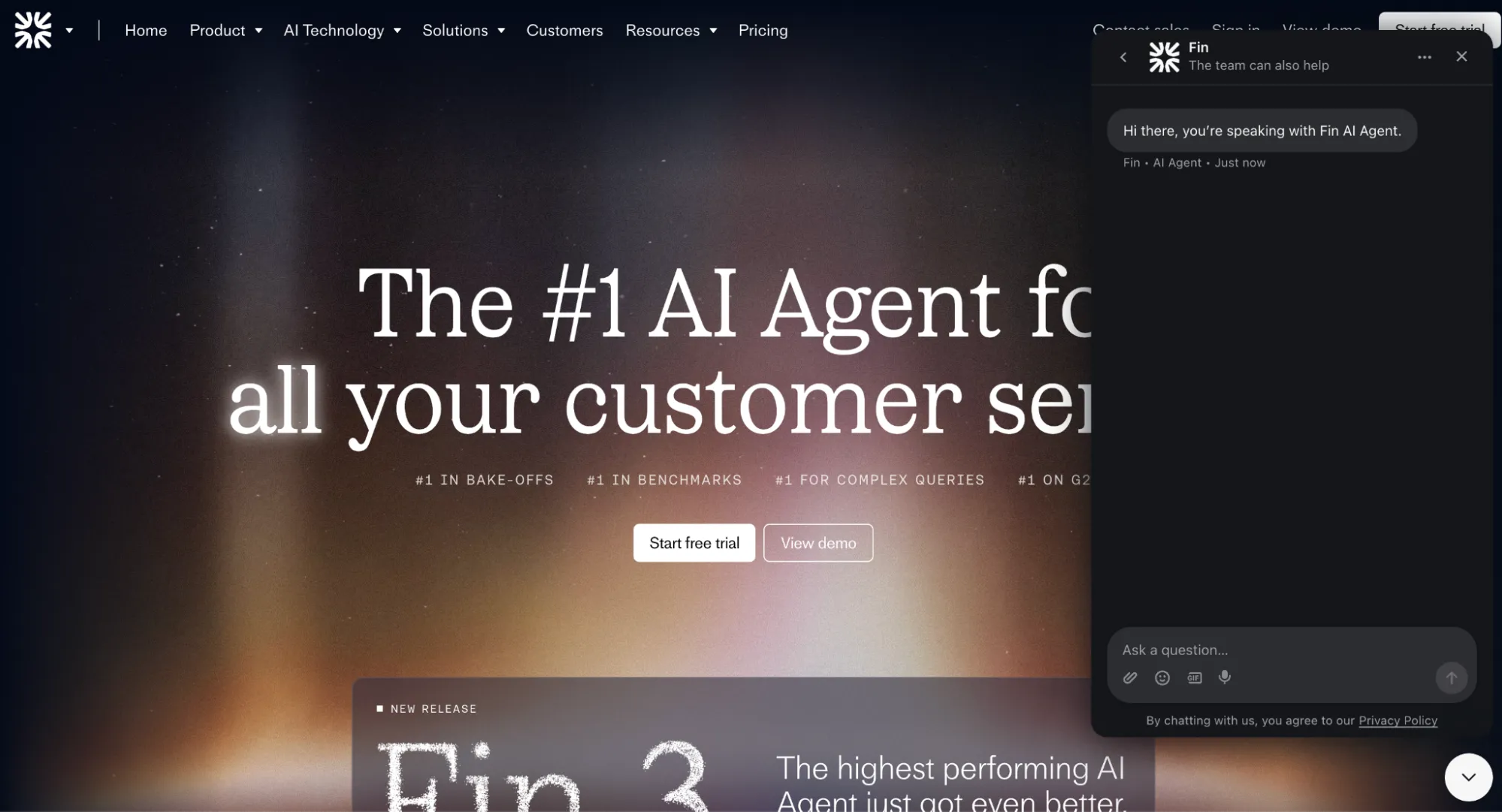
20+ Native Helpdesk Integrations – Zendesk, Intercom, Salesforce, Front, Gorgias, HubSpot (⚠️ no Zapier)Omnichannel – Slack, Discord, Teams; WhatsApp/Messenger via Zendesk/Intercom (⚠️ not Telegram)Website Options – Fini Widget, Search Bar, Standalone; Chrome Extension for agents
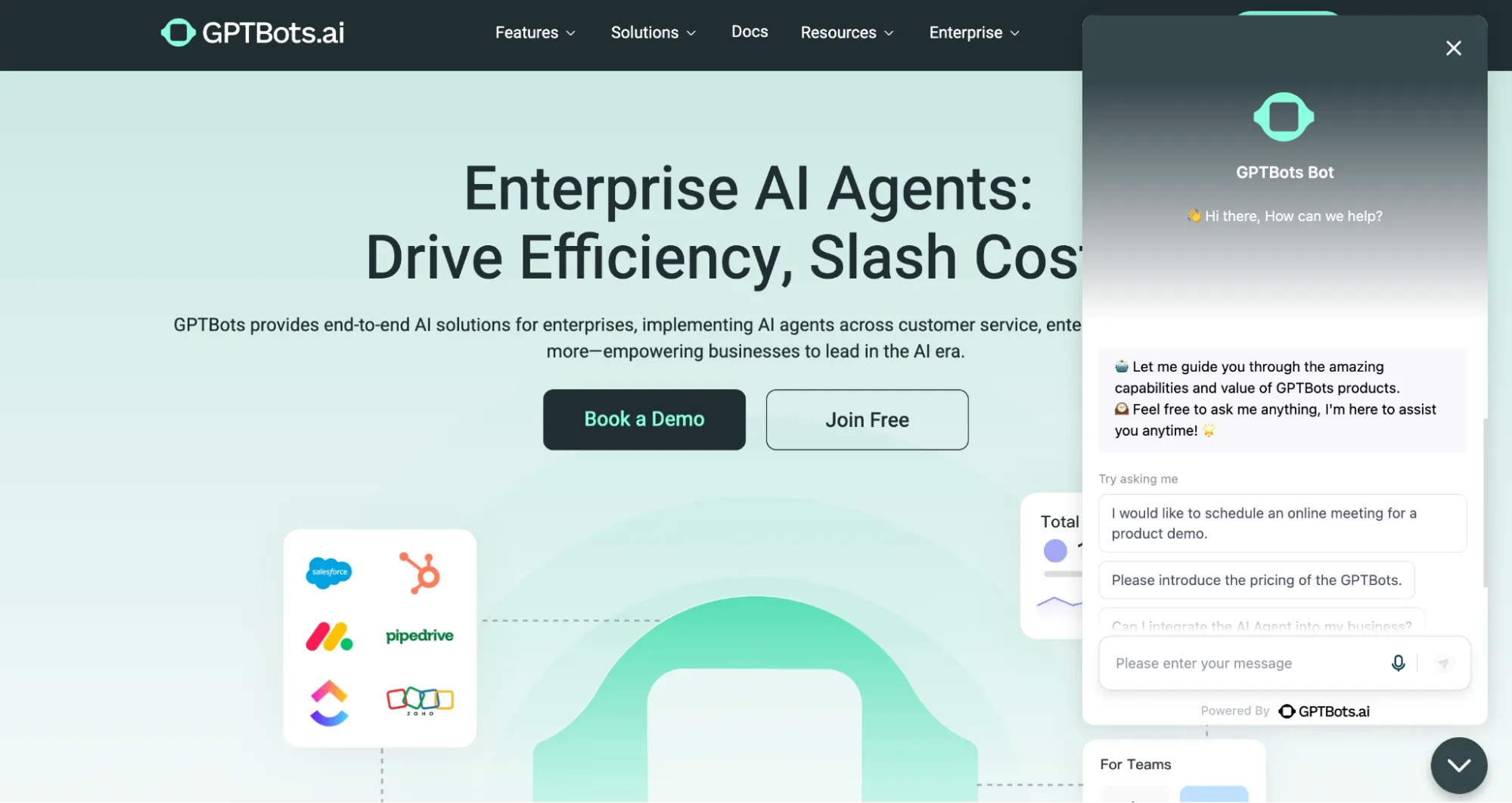
Messaging Platforms – WhatsApp (Meta+EngageLab), Telegram, Slack, Discord, Messenger, Instagram, Line, WeChat, DingTalkCustomer Service – Intercom, LiveChat, Zoho, Zendesk (Zapier), Sobot, SaleSmartly, LivedeskCRM Integration – Salesforce and HubSpot for lead capture with AI SDR capabilitiesAutomation – Zapier (1,500+ apps), n8n workflow support, Webhook V2Website Embedding – Bubble widget, iframe with user ID passthrough, full APIMobile Integration – iOS Swift and Android Java WebView bridges⚠️ Access Control – Domain whitelisting, configurable credit consumption limits per user
Website embedding – Lightweight JS widget or iframe with customizable positioningCMS plugins – WordPress, WIX, Webflow, Framer, SquareSpace native support5,000+ app ecosystem – Zapier connects CRMs, marketing, e-commerce toolsMCP Server – Integrate with Claude Desktop, Cursor, ChatGPT, WindsurfOpenAI SDK compatible – Drop-in replacement for OpenAI API endpointsLiveChat + Slack – Native chat widgets with human handoff capabilities
Sophie AI Agent – 5-layer execution: Safety, LLM Supervisor, Skills, Feedback, Traceability100+ Languages – Locale-based routing with real-time translationHuman Handoff – Context-preserving escalation via keywords, sentiment, confidence thresholds✅ 80% Ticket Resolution – End-to-end without human intervention claim
Three Agent Architectures – Agent (single LLM), Flow-Agent (visual orchestration), MultiAgent (collaborative roles)Multi-Lingual – 90+ languages with 24/7 multilingual supportRAG Grounding – Hybrid search (semantic+keyword) with Jina/BAAI re-ranking for hallucination preventionCitation Support – Source references with configurable relevance score thresholdsHuman Handoff – Intercom, LiveChat, Sobot, Zoho, Webhook triggers with automatic conversation summarization✅ Lead Capture – Salesforce/HubSpot integration claiming 300% lead growth
⚠️ Performance Claims – 95% autonomous resolution, 90% issue reduction (self-reported, no independent validation)
✅ #1 accuracy – Median 5/5 in independent benchmarks, 10% lower hallucination than OpenAI✅ Source citations – Every response includes clickable links to original documents✅ 93% resolution rate – Handles queries autonomously, reducing human workload✅ 92 languages – Native multilingual support without per-language config✅ Lead capture – Built-in email collection, custom forms, real-time notifications✅ Human handoff – Escalation with full conversation context preserved
GUI Widget Editor – Logo, colors, title, messages, FAQs (⚠️ CSS not documented)White-Labeling – Custom domain (CNAME), full logo replacement, agent identity renaming100+ Tone Options – Friendly, Professional, TaxAssistant, Finance advisor, Casual, politeDynamic Routing – User context (VIP, first-time, veteran) for metadata-driven personalization
Widget Customization – Custom nickname, theme color, bubble icon, position, sizeProactive Messaging – Configurable triggers with condition-based timing for automated engagementWhite-Labeling – Private deployment with independent brand logos and service domainsMulti-Agent Specialization – Create specialized AI roles with unique expertise and knowledge basesRegional Control – Data storage selection (Singapore default, Japan, Thailand)RBAC – Owner, manager, viewer roles with team seat management
Full white-labeling included – Colors, logos, CSS, custom domains at no extra cost2-minute setup – No-code wizard with drag-and-drop interfacePersona customization – Control AI personality, tone, response style via pre-promptsVisual theme editor – Real-time preview of branding changesDomain allowlisting – Restrict embedding to approved sites only
Starter (Free) – GPT-4o mini onlyGrowth – GPT-4o mini + ClaudeEnterprise – GPT-4o + Multi-layer automatic routing per query partRAGless Architecture – Query-writing AI; "no embeddings, no hallucinations"⚠️ No Runtime Switching – Plan-based selection only
OpenAI – GPT-5.1 (400k context), GPT-4.1 (1M context), GPT-4o, o3, o4-miniAnthropic – Claude 4.5 Opus/Sonnet/Haiku (200k), Claude 4.0 SonnetGoogle – Gemini 3.0 Pro, Gemini 2.5 Pro/FlashDeepSeek – V3, R1 reasoning model (claimed 87.5% AIME 2025 accuracy)Meta – Llama 3.0/3.1 (8B-405B parameter range)Chinese LLMs – Qwen 3.0/2.5, Hunyuan, ERNIE 4.0, GLM-4.5✅ Dynamic Model Switching – Mid-conversation changes based on task requirements
✅ Service Modes – GPTBots-provided API keys OR bring-your-own-key with reduced credits
✅ Competitive Differentiator – 30+ model options, one of market's most comprehensive selections
GPT-5.1 models – Latest thinking models (Optimal & Smart variants)GPT-4 series – GPT-4, GPT-4 Turbo, GPT-4o availableClaude 4.5 – Anthropic's Opus available for EnterpriseAuto model routing – Balances cost/performance automaticallyZero API key management – All models managed behind the scenes
Developer Experience ( A P I & S D Ks)
Base URL – https://api-prod.usefini.com (v2, Bearer Token auth)Core Endpoints – /v2/bots/ask-question, /v2/bots/links/*, feedback, chat history⚠️ NO Official SDKs – Only Python and Node.js examples
Documentation Quality – 3/5 completeness, 2/5 error handling, 1/5 rate limitsParamount – Open-source tool (github.com/ask-fini/paramount) for accuracy measurement
REST API – 8 categories: Conversation, Workflow, Knowledge, Database, Models, User, Analytics, AccountCore Capabilities – Create conversations, send messages, retrieve history, run workflows (sync/async)Audio Support – Audio-to-text and text-to-audio conversion endpointsUser Management – Identity management with cross-channel user merging⚠️ Rate Limits – Free tier severely constrained at 3 requests/minute
❌ SDK Gap – NO official Python, JavaScript, or Go SDKs available
Documentation – Comprehensive references, multi-language support, 11+ releases in 2025⚠️ Critical Limitation – Developers must implement direct REST calls without SDK support
REST API – Full-featured for agents, projects, data ingestion, chat queriesPython SDK – Open-source customgpt-client with full API coveragePostman collections – Pre-built requests for rapid prototypingWebhooks – Real-time event notifications for conversations and leadsOpenAI compatible – Use existing OpenAI SDK code with minimal changes
✅ 97-98% Accuracy Claim – Column Tax (94%, 98% resolved), Qogita (90%, 121% SLA)
6 Hallucination Prevention – RAGless, LLM filtering, confidence gating, guardrails, skill modulesAccuracy Tools – Sophia AI Evaluator (Growth/Enterprise), Paramount, CXACT Benchmarking✅ 80% Ticket Resolution – End-to-end without human intervention
Hybrid RAG Architecture – Multi-path retrieval with semantic vector + keyword searchRe-Ranking Models – Jina and BAAI models for improved accuracy after retrievalChunking Strategy – Default 600 tokens adjustable with custom text splittersHallucination Prevention – RAG grounding, configurable relevance score thresholds✅ DeepSeek R1 Integration – Claimed 87.5% AIME accuracy (improved from 70%)
⚠️ Case Study Results – GameWorld claims $4M annual savings (self-reported)
❌ Benchmark Gap – NO published RAGAS scores or third-party analyst coverage
Sub-second responses – Optimized RAG with vector search and multi-layer cachingBenchmark-proven – 13% higher accuracy, 34% faster than OpenAI Assistants APIAnti-hallucination tech – Responses grounded only in your provided contentOpenGraph citations – Rich visual cards with titles, descriptions, images99.9% uptime – Auto-scaling infrastructure handles traffic spikes
Customization & Flexibility ( Behavior & Knowledge)
Guidelines System – Tone, phrases, forbidden terms, formatting, response lengthBot Management – Starter 2 bots → Growth/Enterprise unlimitedReal-time Learning – Chat2KB auto-learning (MECE), Flows for specialized workflowsDynamic Personalization – User context from backend, segment-based routing
N/A
Live content updates – Add/remove content with automatic re-indexingSystem prompts – Shape agent behavior and voice through instructionsMulti-agent support – Different bots for different teamsSmart defaults – No ML expertise required for custom behavior
⚠️ Pricing NOT Publicly Disclosed – Requires sales contact
Starter (Free) – GPT-4o mini, ~50 questions/month, ~50 docs, 2 botsGrowth (est. $999/mo) – GPT-4o mini/Claude, 1K docs, unlimited users, SOC 2, RBAC, Chat2KBEnterprise (Custom) – GPT-4o, Multi-layer models, unlimited docs, AI Actions, white-glove onboarding✅ Zero-Pay Guarantee – Only pay if >80% accuracy met
Free Plan – $0/month, 100 credits, unlimited agents (3 requests/minute limit)Business Plan – $649/month, 10,000 credits, 100 agents, 10 published, 10 seatsEnterprise Plan – Custom pricing with private deployment and AI project consultingCredit System – 100 credits = $1 USD, 1-year validity (use-it-or-lose-it)Sample Consumption – GPT-4.1 (0.22/0.88), DeepSeek V3 (0.0157/0.0314), Claude 4.5 (0.33/1.65)⚠️ Entry Cost Barrier – $649/month significantly higher than sub-$100 competitors
✅ Scale Support – 45,500+ users across 188 countries validates enterprise scalability
Standard: $99/mo – 60M words, 10 botsPremium: $449/mo – 300M words, 100 botsAuto-scaling – Managed cloud scales with demandFlat rates – No per-query charges
✅ Certifications – SOC 2 Type II (zero findings), ISO 27001, ISO 42001, GDPR
⚠️ HIPAA Conflicting – Marketing claims vs. case study "next up" (verify)
⚠️ PCI DSS – Claimed but not on official security section (verify)
PII Shield – Auto-masks SSN, passport, license, taxpayer ID, credit cardsEncryption – AES-256 at rest, TLS 1.3 in transit; "no training" policyAccess Controls – RBAC (Growth/Enterprise), SSO, audit logging, EU/US data residency
ISO 27001 – Information Security Management System certificationISO 27701 – Privacy Information Management System certificationGDPR Compliance – Explicit compliance with data deletion within 15 business daysEncryption – SSL/HTTPS for transit, encryption technology for data at restRegional Storage – Singapore (default), Japan, Thailand data centersSSO Support – SAML 2.0 with Microsoft Azure, Okta, OneLogin, Google⚠️ SOC 2 – Referenced but explicit certification details not prominently documented
❌ HIPAA – Not mentioned, potential blocker for healthcare use cases
SOC 2 Type II + GDPR – Third-party audited complianceEncryption – 256-bit AES at rest, SSL/TLS in transitAccess controls – RBAC, 2FA, SSO, domain allowlistingData isolation – Never trains on your data
Observability & Monitoring
Fini 2.0 (Jan 2025) – AI resolution, quality, confidence, CSAT, agent productivity, drop-off analysisChat History (Feb 2025) – Centralized view with filtering; CSV/JSON export for Looker/TableauAI Categorization – Auto-tags by topic (returns, login, pricing, shipping)Knowledge Gap Analysis – Identifies unanswerable questions with improvement suggestions
Analytics API – Dedicated endpoints for credit consumption trackingToken Tracking – API V2 includes detailed input/output token countsConversation Logs – Full history with configurable retentionGA4 Integration – Event callback tracking for conversion measurementRetrieval Testing – Debug knowledge base recall quality before deployment⚠️ Monitoring Gap – Specific alerting capabilities less emphasized than core features
Real-time dashboard – Query volumes, token usage, response timesCustomer Intelligence – User behavior patterns, popular queries, knowledge gapsConversation analytics – Full transcripts, resolution rates, common questionsExport capabilities – API export to BI tools and data warehouses
Founding Team – Ex-Uber engineers; CEO led 4M+ interactions/month at UberBacked By – Y Combinator S22 ($125K), Matrix Partners, angels from Uber/Intercom/SoftbankCustomers – HackerRank, Qogita, Column Tax, Bitdefender, Duolingo, Meesho, TrainingPeaksImplementation – 60-day program; Enterprise gets dedicated AI engineers, 24/7 Slack
Documentation – Comprehensive at gptbots.ai/docs with endpoint referencesMulti-Language Docs – English, Chinese, Japanese, Spanish, ThaiTesting Resources – Postman Collections (no interactive playground)Active Development – 11+ major releases in 2025Enterprise Support – AI project consulting, implementation services, custom SLAsParent Company Backing – Aurora Mobile Limited (NASDAQ: JG) with RMB 316.17M revenue⚠️ G2 Feedback – Documentation gaps cited by 7 reviewers, limited Spanish support by 6
Comprehensive docs – Tutorials, cookbooks, API referencesEmail + in-app support – Under 24hr response timePremium support – Dedicated account managers for Premium/EnterpriseOpen-source SDK – Python SDK, Postman, GitHub examples5,000+ Zapier apps – CRMs, e-commerce, marketing integrations
Additional Considerations
RAGless Positioning – Criticizes RAG as "search engines" claiming "will become obsolete"Action-Taking Focus – Actions vs. information ("Done! Refund processed" vs. "Find details here")Target Customer – Enterprise B2C high-volume (fintech, e-commerce, healthcare)vs. Intercom Fin – Claims 95%+ accuracy vs. ~80%; platform agnostic⚠️ Less Suitable For – General Q&A, content generation, standalone chatbots
N/A
Time-to-value – 2-minute deployment vs weeks with DIYAlways current – Auto-updates to latest GPT modelsProven scale – 6,000+ organizations, millions of queriesMulti-LLM – OpenAI + Claude reduces vendor lock-in
No- Code Interface & Usability
✅ Time to Go Live – "2 minutes" setup, <1 week full integration, 1-2 weeks Enterprise
No-Code Deployment – Widget (JS snippet), Search Bar, Standalone, native helpdesk one-click, Chrome ExtensionAdmin Dashboard – Agent creation, Knowledge Hub (Notion/Confluence/Drive), Prompt Configurator (escalation, guardrails)Pre-Built Templates – E-commerce, fintech, SaaS onboarding workflows
Visual Builder – Drag-and-drop agent construction with "no development burden"Three Complexity Levels – Agent (simple), Flow-Agent (visual), MultiAgent (collaborative)Pre-Built Templates – Customer support, lead generation, appointment schedulingDebug & Preview – Test conversations before deployment with retrieval testing90-Language Support – Multilingual deployment without technical configuration
2-minute deployment – Fastest time-to-value in the industryWizard interface – Step-by-step with visual previewsDrag-and-drop – Upload files, paste URLs, connect cloud storageIn-browser testing – Test before deploying to productionZero learning curve – Productive on day one
Market Position – Agentic AI for customer support; Sophie's 5-layer + RAGless claiming 97-98% accuracyKey Competitors – Intercom Fin, Zendesk Answer Bot, Ada, Ultimate.ai, traditional RAG chatbots✅ Competitive Advantages – 97-98% accuracy vs. ~80%, 20+ native integrations, RAGless, 100+ languages, Zero-Pay Guarantee
Best Value For – Enterprises prioritizing accuracy, action-taking AI, regulated industries (fintech, healthcare)
✅ Primary Advantage – Unmatched multi-LLM orchestration with 30+ models
✅ Deployment Flexibility – Only platform offering SaaS, cloud-native, and on-premise
✅ Security Credentials – ISO 27001/27701 certification rare among AI platforms
✅ Asia-Pacific Focus – Regional data centers, Chinese LLM support, multi-language docs
❌ Primary Challenge – NO official language SDKs (Python, JavaScript, Go)
⚠️ Pricing Barrier – $649/month significantly higher than sub-$100 competitors
⚠️ Free Tier Limitation – 3 requests/minute severely constrains production use
⚠️ Market Position – 223rd among 1,893 AI competitors (Tracxn)
Market position – Leading RAG platform balancing enterprise accuracy with no-code usability. Trusted by 6,000+ orgs including Adobe, MIT, Dropbox.Key differentiators – #1 benchmarked accuracy • 1,400+ formats • Full white-labeling included • Flat-rate pricingvs OpenAI – 10% lower hallucination, 13% higher accuracy, 34% fastervs Botsonic/Chatbase – More file formats, source citations, no hidden costsvs LangChain – Production-ready in 2 min vs weeks of development
Starter (Free) – GPT-4o mini only (~50 questions/month)Growth – GPT-4o mini + Claude, 1K docs, unlimited usersEnterprise – GPT-4o + Multi-layer automatic routing per query part✅ Target Accuracy – 97-98% claim with human-in-the-loop customization
⚠️ No Manual Switching – Plan-based model selection only
N/A
OpenAI – GPT-5.1 (Optimal/Smart), GPT-4 seriesAnthropic – Claude 4.5 Opus/Sonnet (Enterprise)Auto-routing – Intelligent model selection for cost/performanceManaged – No API keys or fine-tuning required
RAGless Architecture – Query-writing AI; "no embeddings, no hallucinations" with precise attribution6-Mechanism Prevention – LLM filtering, confidence gating, guardrails, deterministic skill modulesReal-time Knowledge – Content used immediately after ingestion without retrainingChat2KB (Growth/Enterprise) – Auto-extracts Q&A with MECE classification, conflict resolution✅ Customer Results – Column Tax (94%, 98% resolved), Qogita (90%, 121% SLA)
N/A
GPT-4 + RAG – Outperforms OpenAI in independent benchmarksAnti-hallucination – Responses grounded in your content onlyAutomatic citations – Clickable source links in every responseSub-second latency – Optimized vector search and cachingScale to 300M words – No performance degradation at scale
✅ Enterprise B2C Support – High-volume fintech, e-commerce, healthcare (80% resolution, 97-98% accuracy)
✅ Action-Taking AI – Autonomous refunds, updates, CRM sync (Salesforce, Stripe, Shopify)
✅ Helpdesk Integration – 20+ native platforms (Zendesk, Intercom, Salesforce, Front) without Zapier
✅ PII-Sensitive Industries – Auto-masking SSN, passport, license, credit cards with PII Shield
⚠️ NOT Suitable For – General Q&A, content generation, no existing helpdesk
N/A
Customer support – 24/7 AI handling common queries with citationsInternal knowledge – HR policies, onboarding, technical docsSales enablement – Product info, lead qualification, educationDocumentation – Help centers, FAQs with auto-crawlingE-commerce – Product recommendations, order assistance
✅ SOC 2 Type II – Zero audit findings per Sprinto
✅ ISO 27001 & 42001 – Information security + AI governance
✅ GDPR Compliant – Full data subject rights, EU data residency
⚠️ HIPAA Conflicting – Marketing claims vs. case study "next up" (verify)
⚠️ PCI DSS – Claimed but not on official security page (verify)
"No Training on Data" – OpenAI DPA; PII Shield; AES-256, TLS 1.3
N/A
SOC 2 Type II + GDPR – Regular third-party audits, full EU compliance256-bit AES encryption – Data at rest; SSL/TLS in transitSSO + 2FA + RBAC – Enterprise access controls with role-based permissionsData isolation – Never trains on customer dataDomain allowlisting – Restrict chatbot to approved domains
⚠️ Pricing NOT Publicly Disclosed – Requires sales contact
Starter (Free) – GPT-4o mini, ~50 questions/month, ~50 docs, 2 botsGrowth (est. $999/mo) – GPT-4o mini/Claude, 1K docs, unlimited users, SOC 2, RBAC, Chat2KBEnterprise (Custom) – GPT-4o, Multi-layer models, unlimited docs, AI Actions, white-glove onboarding✅ Zero-Pay Guarantee – Only pay if >80% accuracy met (unique risk mitigation)
N/A
Standard: $99/mo – 10 chatbots, 60M words, 5K items/botPremium: $449/mo – 100 chatbots, 300M words, 20K items/botEnterprise: Custom – SSO, dedicated support, custom SLAs7-day free trial – Full Standard access, no chargesFlat-rate pricing – No per-query charges, no hidden costs
Founding Team – Ex-Uber engineers; CEO led 4M+ interactions/month; Y Combinator S22, Matrix PartnersCustomers – HackerRank, Qogita, Column Tax, Bitdefender, Duolingo, Meesho60-Day Implementation – Discovery → Deployment → Optimization → Production with dedicated managersEnterprise Support – Dedicated AI engineers, CSMs, 24/7 Slack channels⚠️ Documentation Quality – 3/5 completeness, 2/5 error handling, 1/5 rate limits; NO SDKs
N/A
Documentation hub – Docs, tutorials, API referencesSupport channels – Email, in-app chat, dedicated managers (Premium+)Open-source – Python SDK, Postman, GitHub examplesCommunity – User community + 5,000 Zapier integrations
Limitations & Considerations
⚠️ Pricing Opacity – No public pricing creates evaluation friction
⚠️ HIPAA & PCI DSS Unverified – Conflicting claims require verification
⚠️ Documentation Limitations – Basic API docs (3/5, 2/5, 1/5), no SDKs
⚠️ Small Team (14 employees) – Limited capacity vs. enterprise competitors
⚠️ Platform Lock-In – Requires existing helpdesk (Zendesk/Intercom/Salesforce)
✅ Best For – Enterprise B2C high-volume prioritizing 97-98% accuracy, 60-day commitment
❌ NO Official Language SDKs – CRITICAL GAP limiting developer adoption
❌ iOS/Android WebView Only – Not full native SDK functionality
⚠️ Free Tier Constraints – 3 requests/minute prevents meaningful testing
⚠️ High Entry Price – $649/month creates SMB adoption barrier
⚠️ Credit System Complexity – Multi-dimensional consumption requires careful forecasting
⚠️ Performance Claims Unvalidated – 95% resolution, 90% issue reduction self-reported
❌ No Published Benchmarks – Absence of RAGAS scores or analyst coverage
❌ HIPAA Absence – No healthcare PHI handling compliance
⚠️ Update Cadence Trade-off – 1-4 updates/year (private) vs monthly (public cloud)
Managed service – Less control over RAG pipeline vs build-your-ownModel selection – OpenAI + Anthropic only; no Cohere, AI21, open-sourceReal-time data – Requires re-indexing; not ideal for live inventory/pricesEnterprise features – Custom SSO only on Enterprise plan
Sophie AI Agent – Fully autonomous resolving 80% of tickets end-to-end without human intervention5-Layer Execution – Safety Guardrails (40+ filters, PII), LLM Supervisor, Skills, Feedback, TraceabilityMulti-Layer Architecture (Enterprise) – Automatic routing to best LLM per query part; specialized agentsAction-Taking – Autonomous refunds, updates, CRM sync (Salesforce, Stripe, Shopify)✅ 100+ Languages – Automatic translation with locale-based routing
N/A
Custom AI Agents – Autonomous GPT-4/Claude agents for business tasksMulti-Agent Systems – Specialized agents for support, sales, knowledgeMemory & Context – Persistent conversation history across sessionsTool Integration – Webhooks + 5,000 Zapier apps for automationContinuous Learning – Auto re-indexing without manual retraining
R A G-as-a- Service Assessment
Platform Type – AGENTIC AI CUSTOMER SUPPORT with RAGless architecture, NOT traditional RAG-as-a-ServiceArchitectural Approach – Query-writing AI; "no embeddings, no hallucinations" with deterministic resultsSophie's 5-Layer Framework – 97-98% accuracy vs. ~80% competitors; Zero-Pay Guarantee⚠️ Developer Experience – Basic REST API (v2), NO SDKs, docs (3/5, 2/5, 1/5)
No-Code Capabilities – "2 minutes" setup, 20+ native helpdesk integrations, "Day 1 Ready-to-Use"⚠️ NOT A RAG PLATFORM – Explicitly positions AGAINST traditional RAG; fundamentally different
⚠️ NOT Suitable For – General Q&A, content generation, no helpdesk, programmatic RAG API needs
N/A
Platform type – TRUE RAG-AS-A-SERVICE with managed infrastructureAPI-first – REST API, Python SDK, OpenAI compatibility, MCP ServerNo-code option – 2-minute wizard deployment for non-developersHybrid positioning – Serves both dev teams (APIs) and business users (no-code)Enterprise ready – SOC 2 Type II, GDPR, WCAG 2.0, flat-rate pricing
Multi- L L M Orchestration N/A
Market-Leading Selection – 30+ models across 7+ providersContext Windows – Up to 1M tokens (GPT-4.1), 400k (GPT-5.1), 200k (Claude 4.5)Reasoning Models – DeepSeek R1 with 87.5% AIME 2025 accuracy✅ Dynamic Switching – Mid-conversation model changes for task-specific optimization
✅ Cost Optimization – Use expensive models for complex tasks, cheap for simple responses
✅ Architectural Advantage – Multi-LLM orchestration unmatched by most competitors
N/A
N/A
Deployment Options – AWS cloud-native, Azure cloud-native, complete on-premiseSetup Timeline – Two weeks from initiation to deploymentWhite-Label Control – Independent brand logos, custom domains, dedicated account systemsData Sovereignty – Complete control over data location for regulatory compliance⚠️ Update Cadence – 1-4 updates/year (private) vs monthly (public cloud)
✅ Market Positioning – "Asia's first on-premise AI bot development platform"
N/A
A I S D R & Lead Generation N/A
CRM Integration – Deep Salesforce and HubSpot connectivityLead Growth Claims – Up to 300% lead growth (self-reported)Automated Qualification – AI-driven lead qualification and routingMulti-Channel Capture – Lead generation across 15+ messaging platformsGA4 Analytics – Conversion tracking via Google Analytics 4 callback events
N/A










Join the Discussion
Loading comments...