Lindy.ai vs SimplyRetrieve

Make an informed decision with our comprehensive comparison. Discover which RAG solution perfectly fits your needs.

Priyansh Khodiyar's avatar
Priyansh KhodiyarDevRel at CustomGPT.ai

Fact checked and reviewed by Bill Cava

Published: 01.04.2025Updated: 25.04.2025

In this comprehensive guide, we compare Lindy.ai and SimplyRetrieve across various parameters including features, pricing, performance, and customer support to help you make the best decision for your business needs.

Overview

When choosing between Lindy.ai and SimplyRetrieve, understanding their unique strengths and architectural differences is crucial for making an informed decision. Both platforms serve the RAG (Retrieval-Augmented Generation) space but cater to different use cases and organizational needs.

Quick Decision Guide

  • Choose Lindy.ai if: you value exceptional no-code usability: 4.9/5 g2 rating, 30-second setup vs 15-60 min with zapier/make
  • Choose SimplyRetrieve if: you value completely free and open source

About Lindy.ai

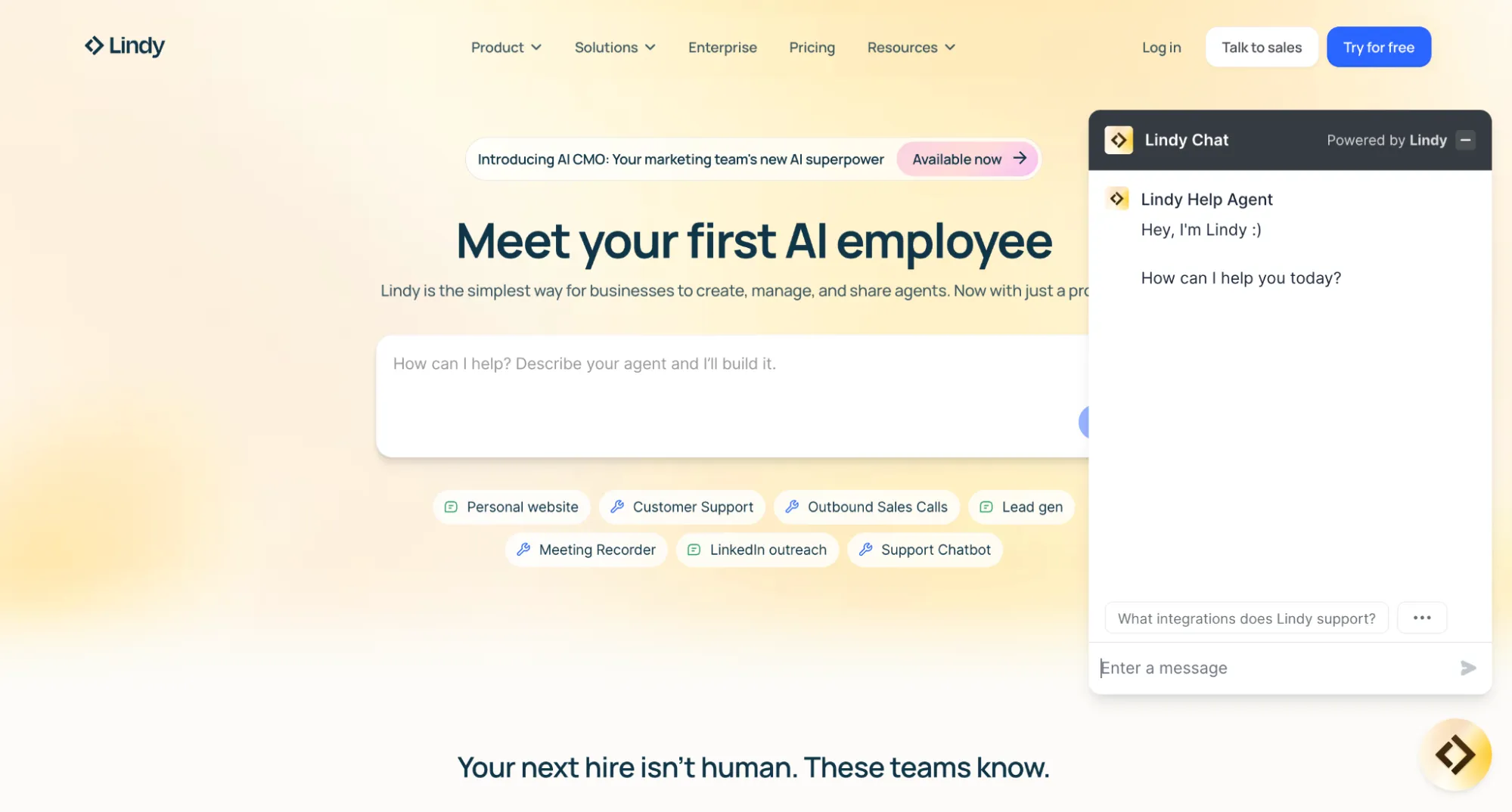
Lindy.ai Landing Page Screenshot

Lindy.ai is ai-powered personal assistant for workflow automation. No-code AI agent platform positioning as 'AI employees' for workflow automation, NOT developer-focused RAG platform. 5,000+ integrations via Pipedream, Claude Sonnet 4.5 default, $5.1M revenue (Oct 2024), 4.9/5 G2 rating. Critical limitation: No public API or SDKs available. Founded in 2023, headquartered in San Francisco, CA, USA, the platform has established itself as a reliable solution in the RAG space.

Overall Rating
81/100
Starting Price
Custom

About SimplyRetrieve

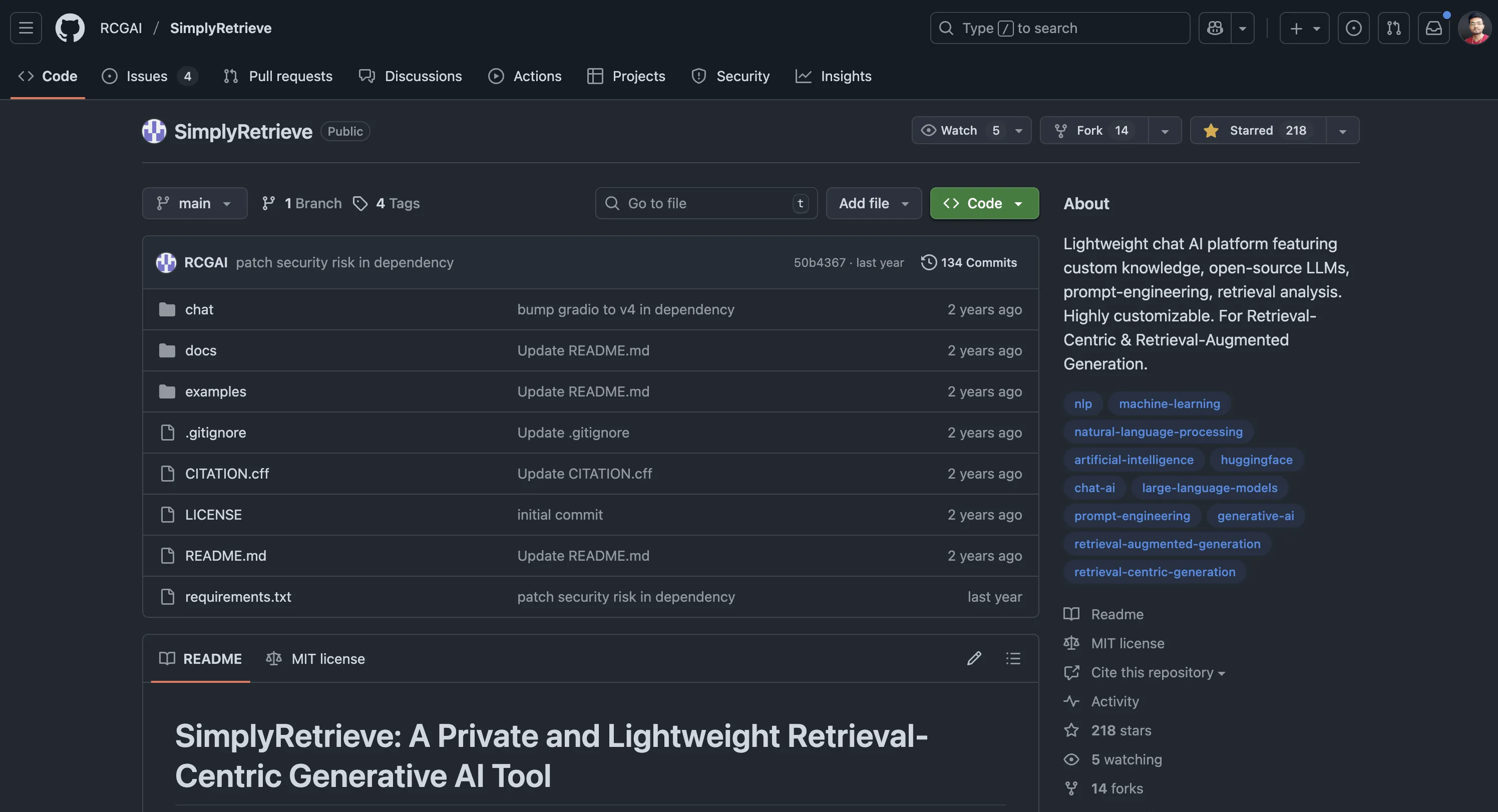
SimplyRetrieve Landing Page Screenshot

SimplyRetrieve is lightweight retrieval-centric generative ai platform. SimplyRetrieve is an open-source tool providing a fully localized, lightweight, and user-friendly GUI and API platform for Retrieval-Centric Generation (RCG). It emphasizes privacy and can run on a single GPU while maintaining clear separation between LLM context interpretation and knowledge memorization. Founded in 2019, headquartered in Tokyo, Japan, the platform has established itself as a reliable solution in the RAG space.

Overall Rating
82/100
Starting Price
Custom

Key Differences at a Glance

In terms of user ratings, both platforms score similarly in overall satisfaction. From a cost perspective, pricing is comparable. The platforms also differ in their primary focus: AI Assistant versus RAG Platform. These differences make each platform better suited for specific use cases and organizational requirements.

⚠️ What This Comparison Covers

We'll analyze features, pricing, performance benchmarks, security compliance, integration capabilities, and real-world use cases to help you determine which platform best fits your organization's needs. All data is independently verified from official documentation and third-party review platforms.

Detailed Feature Comparison

logo of lindy
Lindy.ai
logo of simplyretrieve
SimplyRetrieve
logo of customGPT logo
CustomGPTRECOMMENDED
Data Ingestion & Knowledge Sources
  • Document Formats – PDF, DOCX, XLSX, CSV, TXT, HTML (20MB per file)
  • Cloud Integrations – Drive, OneDrive, Dropbox, Notion, SharePoint, auto 24-hour sync
  • ⚠️ Storage Limits – 1M chars (Free), 20M (Pro), 50M (Business)
  • ⚠️ Search Constraint – Fuzziness <100 limits to first 1,500 files
  • File-Based Workflow – Drop PDFs, DOCX, PPTX, HTML into folder and embed via script
  • GUI Knowledge Editor – Add documents on-the-fly through basic interface
  • Manual Processing – ⚠️ No web crawler or automatic refresh capabilities
  • Local Storage – ✅ All data stays on your machine for air-gapped deployments
  • 1,400+ file formats – PDF, DOCX, Excel, PowerPoint, Markdown, HTML + auto-extraction from ZIP/RAR/7Z archives
  • Website crawling – Sitemap indexing with configurable depth for help docs, FAQs, and public content
  • Multimedia transcription – AI Vision, OCR, YouTube/Vimeo/podcast speech-to-text built-in
  • Cloud integrations – Google Drive, SharePoint, OneDrive, Dropbox, Notion with auto-sync
  • Knowledge platforms – Zendesk, Freshdesk, HubSpot, Confluence, Shopify connectors
  • Massive scale – 60M words (Standard) / 300M words (Premium) per bot with no performance degradation
Integrations & Channels
  • 5,000+ Apps – Via Pipedream Connect with 2,500+ ready actions
  • Messaging – Slack, WhatsApp, Teams, Telegram, Discord, Twilio SMS
  • CRM – Salesforce (24 actions), HubSpot, Pipedrive, Zoho CRM
  • Productivity – Notion, Airtable, Google Workspace (Gmail, Calendar, Docs, Sheets, Drive)
  • Webhooks + HTTP – Inbound triggers and outbound API calls
  • Local Gradio GUI – Python scripts for queries with no pre-built channels
  • No Native Integrations – ⚠️ No Slack, Teams, or website widgets out-of-box
  • Custom Wrappers Required – Build your own connectors to forward messages
  • Website embedding – Lightweight JS widget or iframe with customizable positioning
  • CMS plugins – WordPress, WIX, Webflow, Framer, SquareSpace native support
  • 5,000+ app ecosystem – Zapier connects CRMs, marketing, e-commerce tools
  • MCP Server – Integrate with Claude Desktop, Cursor, ChatGPT, Windsurf
  • OpenAI SDK compatible – Drop-in replacement for OpenAI API endpoints
  • LiveChat + Slack – Native chat widgets with human handoff capabilities
Core Agent Features
  • Agent Autonomy Focus – Task execution vs conversational chatbot
  • Multi-Lingual – 30+ (voice), 50+ (transcription), 85+ (text)
  • ✅ Lead Capture – Real-time qualification, CRM sync (70% higher conversion claimed)
  • Agent Evals – Benchmarking with regression prevention
  • Retrieval-Centric Generation – Research approach separating reasoning from knowledge
  • Retrieval Tuning Module – ✅ Developer transparency showing document selection
  • Knowledge Base Mixing – Route queries across multiple sources
  • Single-Turn Focus – ⚠️ Limited multi-turn conversation memory
  • No Chatbot UI – ⚠️ Gradio for developers only
  • No Production Features – ⚠️ No lead capture, handoff, or multi-channel support
  • Custom AI Agents – Autonomous GPT-4/Claude agents for business tasks
  • Multi-Agent Systems – Specialized agents for support, sales, knowledge
  • Memory & Context – Persistent conversation history across sessions
  • Tool Integration – Webhooks + 5,000 Zapier apps for automation
  • Continuous Learning – Auto re-indexing without manual retraining
Customization & Branding
  • Widget – Custom name, accent color, logo for expanded/collapsed states
  • Domain Restrictions – Control allowed deployment domains
  • Memory Snippets – Learning preferences saved across sessions
  • ⚠️ White-Label Unclear – Complete branding removal not explicitly confirmed
  • Plain Gradio Interface – Minimal theming with developer-focused design
  • Source Code Customization – Tweak code or build custom front-end for branding
  • Full white-labeling included – Colors, logos, CSS, custom domains at no extra cost
  • 2-minute setup – No-code wizard with drag-and-drop interface
  • Persona customization – Control AI personality, tone, response style via pre-prompts
  • Visual theme editor – Real-time preview of branding changes
  • Domain allowlisting – Restrict embedding to approved sites only
L L M Model Options
  • Anthropic Claude – Sonnet 4.5 (default), Sonnet 3.7, Haiku 3.5
  • OpenAI – GPT-5, GPT-5 Codex, GPT-4o, GPT-4 Turbo, o3, o1
  • Google Gemini – 2.5 Pro, 2.5 Flash, 2.0 Flash
  • Per-Action Selection – Manual model choice affects credit consumption
  • ⚠️ No Auto-Routing – No dynamic model switching
  • WizardVicuna-13B Default – Instruction-tuned open-source model included
  • Hugging Face Compatible – Swap any model with sufficient GPU resources
  • Full Local Control – ✅ No external APIs or cloud dependencies
  • Model Limitations – ⚠️ Smaller models won't match GPT-4 depth
  • GPT-5.1 models – Latest thinking models (Optimal & Smart variants)
  • GPT-4 series – GPT-4, GPT-4 Turbo, GPT-4o available
  • Claude 4.5 – Anthropic's Opus available for Enterprise
  • Auto model routing – Balances cost/performance automatically
  • Zero API key management – All models managed behind the scenes
Developer Experience ( A P I & S D Ks)
  • ⚠️ CRITICAL LIMITATION – NO public REST API, GraphQL, or SDKs
  • Workarounds Only – Inbound webhooks, HTTP actions, Code sandboxes (~150ms)
  • User-Focused Docs – Lindy Academy for business users, NO API reference
  • Python Script Interface – No formal REST API or SDK
  • Subprocess Integration – Call scripts directly or build custom wrapper
  • Open Source Access – ✅ Full code access for modification
  • REST API – Full-featured for agents, projects, data ingestion, chat queries
  • Python SDK – Open-source customgpt-client with full API coverage
  • Postman collections – Pre-built requests for rapid prototyping
  • Webhooks – Real-time event notifications for conversations and leads
  • OpenAI compatible – Use existing OpenAI SDK code with minimal changes
Performance & Accuracy
  • Hybrid Search – Semantic + keyword with Fuzziness slider (0-100)
  • Hallucination Reduction – Human confirmation before actions
  • ⚠️ NO Published Benchmarks – No RAG accuracy or latency metrics
  • ⚠️ Black Box – Vector database and embedding models undisclosed
  • Slower Inference – ⚠️ 3-10+ seconds per reply on single GPU
  • Decent Accuracy – Good when relevant docs found, struggles with complexity
  • FAISS Vector Search – Fast retrieval using Facebook's library
  • Sub-second responses – Optimized RAG with vector search and multi-layer caching
  • Benchmark-proven – 13% higher accuracy, 34% faster than OpenAI Assistants API
  • Anti-hallucination tech – Responses grounded only in your provided content
  • OpenGraph citations – Rich visual cards with titles, descriptions, images
  • 99.9% uptime – Auto-scaling infrastructure handles traffic spikes
Pricing & Scalability
  • Free: $0 – 400 credits, 1M char knowledge base
  • Pro: $49.99 – 5,000 credits, 20M chars, phone calls, Lindy branding
  • Business: $199.99-$299.99 – 20K-30K credits, 50M chars, custom branding
  • Enterprise: Custom – SSO, SCIM, dedicated support, custom training
  • ⚠️ Unpredictable Costs – Credit depletion speed is primary user complaint
  • MIT Licensed – ✅ Completely free with no subscription fees
  • Infrastructure Costs – Pay only for GPU hardware or cloud servers
  • Manual Scaling – ⚠️ Spin up and manage your own hardware
  • Standard: $99/mo – 60M words, 10 bots
  • Premium: $449/mo – 300M words, 100 bots
  • Auto-scaling – Managed cloud scales with demand
  • Flat rates – No per-query charges
Security & Privacy
  • SOC 2 Type II, HIPAA, GDPR, PIPEDA, CCPA – Comprehensive compliance
  • Encryption – AES-256 at rest, TLS 1.2+ in transit
  • Enterprise SSO + SCIM – Automated user lifecycle management
  • ⚠️ US Data Residency Only – No explicit EU option documented
  • 100% Local Execution – ✅ Perfect for sensitive data and air-gapped environments
  • No External Transmission – All processing stays on-premises
  • DIY Security – ⚠️ No built-in auth, you implement access controls
  • SOC 2 Type II + GDPR – Third-party audited compliance
  • Encryption – 256-bit AES at rest, SSL/TLS in transit
  • Access controls – RBAC, 2FA, SSO, domain allowlisting
  • Data isolation – Never trains on your data
Observability & Monitoring
  • Workflow Performance – Agent action visibility with recent runs
  • Audit Logs – User actions, data access on Business/Enterprise plans
  • ⚠️ Log Retention – 1 day (Free) severely constrains troubleshooting
  • ⚠️ NO RAG Metrics – Cannot track retrieval precision or recall
  • Analysis Tab – Shows retrieved docs and query construction process
  • Console Logging – Basic logs printed to terminal
  • No Dashboard – ⚠️ Add your own monitoring for stats
  • Real-time dashboard – Query volumes, token usage, response times
  • Customer Intelligence – User behavior patterns, popular queries, knowledge gaps
  • Conversation analytics – Full transcripts, resolution rates, common questions
  • Export capabilities – API export to BI tools and data warehouses
Support & Ecosystem
  • Email Support – support@lindy.ai, security@lindy.ai, privacy@lindy.ai
  • Slack + Forum – community.lindy.ai for peer support
  • 100+ Templates – Pre-built workflow automation scenarios
  • ⚠️ Support Inconsistency – Mixed reviews on responsiveness for lower tiers
  • Community-Driven – GitHub issues and lightweight documentation
  • Research Foundation – Academic paper (arXiv 2308.03983) on RCG approach
  • No Paid Support – ⚠️ No SLA or enterprise help desk
  • Comprehensive docs – Tutorials, cookbooks, API references
  • Email + in-app support – Under 24hr response time
  • Premium support – Dedicated account managers for Premium/Enterprise
  • Open-source SDK – Python SDK, Postman, GitHub examples
  • 5,000+ Zapier apps – CRMs, e-commerce, marketing integrations
No- Code Interface & Usability
  • ✅ 4.9/5 G2 Rating – 109+ reviews validate ease of use
  • Agent Builder – Natural language prompts create complex agents
  • Setup Speed – 30 seconds vs 15-60 minutes with Zapier/Make
  • Drag-Drop Builder – Visual workflow construction, zero coding
N/A
  • 2-minute deployment – Fastest time-to-value in the industry
  • Wizard interface – Step-by-step with visual previews
  • Drag-and-drop – Upload files, paste URLs, connect cloud storage
  • In-browser testing – Test before deploying to production
  • Zero learning curve – Productive on day one
Autopilot & Computer Use ( Core Differentiator)
  • Unique Capability – AI agents operate cloud-based virtual computers
  • No API Required – Interact with any website/application through computer vision
  • E2B Sandboxes – Secure Python/JavaScript execution (~150ms startup)
  • ✅ Market Differentiation – Computer Use unique among no-code automation platforms
N/A
N/A
Multi- Agent Collaboration
  • Societies of Lindies – Multiple specialized agents with delegation rules
  • Context Preservation – Full conversation history passed between agents
  • Use Cases – Sales (SDR → AE → CS), Support (Triage → Technical → Escalation)
  • Learning Shared – Feedback across agent society for collective improvement
N/A
N/A
Lead Capture & Conversion
  • Real-Time Qualification – AI evaluates lead quality during conversation
  • Enrichment – Firmographic data, UTM attribution, validation
  • Auto CRM Sync – Qualified leads flow to Salesforce, HubSpot, Pipedrive, Zoho
  • ✅ 70% Higher Conversion – Claimed vs traditional forms (vendor claim)
N/A
N/A
R A G-as-a- Service Assessment
  • ⚠️ NOT a RAG Platform – Workflow automation for business users vs developers
  • Black-Box RAG – Hybrid search with no exposed retrieval controls
  • NO API, SDKs, CLI – No programmatic access for developers
  • NOT RAG-AS-A-SERVICE – Open-source research project for local experimentation
  • Academic Foundation – Published research tool from RCGAI (arXiv 2308.03983)
  • Self-Hosted Only – ⚠️ No managed infrastructure, APIs, or SLAs
  • Developer-First Design – Python with GPU infrastructure requirements
  • 100% Local Execution – ✅ Perfect for air-gapped and classified environments
  • No Service Features – ⚠️ No auth, multi-tenancy, analytics, or SaaS conveniences
  • Platform type – TRUE RAG-AS-A-SERVICE with managed infrastructure
  • API-first – REST API, Python SDK, OpenAI compatibility, MCP Server
  • No-code option – 2-minute wizard deployment for non-developers
  • Hybrid positioning – Serves both dev teams (APIs) and business users (no-code)
  • Enterprise ready – SOC 2 Type II, GDPR, WCAG 2.0, flat-rate pricing
Competitive Positioning
  • ✅ Primary Advantage – 4.9/5 G2 usability with 5,000+ integrations
  • Financial Validation – $5.1M revenue, $50M+ funding (Menlo, Battery, Coatue)
  • Claude Sonnet 4.5 Default – Drove 10x customer growth
  • ⚠️ Pricing Unpredictability – Credit-based model most common complaint
  • Market Position – MIT open-source local RAG for on-premises deployment
  • Target Customers – Developers experimenting locally, strict data isolation orgs
  • Key Competitors – LangChain, LlamaIndex, PrivateGPT, LocalGPT
  • Advantages – ✅ Free MIT license, 100% local, full model control
  • Best For – Offline environments, GPU infrastructure teams, zero cloud costs
  • Market position – Leading RAG platform balancing enterprise accuracy with no-code usability. Trusted by 6,000+ orgs including Adobe, MIT, Dropbox.
  • Key differentiators – #1 benchmarked accuracy • 1,400+ formats • Full white-labeling included • Flat-rate pricing
  • vs OpenAI – 10% lower hallucination, 13% higher accuracy, 34% faster
  • vs Botsonic/Chatbase – More file formats, source citations, no hidden costs
  • vs LangChain – Production-ready in 2 min vs weeks of development
A I Models
  • Default: Claude Sonnet 4.5 – 'Almost no one overrides' per Anthropic
  • Claude Family – Sonnet 4.5, 3.7, Haiku 3.5 (200K context)
  • OpenAI – GPT-5, GPT-4o, GPT-4 Turbo, o3, o1
  • Google – Gemini 2.5 Pro, 2.5 Flash, 2.0 Flash
  • WizardVicuna-13B – Default uncensored instruction-tuned model
  • Any Hugging Face Model – Llama 2, Falcon, Mistral with GPU capacity
  • No Vendor Lock-In – ✅ Complete flexibility without API limits
  • Performance Trade-Off – ⚠️ Open models slower than managed cloud APIs
  • OpenAI – GPT-5.1 (Optimal/Smart), GPT-4 series
  • Anthropic – Claude 4.5 Opus/Sonnet (Enterprise)
  • Auto-routing – Intelligent model selection for cost/performance
  • Managed – No API keys or fine-tuning required
R A G Capabilities
  • Hybrid Search – Semantic + keyword with Fuzziness slider (0-100)
  • Document Processing – PDF, DOCX, XLSX, CSV, TXT, HTML (20MB)
  • Cloud Integration – Auto 24-hour sync (Drive, OneDrive, Dropbox, Notion, SharePoint)
  • ⚠️ Black Box – Vector database, embedding models undisclosed
  • ⚠️ NO Developer Control – Cannot customize retrieval parameters
  • Retrieval-Centric Generation – Research-backed approach separating LLM from knowledge memorization
  • Mixtures-of-Knowledge-Bases – Multiple knowledge bases with intelligent routing
  • Explicit Prompt-Weighting – Control retrieved content influence on answers
  • Retrieval Transparency – ✅ Visual debugging showing document selection
  • FAISS Search – Fast approximate nearest neighbor retrieval
  • GPT-4 + RAG – Outperforms OpenAI in independent benchmarks
  • Anti-hallucination – Responses grounded in your content only
  • Automatic citations – Clickable source links in every response
  • Sub-second latency – Optimized vector search and caching
  • Scale to 300M words – No performance degradation at scale
Use Cases
  • Sales Automation – Lead qualification, scoring, enrichment, CRM syncing
  • Customer Support – Email triage, routing, FAQ, escalation
  • Voice Agents (Gaia) – 30+ language phone automation with call transfer
  • ⚠️ NOT Ideal For – Developers needing RAG APIs, EU residency
  • Air-Gapped Environments – ✅ Defense, classified research requiring offline operation
  • Healthcare PHI Compliance – HIPAA organizations needing 100% data isolation
  • RAG Research – Developers learning internals with full transparency
  • Zero-Cost RAG – Teams with GPU infrastructure avoiding subscriptions
  • Data Sovereignty – Strict data residency preventing cloud processing
  • Customer support – 24/7 AI handling common queries with citations
  • Internal knowledge – HR policies, onboarding, technical docs
  • Sales enablement – Product info, lead qualification, education
  • Documentation – Help centers, FAQs with auto-crawling
  • E-commerce – Product recommendations, order assistance
Security & Compliance
  • SOC 2 Type II + HIPAA with BAA – Independently audited
  • GDPR + PIPEDA + CCPA – Multi-region privacy compliance
  • AES-256 + TLS 1.2+ – Encryption at rest and in transit
  • ⚠️ NO ISO 27001 – May limit enterprise procurement
  • Complete Data Isolation – ✅ Ideal for classified, PHI, PII data
  • No Third-Party APIs – Zero external calls to cloud providers
  • Open-Source Auditing – Full code transparency for security reviews
  • Self-Managed Security – ⚠️ You control all security layers
  • SOC 2 Type II + GDPR – Regular third-party audits, full EU compliance
  • 256-bit AES encryption – Data at rest; SSL/TLS in transit
  • SSO + 2FA + RBAC – Enterprise access controls with role-based permissions
  • Data isolation – Never trains on customer data
  • Domain allowlisting – Restrict chatbot to approved domains
Pricing & Plans
  • Free: $0 – 400 credits, 1M chars, 1-day logs
  • Pro: $49.99 – 5K credits, 20M chars, phone calls
  • Business: $199.99-$299.99 – 20K-30K credits, 50M chars, branding
  • ⚠️ PRIMARY COMPLAINT – Unpredictable credit consumption difficult to budget
  • MIT License – ✅ Free with no subscription or API charges
  • GPU Costs Only – Hardware or cloud compute are sole expenses
  • Unlimited Queries – No per-request pricing or rate limits
  • Standard: $99/mo – 10 chatbots, 60M words, 5K items/bot
  • Premium: $449/mo – 100 chatbots, 300M words, 20K items/bot
  • Enterprise: Custom – SSO, dedicated support, custom SLAs
  • 7-day free trial – Full Standard access, no charges
  • Flat-rate pricing – No per-query charges, no hidden costs
Support & Documentation
  • Lindy Academy – Step-by-step tutorials for business users
  • 100+ Templates – Pre-built workflows for common scenarios
  • Slack + Forum – community.lindy.ai for peer support
  • ⚠️ NO Developer Docs – No API reference or technical architecture
  • GitHub Repository – Code, docs, and examples at RCGAI/SimplyRetrieve
  • Academic Paper – arXiv 2308.03983 explaining RCG architecture
  • Community Support – GitHub Issues for troubleshooting
  • No Paid Support – ⚠️ Community-driven only, no SLAs
  • Documentation hub – Docs, tutorials, API references
  • Support channels – Email, in-app chat, dedicated managers (Premium+)
  • Open-source – Python SDK, Postman, GitHub examples
  • Community – User community + 5,000 Zapier integrations
Limitations & Considerations
  • NO Public REST API – Cannot manage agents programmatically
  • Black Box RAG – Vector database, embeddings undisclosed
  • Search Constraint – Fuzziness <100 limits to 1,500 files
  • Credit Unpredictability – Most common user complaint about costs
  • ⚠️ Platform Mismatch – Workflow automation vs RAG comparison misleading
  • Developer-Only Tool – ⚠️ Requires Python, GPU, and technical expertise
  • GPU Infrastructure Required – ⚠️ Dedicated hardware or cloud GPU needed
  • Basic UI – Gradio interface needs custom front-end for production
  • Manual Scaling – ⚠️ No auto-scaling, you manage load balancing
  • No Enterprise Features – Missing multi-tenancy, user management, analytics
  • Slower Inference – ⚠️ 3-10+ seconds vs sub-second cloud APIs
  • Managed service – Less control over RAG pipeline vs build-your-own
  • Model selection – OpenAI + Anthropic only; no Cohere, AI21, open-source
  • Real-time data – Requires re-indexing; not ideal for live inventory/prices
  • Enterprise features – Custom SSO only on Enterprise plan
Core Chatbot Features
N/A
  • Open-Source RAG Bot – Runs on local LLMs with streaming responses
  • Single-Turn Q&A – ⚠️ Limited multi-turn conversation and long-term memory
  • Retrieval Tuning Module – Transparency layer showing answer construction process
  • Basic Interactions – No lead capture or human handoff features
  • ✅ #1 accuracy – Median 5/5 in independent benchmarks, 10% lower hallucination than OpenAI
  • ✅ Source citations – Every response includes clickable links to original documents
  • ✅ 93% resolution rate – Handles queries autonomously, reducing human workload
  • ✅ 92 languages – Native multilingual support without per-language config
  • ✅ Lead capture – Built-in email collection, custom forms, real-time notifications
  • ✅ Human handoff – Escalation with full conversation context preserved
Customization & Flexibility ( Behavior & Knowledge)
N/A
  • Deep Parameter Control – Tweak retrieval params, system prompts, knowledge weighting
  • Embedding Model Swap – Replace multilingual-e5-base with alternatives
  • Pipeline Modification – ✅ Full source access for custom logic
  • Live content updates – Add/remove content with automatic re-indexing
  • System prompts – Shape agent behavior and voice through instructions
  • Multi-agent support – Different bots for different teams
  • Smart defaults – No ML expertise required for custom behavior
Additional Considerations
N/A
N/A
  • Time-to-value – 2-minute deployment vs weeks with DIY
  • Always current – Auto-updates to latest GPT models
  • Proven scale – 6,000+ organizations, millions of queries
  • Multi-LLM – OpenAI + Claude reduces vendor lock-in

Ready to experience the CustomGPT difference?

Start Free Trial →

Final Thoughts

Final Verdict: Lindy.ai vs SimplyRetrieve

After analyzing features, pricing, performance, and user feedback, both Lindy.ai and SimplyRetrieve are capable platforms that serve different market segments and use cases effectively.

When to Choose Lindy.ai

  • You value exceptional no-code usability: 4.9/5 g2 rating, 30-second setup vs 15-60 min with zapier/make
  • Massive integration ecosystem: 5,000+ apps via Pipedream Connect with 2,500+ pre-built actions
  • Claude Sonnet 4.5 default drives 10x customer growth - best-in-class language understanding

Best For: Exceptional no-code usability: 4.9/5 G2 rating, 30-second setup vs 15-60 min with Zapier/Make

When to Choose SimplyRetrieve

  • You value completely free and open source
  • Strong privacy focus - fully localized
  • Lightweight - runs on single GPU

Best For: Completely free and open source

Migration & Switching Considerations

Switching between Lindy.ai and SimplyRetrieve requires careful planning. Consider data export capabilities, API compatibility, and integration complexity. Both platforms offer migration support, but expect 2-4 weeks for complete transition including testing and team training.

Pricing Comparison Summary

Lindy.ai starts at custom pricing, while SimplyRetrieve begins at custom pricing. Total cost of ownership should factor in implementation time, training requirements, API usage fees, and ongoing support. Enterprise deployments typically see annual costs ranging from $10,000 to $500,000+ depending on scale and requirements.

Our Recommendation Process

  1. Start with a free trial - Both platforms offer trial periods to test with your actual data
  2. Define success metrics - Response accuracy, latency, user satisfaction, cost per query
  3. Test with real use cases - Don't rely on generic demos; use your production data
  4. Evaluate total cost - Factor in implementation time, training, and ongoing maintenance
  5. Check vendor stability - Review roadmap transparency, update frequency, and support quality

For most organizations, the decision between Lindy.ai and SimplyRetrieve comes down to specific requirements rather than overall superiority. Evaluate both platforms with your actual data during trial periods, focusing on accuracy, latency, ease of integration, and total cost of ownership.

📚 Next Steps

Ready to make your decision? We recommend starting with a hands-on evaluation of both platforms using your specific use case and data.

  • Review: Check the detailed feature comparison table above
  • Test: Sign up for free trials and test with real queries
  • Calculate: Estimate your monthly costs based on expected usage
  • Decide: Choose the platform that best aligns with your requirements

Last updated: February 23, 2026 | This comparison is regularly reviewed and updated to reflect the latest platform capabilities, pricing, and user feedback.

Ready to Get Started with CustomGPT?

Join thousands of businesses that trust CustomGPT for their AI needs. Choose the path that works best for you.

Why Choose CustomGPT?

97% Accuracy

Industry-leading benchmarks

5-Min Setup

Get started instantly

24/7 Support

Expert help when you need it

Enterprise Ready

Scale with confidence

Trusted by leading companies worldwide

Fortune 500Fortune 500Fortune 500Fortune 500Fortune 500Fortune 500

CustomGPT

The most accurate RAG-as-a-Service API. Deliver production-ready reliable RAG applications faster. Benchmarked #1 in accuracy and hallucinations for fully managed RAG-as-a-Service API.

Get in touch
Contact Us

Join the Discussion

Loading comments...

Priyansh Khodiyar's avatar

Priyansh Khodiyar

DevRel at CustomGPT.ai. Passionate about AI and its applications. Here to help you navigate the world of AI tools and make informed decisions for your business.

Watch: Understanding AI Tool Comparisons