Data Ingestion & Knowledge Sources
✅ Enterprise Integrations – APIs connect to Snowflake, Databricks, Salesforce, data lakes✅ High Volume Processing – Async APIs handle millions/billions of records efficientlyPII/PHI Scanning – Detects sensitive data across structured and unstructured sources⚠️ No File Uploads – Designed for data pipelines, not document upload workflows
Knowledge Base (KB) – RAG-powered retrieval: PDF, Word, CSV, plain text uploadsWebsite crawling – Sitemap ingestion, auto-sync Google Drive, Notion, Confluence, Zendesk (Pro+)✅ No explicit document limits, scales by storage tier
⚠️ Accuracy concerns – Reviews cite KB "often inaccurate" and "too general"
1,400+ file formats – PDF, DOCX, Excel, PowerPoint, Markdown, HTML + auto-extraction from ZIP/RAR/7Z archivesWebsite crawling – Sitemap indexing with configurable depth for help docs, FAQs, and public contentMultimedia transcription – AI Vision, OCR, YouTube/Vimeo/podcast speech-to-text built-inCloud integrations – Google Drive, SharePoint, OneDrive, Dropbox, Notion with auto-syncKnowledge platforms – Zendesk, Freshdesk, HubSpot, Confluence, Shopify connectorsMassive scale – 60M words (Standard) / 300M words (Premium) per bot with no performance degradation
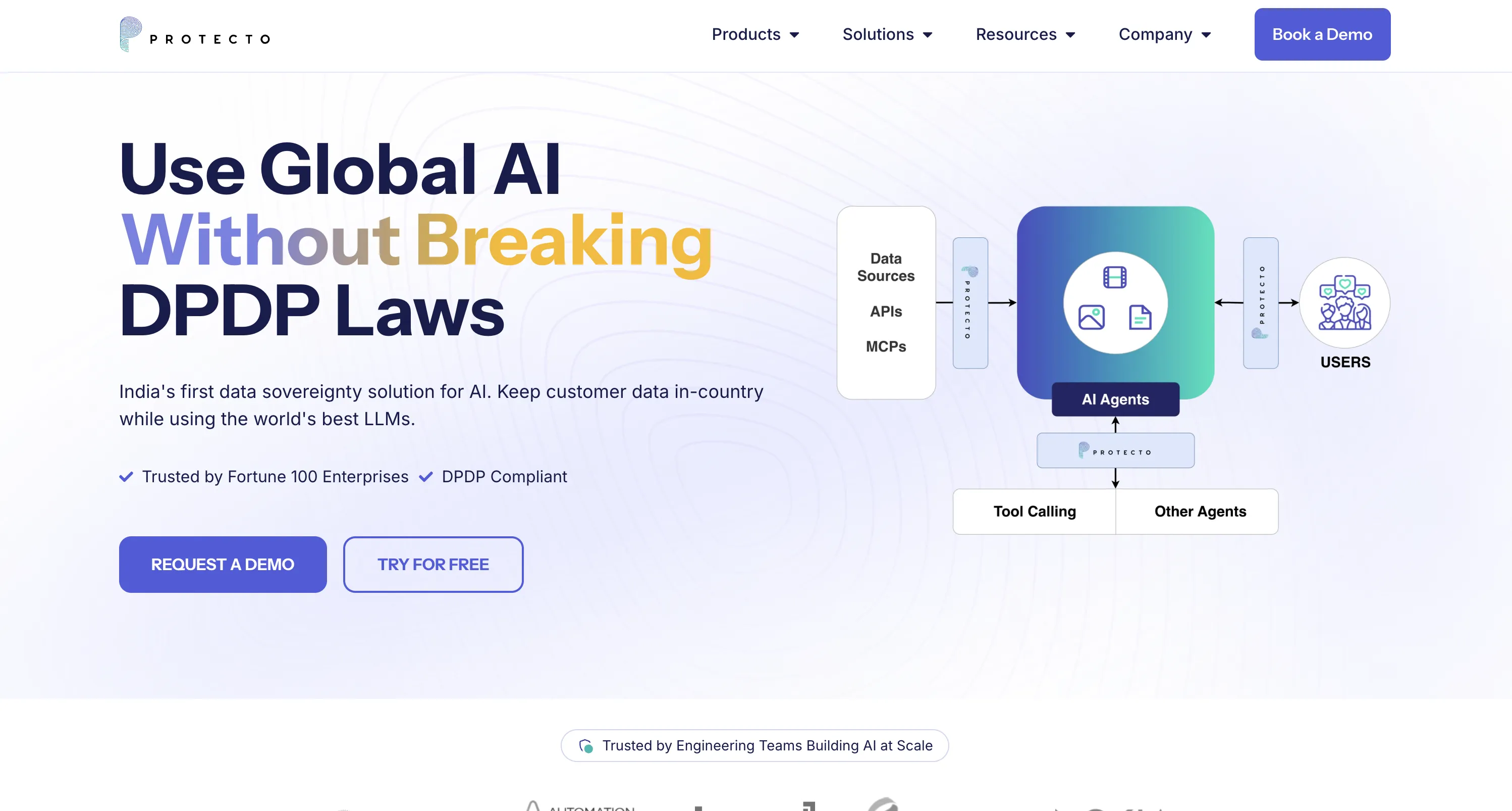
Security Middleware – API layer sanitizes data before reaching any LLM✅ Data Pipeline Integration – Works with Snowflake, Kafka, Databricks for AI workflows⚠️ No Chat Widgets – Backend security layer, not end-user interface platform
15+ native integrations – Zendesk, Salesforce, HubSpot, Intercom, Slack, Teams, FreshdeskMessaging & voice – WhatsApp, SMS, Alexa, Google Assistant, custom telephonyE-commerce – Shopify, Stripe, Zapier, Make.com (5000+ apps), Calendly✅ Custom integrations via unlimited HTTP API blocks, webhooks, iOS/Android SDKs
Website embedding – Lightweight JS widget or iframe with customizable positioningCMS plugins – WordPress, WIX, Webflow, Framer, SquareSpace native support5,000+ app ecosystem – Zapier connects CRMs, marketing, e-commerce toolsMCP Server – Integrate with Claude Desktop, Cursor, ChatGPT, WindsurfOpenAI SDK compatible – Drop-in replacement for OpenAI API endpointsLiveChat + Slack – Native chat widgets with human handoff capabilities
⚠️ Not a Chatbot – Detects and masks sensitive data, doesn't generate responses✅ Advanced NER + Regex – Spots PII/PHI while preserving context and accuracyContent Moderation – Safety checks ensure compliance and prevent data exposure
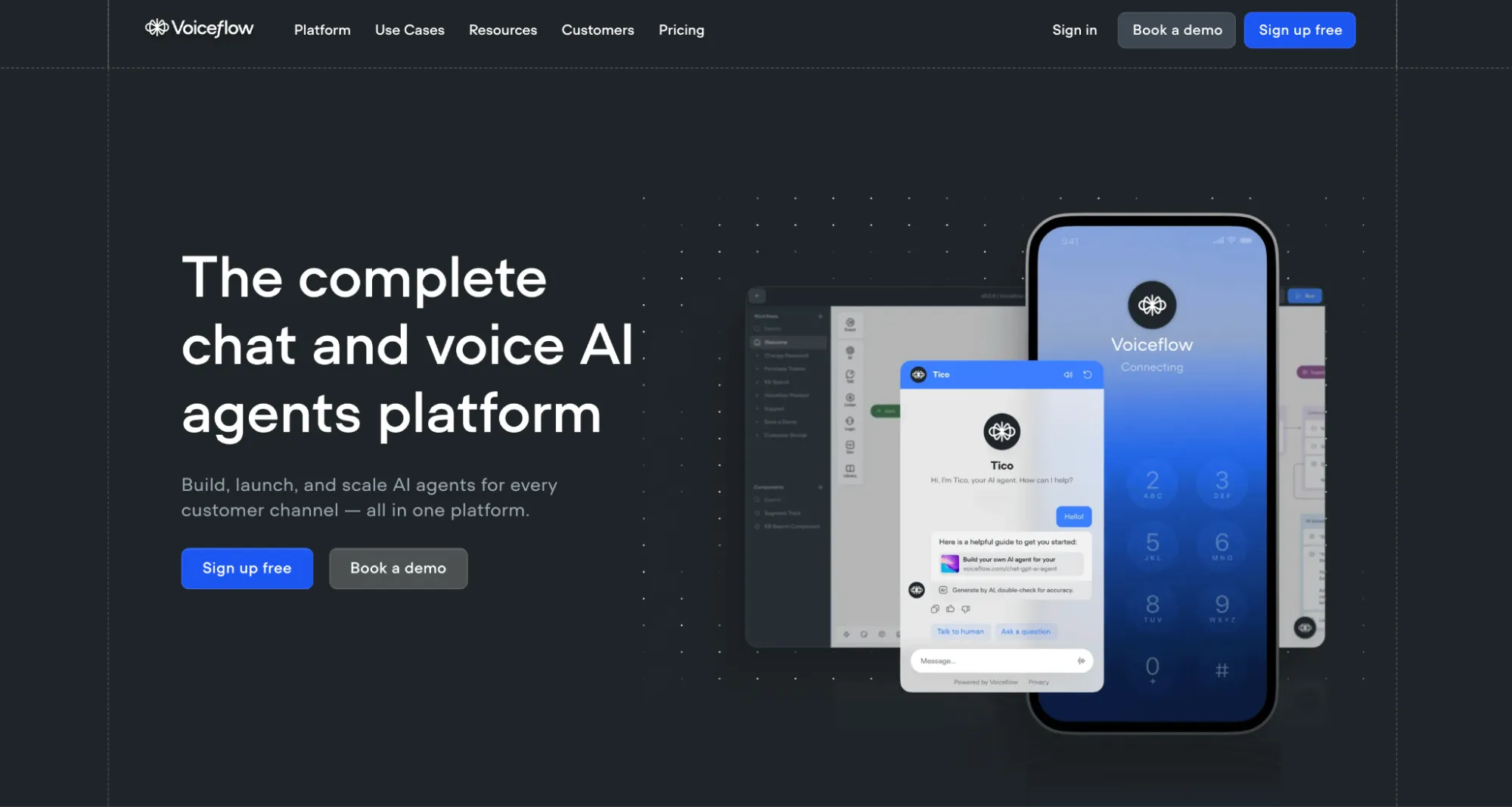
Visual workflow canvas – 50+ drag-and-drop blocks (text, cards, buttons, forms, APIs)Multi-turn conversations – Context preservation across sessions with full transcript loggingAgent handoff – Multi-agent routing, human handoff with context transfer100+ languages – Intent recognition, entity extraction, slot filling via NLU✅ Analytics dashboard: sessions, users, completion rates, drop-offs, A/B testing
✅ #1 accuracy – Median 5/5 in independent benchmarks, 10% lower hallucination than OpenAI✅ Source citations – Every response includes clickable links to original documents✅ 93% resolution rate – Handles queries autonomously, reducing human workload✅ 92 languages – Native multilingual support without per-language config✅ Lead capture – Built-in email collection, custom forms, real-time notifications✅ Human handoff – Escalation with full conversation context preserved
⚠️ No Visual Branding – Backend middleware, no UI to customize or brand✅ Policy Customization – Tailor masking rules via dashboard or config filesCompliance-Focused – Configure policies to match GDPR, HIPAA, PCI DSS requirements
Visual widget editor – Custom colors, logos, fonts, button styles, bubble positioningWhite-labeling – Remove branding (Team+), custom domains (Pro+), CSS injection✅ Dynamic personalization via user attributes, multi-channel customization, configurable tone/prompts
Full white-labeling included – Colors, logos, CSS, custom domains at no extra cost2-minute setup – No-code wizard with drag-and-drop interfacePersona customization – Control AI personality, tone, response style via pre-promptsVisual theme editor – Real-time preview of branding changesDomain allowlisting – Restrict embedding to approved sites only
✅ Model-Agnostic – Works with any LLM: GPT, Claude, LLaMA, Gemini, custom models✅ LangChain Integration – Orchestrates multi-model workflows and complex AI pipelines✅ Context-Preserving – Maintains 99% accuracy (RARI) despite masking sensitive data
Multi-model support – GPT-4, GPT-3.5, Claude, Gemini per agent/step configurationFunction calling – GPT-4/Claude support with custom model API integrationPrompt controls – System prompts, few-shot examples, temperature/token controls per request✅ Cost optimization via model routing, RAG auto-augments LLM prompts
GPT-5.1 models – Latest thinking models (Optimal & Smart variants)GPT-4 series – GPT-4, GPT-4 Turbo, GPT-4o availableClaude 4.5 – Anthropic's Opus available for EnterpriseAuto model routing – Balances cost/performance automaticallyZero API key management – All models managed behind the scenes
Developer Experience ( A P I & S D Ks)
✅ REST APIs + Python SDK – Straightforward scanning, masking, and tokenizing implementationDetailed Documentation – Step-by-step guides for data pipelines and AI appsReal-Time + Batch – Supports ETL, CI/CD pipelines with comprehensive examples
REST API & SDKs – JavaScript/TypeScript, Python, GraphQL API for queriesAPI capabilities – Send messages, manage state, retrieve transcripts, update KBCustom code blocks – JavaScript execution within workflows, rate limits 10K/hour (Pro)✅ Comprehensive docs, 15K+ community (Discord/Slack), Postman/OpenAPI specs
REST API – Full-featured for agents, projects, data ingestion, chat queriesPython SDK – Open-source customgpt-client with full API coveragePostman collections – Pre-built requests for rapid prototypingWebhooks – Real-time event notifications for conversations and leadsOpenAI compatible – Use existing OpenAI SDK code with minimal changes
✅ 99% RARI Accuracy – Context-preserving masking vs 70% vanilla masking accuracy✅ Low Latency – Async APIs and auto-scaling maintain performance at high volumeSemantic Preservation – Masked data retains context for accurate LLM responses
Response times – 200-500ms simple, 1-2s complex; 99.9% SLA (Enterprise)Accuracy claims – GoStudent case: 98% accuracy on 100K conversationsHallucination prevention – RAG grounding, confidence thresholds, source citations⚠️ KB accuracy concerns – Reviews cite "often inaccurate", manual preprocessing required
Sub-second responses – Optimized RAG with vector search and multi-layer cachingBenchmark-proven – 13% higher accuracy, 34% faster than OpenAI Assistants APIAnti-hallucination tech – Responses grounded only in your provided contentOpenGraph citations – Rich visual cards with titles, descriptions, images99.9% uptime – Auto-scaling infrastructure handles traffic spikes
Customization & Flexibility ( Behavior & Knowledge)
✅ Custom Regex Rules – Fine-tune masking with granular entity types and patterns✅ Role-Based Access – Privileged users see unmasked data, others see tokensDynamic Policies – Update masking rules without model retraining for new regulations
Real-time updates – Workflow changes deploy instantly, no rebuild requiredVersion control – Git-style versioning, rollback, Dev/Staging/Prod environments (Team+)Component reusability – Save sections, 100+ templates, dynamic KB syncing✅ Task-specific flows, multi-language routing, user segmentation by custom attributes
Live content updates – Add/remove content with automatic re-indexingSystem prompts – Shape agent behavior and voice through instructionsMulti-agent support – Different bots for different teamsSmart defaults – No ML expertise required for custom behavior
Enterprise Pricing – Custom quotes based on data volume and throughput✅ Massive Scale – Handles millions/billions of records, cloud or on-prem deploymentVolume Discounts – Free trial available, pricing optimized for large organizations
Sandbox (Free) – 2 agents, unlimited interactions, 3 collaboratorsPro: $50/month – 10 agents, unlimited interactions, 10 collaboratorsTeam: $625/month – 50 agents, 25 collaborators, API, version control, RBACEnterprise: Custom – Unlimited agents, SSO, SOC 2, SLA, dedicated support⚠️ Pricing complexity – Per-seat ($15-25) + per-agent ($20-50) charges escalate quickly
Standard: $99/mo – 60M words, 10 botsPremium: $449/mo – 300M words, 100 botsAuto-scaling – Managed cloud scales with demandFlat rates – No per-query charges
✅ Privacy-First – Masks PII/PHI before LLM access, meets GDPR/HIPAA/PCI DSS✅ End-to-End Encryption – TLS in transit, encryption at rest with audit logs✅ Deployment Flexibility – Public cloud, private cloud, or on-prem for data residency
SOC 2 Type II certified – GDPR compliant, HIPAA ready (Enterprise)Encryption – AES-256 at rest, TLS 1.3 in transit, zero-retention policySSO/SAML – Okta/Azure AD, RBAC (Team+), audit logs (Enterprise)✅ On-premise deployment, EU data residency, DPA, IP whitelisting, key rotation
SOC 2 Type II + GDPR – Third-party audited complianceEncryption – 256-bit AES at rest, SSL/TLS in transitAccess controls – RBAC, 2FA, SSO, domain allowlistingData isolation – Never trains on your data
Observability & Monitoring
Comprehensive Audit Logs – Tracks every masking action and sensitive data detection✅ SIEM Integration – Real-time compliance and performance monitoring with alertingRARI Metrics – Reports accuracy preservation and data protection effectiveness
Analytics dashboard – Sessions, users, messages, completion rates, drop-off visualizationConversation funnels – Journey mapping with full transcript viewerError tracking – Monitor API failures, timeouts, unhandled intents real-time✅ User feedback (thumbs/CSAT/NPS), CSV/JSON export, Datadog/New Relic webhooks
Real-time dashboard – Query volumes, token usage, response timesCustomer Intelligence – User behavior patterns, popular queries, knowledge gapsConversation analytics – Full transcripts, resolution rates, common questionsExport capabilities – API export to BI tools and data warehouses
✅ Enterprise Support – Dedicated account managers and SLA-backed assistanceRich Documentation – API guides, whitepapers, and secure AI pipeline best practicesIndustry Partnerships – Active thought leadership and compliance standards collaboration
Founded 2017 – $28M funding (Felicis, OpenAI Startup Fund, Tiger Global)200K+ teams – Mercedes-Benz, JP Morgan, Shopify; 15K+ developer communitySupport tiers – Community (Free), priority email (Pro), chat (Team), 24/7 CSM (Enterprise)✅ 100+ templates, Academy certifications, comprehensive docs, partner program
Comprehensive docs – Tutorials, cookbooks, API referencesEmail + in-app support – Under 24hr response timePremium support – Dedicated account managers for Premium/EnterpriseOpen-source SDK – Python SDK, Postman, GitHub examples5,000+ Zapier apps – CRMs, e-commerce, marketing integrations
Additional Considerations
✅ Secure RAG Focus – Protects sensitive data in third-party LLMs while preserving context✅ On-Prem Deployment – Total isolation for highly regulated sectorsProprietary RARI Metric – Proves aggressive masking maintains 99% model accuracy
Workflow-first platform – Excels complex workflows, KB accuracy lags RAG specialistsBest use case – Multi-step API orchestration, team collaboration; NOT document Q&A⚠️ Steep learning curve – Weeks onboarding despite visual interface
⚠️ Visual canvas overwhelm – Complex agents (100+ blocks) difficult to manage
⚠️ Pricing escalation – Per-seat/agent fees escalate beyond base costs quickly
⚠️ SOC 2 Enterprise-only – No SLA guarantees on lower tiers
Time-to-value – 2-minute deployment vs weeks with DIYAlways current – Auto-updates to latest GPT modelsProven scale – 6,000+ organizations, millions of queriesMulti-LLM – OpenAI + Claude reduces vendor lock-in
No- Code Interface & Usability
⚠️ No Chatbot Builder – Technical dashboard for policy setup, not end-user interfaceIT/Security Focus – Config panels for technical teams, not wizard-style tools✅ Guided Presets – HIPAA Mode, GDPR Mode for rapid compliance onboarding
Visual canvas builder – Drag-and-drop 50+ blocks, 80% no-code coverageCollaboration – 10+ simultaneous editors, real-time cursor tracking, commentsTesting tools – Built-in chat simulator, one-click channel deployment✅ Ease of use 8.7/10 (G2), 100+ templates, Academy certifications
2-minute deployment – Fastest time-to-value in the industryWizard interface – Step-by-step with visual previewsDrag-and-drop – Upload files, paste URLs, connect cloud storageIn-browser testing – Test before deploying to productionZero learning curve – Productive on day one
Market position: Enterprise data security middleware for AI, not RAG platformTarget customers: Healthcare, finance, government needing GDPR/HIPAA/PCI compliance and on-prem deploymentKey competitors: Presidio (Microsoft), Private AI, Nightfall AI, traditional DLP tools✅ Competitive advantages: 99% RARI vs 70% vanilla, handles billions of recordsPricing advantage: Higher cost but prevents regulatory fines (GDPR €20M, HIPAA $1.5M)Use case fit: Critical for healthcare PII/PHI, financial records, government data compliance
Market position – Workflow-first platform (founded 2017, $28M funding) for orchestrationTarget customers – Enterprise teams (200K+ users: Mercedes-Benz, JP Morgan) needing multi-agent workflowsKey competitors – Botpress, Rasa, Microsoft Power Virtual Agents, NOT RAG toolsCompetitive advantages – 50+ blocks, 10+ real-time collab, 15+ integrations, SOC 2/GDPR/HIPAA✅ Free Sandbox, Pro $50/month reasonable for startups, best for workflows
⚠️ Use case fit – Ideal complex workflows, NOT simple document Q&A
Market position – Leading RAG platform balancing enterprise accuracy with no-code usability. Trusted by 6,000+ orgs including Adobe, MIT, Dropbox.Key differentiators – #1 benchmarked accuracy • 1,400+ formats • Full white-labeling included • Flat-rate pricingvs OpenAI – 10% lower hallucination, 13% higher accuracy, 34% fastervs Botsonic/Chatbase – More file formats, source citations, no hidden costsvs LangChain – Production-ready in 2 min vs weeks of development
✅ Model-Agnostic: Works with GPT-4, Claude, LLaMA, Gemini, custom modelsPre-Processing Layer: Masks data before LLM access, not tied to providers✅ LangChain Integration: Orchestrates multi-model workflows and complex AI pipelines✅ Context-Preserving: 99% RARI vs 70% vanilla masking accuracyNo Lock-In: Switch LLM providers without changing Protecto configuration
Multi-model support – GPT-4, GPT-3.5, Claude, Gemini per agent/step selectionFunction calling – GPT-4/Claude real-time action triggering during conversationsCustom model integration – Proprietary LLM API support, temperature/token controls (0.0-2.0)✅ Cost optimization routing: GPT-3.5 simple, GPT-4 complex queries
OpenAI – GPT-5.1 (Optimal/Smart), GPT-4 seriesAnthropic – Claude 4.5 Opus/Sonnet (Enterprise)Auto-routing – Intelligent model selection for cost/performanceManaged – No API keys or fine-tuning required
⚠️ NOT A RAG PLATFORM: Security middleware only, not retrieval-augmented generation platformRAG Protection Layer: Masks PII/PHI before RAG indexing and vector database storage✅ Real-Time Sanitization: Intercepts data to/from RAG systems preventing sensitive data leakage✅ Context Preservation: Maintains semantic meaning for accurate RAG retrieval despite maskingQuery + Response Security: Masks sensitive data in queries and post-processes responsesIntegration Point: Security middleware between data sources and RAG platforms
Knowledge Base – RAG vector search, semantic matching (PDF, Word, CSV, text)Website crawling – Sitemap ingestion, auto-sync Google Drive, Notion, Confluence, ZendeskMulti-turn context – Conversation preservation across sessions for coherent dialogues⚠️ Accuracy concerns – Reviews cite KB "often inaccurate", "too general"
⚠️ No RAG controls – Cannot configure chunking, embeddings, similarity thresholds
GPT-4 + RAG – Outperforms OpenAI in independent benchmarksAnti-hallucination – Responses grounded in your content onlyAutomatic citations – Clickable source links in every responseSub-second latency – Optimized vector search and cachingScale to 300M words – No performance degradation at scale
Healthcare AI: HIPAA-compliant patient analysis, clinical support, PHI masking in medical recordsFinancial Services: PCI DSS payment data compliance, financial records, customer service chatbotsGovernment & Defense: Classified data protection, citizen privacy, strict data residency requirementsCustomer Support: Secure analysis of tickets, emails, transcripts with PII for AI insightsMulti-Agent Workflows: Role-based data access across AI agents for global enterprisesClaims Processing: Insurance PHI protection for accurate, privacy-preserving RAG workflows
Complex workflows – API orchestration, multi-agent coordination, sophisticated logicTeam collaboration – 10+ simultaneous editors with real-time tracking/commentsVoice assistants – Alexa, Google Assistant, custom telephony conversational AICustomer service – 15+ integrations (Zendesk, Salesforce, HubSpot, Intercom) automationE-commerce – Shopify orders, product recommendations, lead gen with Calendly/CRM⚠️ NOT ideal for – Simple document Q&A (KB accuracy issues)
Customer support – 24/7 AI handling common queries with citationsInternal knowledge – HR policies, onboarding, technical docsSales enablement – Product info, lead qualification, educationDocumentation – Help centers, FAQs with auto-crawlingE-commerce – Product recommendations, order assistance
✅ GDPR/HIPAA/PCI DSS: Pre-configured policies, BAA support, Safe Harbor PHI maskingPDPL/DPDP Compliance: Saudi Arabia PDPL, India DPDP with regional policies✅ End-to-End Encryption: TLS in transit, encryption at rest with audit logs✅ Role-Based Access: Privileged users see unmasked data, others see tokens✅ Deployment Flexibility: SaaS, VPC, on-prem for strict data residencyZero Data Egress: On-prem ensures data never leaves organizational boundaries
SOC 2 Type II – GDPR compliant, HIPAA ready (Enterprise), EU data residencyEncryption – AES-256 at rest, TLS 1.3 in transit, zero-retentionSSO/SAML – Okta, Azure AD, OneLogin; RBAC (Team+), audit logs (Enterprise)✅ On-premise deployment for data sovereignty, DPA available
SOC 2 Type II + GDPR – Regular third-party audits, full EU compliance256-bit AES encryption – Data at rest; SSL/TLS in transitSSO + 2FA + RBAC – Enterprise access controls with role-based permissionsData isolation – Never trains on customer dataDomain allowlisting – Restrict chatbot to approved domains
Enterprise Pricing: Custom quotes based on volume, throughput, deployment model✅ Free Trial: Test platform capabilities before commitment with hands-on evaluationVolume Discounts: Pricing scales with usage, better rates for higher volumesCost Justification: Prevents regulatory fines (GDPR €20M, HIPAA $1.5M penalties)⚠️ No Public Pricing: Contact sales for custom quotes tailored to needs
Sandbox (Free) – 2 agents, unlimited interactions, 3 collaboratorsPro: $50/month – 10 agents, unlimited interactions, 10 collaborators, GPT-4/ClaudeTeam: $625/month – 50 agents, 25 collaborators, API, version control, RBACEnterprise: Custom – Unlimited agents, SSO, SOC 2, HIPAA, SLA, on-premise⚠️ Per-seat charges – Additional editors $50/month (Pro), $15-25/month (Team)
Standard: $99/mo – 10 chatbots, 60M words, 5K items/botPremium: $449/mo – 100 chatbots, 300M words, 20K items/botEnterprise: Custom – SSO, dedicated support, custom SLAs7-day free trial – Full Standard access, no chargesFlat-rate pricing – No per-query charges, no hidden costs
✅ Enterprise Support: Dedicated account managers, SLA-backed assistance for large deploymentsComprehensive Docs: REST API, Python SDK, integration guides for data pipelinesWhitepapers & Best Practices: Security frameworks, compliance guides, AI pipeline architecturesIntegration Guides: Snowflake, Databricks, Kafka, LangChain, CrewAI, model gatewaysProfessional Services: Implementation help, custom policy setup, security workflow design✅ Training Resources: HIPAA Mode, GDPR Mode presets for rapid deployment
Founded 2017 – $28M funding (Felicis, OpenAI Startup Fund, Tiger Global)200K+ teams – Mercedes-Benz, JP Morgan, Shopify; 15K+ developer communitySupport tiers – Community (Free), priority email (Pro), chat (Team), 24/7 CSM (Enterprise)✅ 100+ templates, comprehensive docs, Academy certifications, partner program
Documentation hub – Docs, tutorials, API referencesSupport channels – Email, in-app chat, dedicated managers (Premium+)Open-source – Python SDK, Postman, GitHub examplesCommunity – User community + 5,000 Zapier integrations
Limitations & Considerations
⚠️ NOT A RAG PLATFORM: Requires separate RAG/LLM infrastructure for complete solution⚠️ NO Chat UI: Technical dashboard only, not end-user chatbot interface⚠️ Developer Integration Required: APIs/SDKs need coding expertise for pipeline integrationHigher Cost: Enterprise pricing but prevents GDPR €20M, HIPAA $1.5M finesPerformance Overhead: Real-time masking adds sub-second latency in high-throughput systemsBest For: Regulated industries (healthcare, finance, government) requiring compliance, not general-purpose
⚠️ KB accuracy issues – Reviews cite "often inaccurate", not ideal document Q&A
⚠️ Workflow-first platform – Excels orchestration, lags specialized RAG platforms
⚠️ Steep learning curve – Weeks onboarding despite visual interface
⚠️ Pricing complexity – Per-seat/agent fees escalate beyond base costs
⚠️ Visual canvas overwhelm – Complex agents (100+ blocks) difficult to manage
⚠️ SOC 2 Enterprise-only – No SLA guarantees on Pro/Team tiers
Managed service – Less control over RAG pipeline vs build-your-ownModel selection – OpenAI + Anthropic only; no Cohere, AI21, open-sourceReal-time data – Requires re-indexing; not ideal for live inventory/pricesEnterprise features – Custom SSO only on Enterprise plan
✅ Multi-Agent Access Control: Fine-grained identity-based access enforcement across agentic workflows✅ Role-Based Security: Controls who sees what at inference time with role-specific permissionsLangChain/CrewAI Integration: Comprehensive agentic workflow protection with major orchestration frameworksAgent Context Sanitization: Masks PII/PHI in prompts, context, and responses during multi-step reasoningSecRAG for Agents: RBAC integrated into retrieval, checks authorization before agent access⚠️ NOT Agent Orchestration: Secures workflows but requires LangChain/CrewAI for coordination
Agent step (2024) – Autonomous AI with tool use, decision-making, KB accessMulti-agent orchestration – Supervisor pattern connecting specialized agents for conversation aspectsHybrid architecture – Hard business logic + Agent networks for flexibilityHuman handoff – Smooth transitions with full history transfer to support/salesLead capture & CRM – Auto-create in HubSpot/Salesforce/Pipedrive, update deal stages
Custom AI Agents – Autonomous GPT-4/Claude agents for business tasksMulti-Agent Systems – Specialized agents for support, sales, knowledgeMemory & Context – Persistent conversation history across sessionsTool Integration – Webhooks + 5,000 Zapier apps for automationContinuous Learning – Auto re-indexing without manual retraining
R A G-as-a- Service Assessment
⚠️ NOT RAG-AS-A-SERVICE: Data security middleware, not retrieval-augmented generation platformSecurity Middleware: Sits between data sources and RAG platforms as protection layerRAG Protection: Sanitizes documents before indexing, queries before retrieval, responses before delivery✅ Context-Preserving RAG: 99% RARI vs 70% vanilla masking for accurate retrievalStack Position: Protecto (security) + CustomGPT/Vectara (RAG) + OpenAI (LLM) = complete solutionBest Comparison: Compare to Presidio, Private AI, Nightfall AI, not RAG platforms
Platform Type – WORKFLOW-FIRST with RAG capabilities, NOT pure RAG-as-a-ServiceCore Architecture – Visual canvas (50+ blocks) combining intent-based + RAG hybridRAG Integration – KB with vector search (Qdrant) + GPT-4, secondary to workflowsDeveloper Experience – REST API, JS/Python SDKs, custom code blocks, GraphQL⚠️ RAG Limitations – KB "often inaccurate", no RAG parameter configuration, manual preprocessing
Platform type – TRUE RAG-AS-A-SERVICE with managed infrastructureAPI-first – REST API, Python SDK, OpenAI compatibility, MCP ServerNo-code option – 2-minute wizard deployment for non-developersHybrid positioning – Serves both dev teams (APIs) and business users (no-code)Enterprise ready – SOC 2 Type II, GDPR, WCAG 2.0, flat-rate pricing










Join the Discussion
Loading comments...